

A backpack that does not fit turns a good hike into a sore-shouldered, hip-bruising day. Most women are sold packs designed for a longer torso and straighter hips, and the result is familiar: the straps dig in, the hip belt rides up, and by mile six the weight is hanging from your shoulders instead of sitting on your hips.
This guide explains how a hiking backpack for women fits differently, how to measure your torso, what size you need for a day hike or a multi-day trip, which features actually matter, and which packs suit each trip type. One honest note first: there is no single “best” pack for everyone. The right one depends on your torso length, your trip, and how much you carry. This is a practical, brand-neutral guide that helps you choose with confidence — not just a shopping list.
Quick Answer:
Measure your torso first, then pick the size for your trip: 20–25L for a day hike, 30–40L overnight, 45–55L for multi-day treks. Choose a women’s-specific pack with a hip belt that fits your hips.
Quick-Guide Table
| Trip type | Pack size | Best options |
| Day hike, under 8 hours | 20–25L | Osprey Tempest 24, Gregory Maya 20, Gregory Juno 24 |
| All-day mountain hike | 26–38L | Osprey Tempest 24, Osprey Sirrus 36, Gregory Jade 28 |
| Overnight to 2 nights | 30–40L | Osprey Sirrus 36, Osprey Kyte 36, Gregory Jade 33 |
| Multi-day, 3–5 nights | 45–55L | Osprey Aura AG 50, Gregory Maven 48, Osprey Eja 48 |
| Long trek, 5+ nights | 55–70L | Osprey Aura AG 65, Gregory Maven 58, Granite Gear Crown3 60L |
Helpful List: Choose Your Pack In 5 Steps
- Measure your torso: from the bony bump at the base of your neck (C7) to where your thumbs meet your spine on your hip bones
- Match the number to the brand’s size chart — women’s packs usually fit torsos of 14–18 inches
- Pick the size for your trip: 20–25L day hike, 30–40L overnight, 45–55L multi-day
- Test the pack loaded with about 10 pounds: tighten the hip belt first, then the shoulder straps, then the sternum strap
- Check the features: adjustable torso, ventilated back panel, rain cover, hydration sleeve, hip-belt pockets
What Makes A Women’s Hiking Backpack Different?
A women’s hiking backpack is not just a smaller men’s pack in a different color. The good ones are built around real anatomical differences, not marketing. The torso range runs shorter — usually 14 to 18 inches, compared with 17 to 22 for men’s packs. The shoulder straps are narrower and spaced closer together so they clear your collarbones, and they curve in an S-shape to route around the chest instead of cutting across it. The hip belt is angled and contoured to sit on hips rather than a straighter waist.
That fit difference matters because most of your load should ride on your hips. A hip belt that does not fit means the weight creeps up onto your shoulders, which is exactly where you do not want it on a long climb. On a steep trail, a well-fitted women’s pack keeps the weight low and stable; a badly fitted one grinds your shoulders raw and leaves bruises on your hips.
Some women fit a unisex pack perfectly well. The point is not the label on the tag — it is the torso range and the hip belt. Check those two things first, and the rest follows.
How To Measure Your Torso And Find Your Fit
Fit starts with one number: your torso length. It is not your height, and it is not your waist size. Two women of the same height can have torsos several inches apart.
To measure it, tilt your head forward and find the bony bump at the base of your neck — your C7 vertebra. That is the top. Now put your hands on the tops of your hip bones with your thumbs pointing back. The spot where your thumbs meet your spine is the bottom. Have someone measure the distance between those two points along your spine, in inches. That number is your torso length.
Match it to the brand’s size chart, then test the pack loaded with about 10 pounds before you decide. Tighten the hip belt first so it sits on your hip bones and carries the weight, then snug the shoulder straps, then clip and adjust the sternum strap. Walk around the shop, climb the stairs if there are any, and pay attention to where the weight sits. If the hip belt is doing its job, your shoulders should feel light.
If you fall between sizes, adjustable-torso packs give a few inches of tuning through a hook-and-loop yoke or a sliding harness, but a wrong size leaves the hip belt riding too high or too low no matter how you adjust it. Petite hikers — under 5’2″, with a torso of 13 to 15 inches — need XS or short sizes. Packs like the Osprey Kyte 36 in XS or the Gregory Jade 33 in XS are built for that range, with hip belts that tailor down to 24 or 25 inches.
What Size Hiking Backpack Do You Need?
Capacity is measured in liters, and the right size depends on the length of your trip and how much gear you carry. The consensus across outdoor guides is simple:
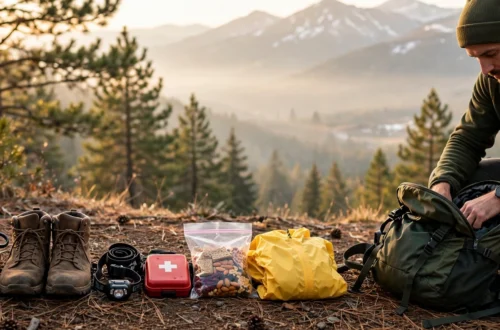
- Day hike (under 8 hours): 15–30 liters. For most day hikes, 20–25L is enough — a small hiking backpack for women in this range holds water, snacks, a light rain shell, a first-aid kit and a small camera.
- Overnight to 2 nights: 30–40 liters. Enough for a compact sleeping system, extra layers and basic cooking gear.
- 3–5 nights: 45–55 liters. A hiking backpack for women 50l is the versatile middle ground here — room for a tent, sleeping bag, sleeping pad, stove and several days of food without becoming a burden.
- Multi-day / 5+ nights: 55–70 liters. For long trips, cold weather or group gear.
An oversized pack tempts you to overfill it, and every extra pound on a smaller frame means disproportionate fatigue. Match the pack to the trip, not to “room to grow”. If you hike in warm weather and pack light, you can size down; cold-weather or group gear usually needs more space.
One more practical note: if you plan to use the pack as a carry-on for flights, stick to 35–40L models with stowable straps or sleeker profiles. Larger packs with a rigid frame and dangling straps are a poor fit for an overhead bin.
Best Hiking Backpack For Women By Trip Type
There is no ranked “best of” list here, because the best hiking backpack for women depends on your torso, your trip and your load. What follows is examples by trip type — model names, weights and prices are single-source review claims, so check the brand’s official site for current sizes and prices before you buy.
For day hiking, the names that come up most often are the Osprey Tempest 22 and 24, the Gregory Maya 20 and 25, and the Gregory Juno 24. The Tempest 24 is the most recommended day pack in this group: a women’s-specific fit for torsos from 13 to 19 inches, about 2.2 pounds, a ventilated AirScape back panel and a built-in rain cover. The Maya is lighter on features but a good value for shorter walks, and the Juno 24 comes with a 3-litre water reservoir included.
For overnight and weekend trips, look at the Osprey Sirrus 36, the Osprey Kyte 36 and the Gregory Jade 28 or 33. The Sirrus 36 has a supportive perimeter frame rated to about 30 pounds, an adjustable torso and an integrated rain cover — good for gear-heavy day trips, extra layers or camera equipment. The Kyte 36 in XS is the pick for petite hikers.
For multi-day backpacking, the Osprey Aura AG 50 and 65 lead most roundups, thanks to the Anti-Gravity suspended mesh back panel that spreads the load across your back and hips. The Gregory Maven 48, 58 and 68 is the comfort-first alternative, with an adjustable, dynamic hip belt that moves with you. The Granite Gear Crown3 Women’s Fit in 40 or 60 liters is the lightweight choice, and the Osprey Eja 48 is the ultralight option for hikers who count every ounce. The Osprey Ariel Plus 70 and 85 suit heavier loads on long expeditions.
Osprey dominates these lists because it makes the widest range of women’s-specific packs, but it is not the only brand. The North Face, Deuter, Gregory, Granite Gear and REI Co-op all make women’s hiking backpacks, and the right choice is the one whose torso range and hip belt match your body — not the logo on the front.
Day Hiking Backpack For Women
A day hiking backpack for women needs to hold the essentials without feeling like a burden: water, snacks, a light rain shell, a first-aid kit, a small camera and an extra layer. That is what 20–25 liters is for. For all-day mountain hikes with extra insulating layers, a bulky lunch and camera gear, 26–38 liters is the better range.
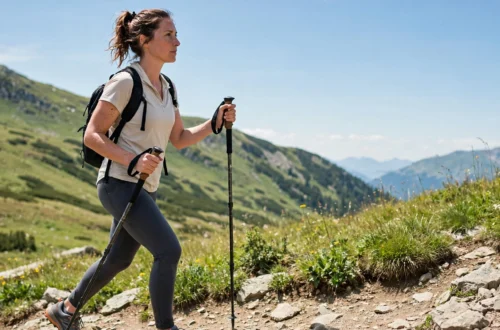
The best day hiking backpack for women is the one you forget you are wearing. Look for a ventilated back panel that holds the pack slightly off your back and lets air move through, hip-belt pockets that swallow your phone and a couple of snacks without breaking stride, a rain cover tucked in the bottom, trekking-pole attachments, and a hydration sleeve. A pack that weighs around 2 pounds empty is a good target for a day pack — heavier than that, and you are carrying the pack instead of the pack carrying your gear.
Features That Actually Matter
Adjustable torso length is the first feature to check. If the pack cannot be tuned to your back, nothing else will save it. The hip belt is second: it should be padded, contoured and wide enough to sit on your hip bones, not your waist.
A ventilated back panel matters on warm days. The pack sits slightly off your back and lets air move through, which keeps you cooler on a climb. A rain cover — built-in or separate — and water-resistant fabric matter on any mountain trail, where the weather can turn in an hour.
Hip-belt pockets for your phone and snacks, side-zip or bottom access to the main compartment, compression straps to keep the load tight, and load lifters to pull the top of the pack toward your shoulders are all useful. What to ignore: color, brand logos, and extra pockets you will never use. A pack with ten pockets sounds organized; in practice, you use three.
Weight is worth watching. Daypacks run around 2–3 pounds, overnight packs 2.5–4 pounds, and multi-day packs 3.5–4.5 pounds. Ultralight options exist under 3 pounds even at 55–60 liters, but they usually give up padding, pockets and structure to get there. For most hikers, a comfortable 4-pound pack beats an uncomfortable 2.5-pound one.
Hiking Backpack For Women With Water
Hydration is the feature most first-time buyers forget to check. A hiking backpack for women with water means one of two things: a water-bladder sleeve with a hose port, or side pockets for bottles. Most hikers use one or the other; some use both.
A bladder lets you drink without stopping, which matters on a long climb. The Gregory Juno 24 includes a 3-litre reservoir in the box. Most other packs sell the bladder separately, so check whether the price you see includes one. Bottles are simpler to fill and clean, and side pockets let you grab one without taking the pack off — but they can be hard to reach with a loaded pack, so test that in the shop.
How much water to carry depends on the trail length, the heat and the water sources on the route. Check the trail’s water availability before you go, and carry more than you think you need on a hot day or a trail with no streams. A 2-litre bladder is a good starting point for a half-day hike; 3 liters suits a full day in warm weather.
How To Pack And Adjust Your Backpack
Pack heavy items close to your back and near your hips — that is where the weight is easiest to carry. Light, bulky items go at the bottom and top. Put the things you need during the day — snacks, sunscreen, rain shell — in the top lid or hip-belt pockets, not buried at the bottom.
Adjust in order: hip belt first, then shoulder straps, then load lifters, then the sternum strap. The hip belt should carry roughly 80% of the pack’s weight off your shoulders. If your shoulders ache after an hour, the belt is too loose or sitting too high. If your hips bruise, the belt is too tight or the wrong shape for you.
A full trekking backpack should weigh no more than about 20% of the wearer’s body weight. Test the loaded pack on a short walk before a long trip — a loaded test at home will tell you more in twenty minutes than any review can.
Common Mistakes To Avoid
The most common mistake is buying a men’s or unisex pack without checking the torso range. A pack sized for a longer back rides too high and pulls at your shoulders no matter how you adjust it. The second is buying too big. An oversized pack tempts you to overfill it, and every extra pound on a smaller frame means disproportionate fatigue.
The third is skipping the loaded test. A pack feels fine empty; it feels very different with 10 pounds in it. The fourth is choosing by color or price alone and ignoring the hip belt fit. And the fifth is overpacking — the heaviest thing most hikers carry is the stuff they never use. Lay out everything you plan to carry, then take out a third of it.
How To Care For Your Backpack
Empty your pack after every trip, shake out the dirt, and air it out before storing. Wash it with mild soap and lukewarm water when it needs it — never machine wash or tumble dry unless the brand says so, because the heat and agitation can damage the frame, the coatings and the zips.
Store it loosely, uncompressed, in a dry place, with the zips and buckles clean and the straps loose. Check the straps, buckles and seams before a long trip, not on the trail. A small repair at home is a five-minute job; the same repair on a mountain is a ruined day.
Conclusion
Choosing a hiking backpack for women comes down to three decisions. First, measure your torso and match it to the brand’s size chart. Second, pick the size for your trip — 20–25 liters for a day hike, 30–40 liters for an overnight trip, 45–55 liters for a multi-day trek. Third, check the hip belt and the features that matter: adjustable torso, ventilated back panel, rain cover, hydration sleeve.
There is no single best pack. The right one is the one that fits your body and your trip. Take a loaded test walk before your first long hike, and check the brand’s official site for current prices and sizes before you buy. Then go — the trail is waiting, and a pack that fits makes all the difference. If you want to keep planning, the site’s other hiking guides cover the best hiking poles, trail running shoes for hiking, and how to pack for a long trip in the same practical style.
FAQ’s:
What Size Hiking Backpack Do I Need For A Day Hike?
For most day hikes, 20–25 liters is enough for water, snacks, a rain shell, a first-aid kit and a small camera. For all-day mountain hikes with extra layers, 26–38 liters works better.
How Do I Measure My Torso For A Backpack?
Measure from the bony bump at the base of your neck down your spine to where your thumbs meet your spine when your hands rest on your hip bones. Match that number to the brand’s size chart.
Are Women’s Hiking Backpacks Really Different?
Yes. Women’s packs have a shorter torso range, narrower S-curved shoulder straps, and a hip belt shaped to sit on hips. A pack sized for a longer back pulls at your shoulders no matter how you adjust it.
How Heavy Should My Loaded Backpack Be?
A full trekking backpack should weigh no more than about 20% of your body weight. Pack heavy items close to your back and near your hips, and test the loaded pack on a short walk first.
Can I Use A Hiking Backpack As A Carry-on?
Yes, if it is 35–40 liters with stowable straps or a sleeker profile. Larger packs with a rigid frame and dangling straps are a poor fit for an overhead bin.
Disclaimer:
This article is for general information only. Travel conditions, prices, entry requirements, and opening times can change, so please check official travel advice and official sources before you travel. Travel3Ways is an independent travel information website and is not affiliated with any tourism board, airline, hotel, or booking service. Travel3Ways was created only to provide helpful information to visitors and does not engage in paid promotions or advertising.



4 Comments on “Hiking Backpack For Women: How To Choose The Right Fit, Size And Pack”