
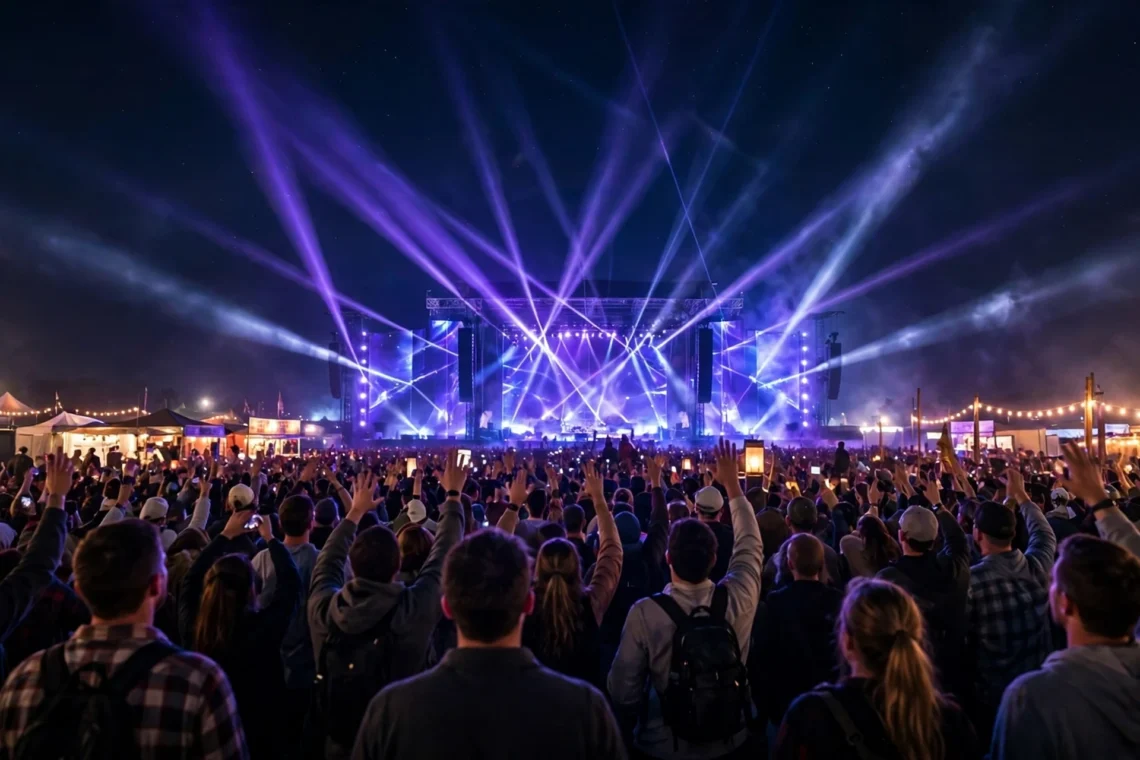
The biggest music festivals in the US depends on how you count. By total attendance, Musikfest leads, with over 1.26 million people across ten days in Bethlehem, Pennsylvania — most of it on free stages. By ticketed attendance, Coachella leads, with about 750,000 admissions across its two weekends in Indio, California. And by single-night crowd, EDC Las Vegas leads, packing more than 500,000 people into three nights at the Las Vegas Motor Speedway.
That matters, because a free street festival and a ticketed desert festival are very different trips. The right choice depends on your genre, your budget, and whether you want to camp in a field or sleep in a hotel. This guide covers the biggest festivals by type, how to choose one, what a trip costs, how to book, and how to stay safe. Attendance figures here are approximate and differ across sources, and dates and lineups change every year — always check each festival’s official site before booking.
Quick Answer
By total attendance, Musikfest leads with over 1.26 million people, while Coachella is the biggest ticketed festival at about 750,000. EDC Las Vegas draws the largest single-night crowd, over 500,000 in three nights.
Quick-Guide Table
| Festival | Location | Typical month | Genre | Approximate attendance |
| Coachella | Indio, CA | April | Pop, rock, hip-hop, EDM | About 750,000 (two weekends) |
| EDC Las Vegas | Las Vegas, NV | May | EDM | 500,000+ (three nights) |
| Lollapalooza | Chicago, IL | Late July–August | Multi-genre | About 400,000–460,000 |
| Austin City Limits | Austin, TX | October | Multi-genre | About 450,000 (two weekends) |
| Summerfest | Milwaukee, WI | June–July | All genres | About 570,000–600,000 |
| Bonnaroo | Manchester, TN | June | Multi-genre | About 80,000 |
| New Orleans Jazz & Heritage Festival | New Orleans, LA | Late April–May | Jazz, blues, gospel, rock, R&B | About 475,000 |
| Stagecoach | Indio, CA | April | Country | About 255,000 |
| Outside Lands | San Francisco, CA | August | Multi-genre | About 225,000 |
| Governors Ball | New York, NY | June | Multi-genre | About 150,000 |
| CMA Fest | Nashville, TN | June | Country | About 400,000 |
| Musikfest | Bethlehem, PA | August | Multi-genre, mostly free | Over 1.26 million |
| French Quarter Festival | New Orleans, LA | April | Jazz, funk, brass, R&B | About 950,000 |
Helpful List: Before You Book
- Pick the festival by genre first, then by style: camping, city hotel, or free and flexible.
- Buy tickets only through official channels or verified resale.
- Book your hotel at the same time as your ticket — rooms near major festivals sell out months ahead.
- Check the festival’s prohibited-items list before packing — clear-bag rules and gear restrictions vary every year.
- Download the official festival app and study the map before you arrive.
- Agree a meeting point with your group, since phone signal is unreliable in big crowds.
What “Biggest” Really Means
There are three honest ways to measure a festival’s size, and each one gives a different winner. Total attendance counts every person who walks through, including free stages and street areas. By that measure, free festivals win: Musikfest in Bethlehem drew over 1.26 million people in 2026, and the French Quarter Festival in New Orleans drew about 950,000.
Ticketed attendance counts only people who bought a pass. By that measure, Coachella is the biggest, with about 750,000 admissions across its two weekends in 2025 — roughly 125,000 people per day. Single-day or single-night crowd is the third measure, and by that one EDC Las Vegas wins, with more than 165,000 people per night.
Summerfest in Milwaukee deserves a mention of its own: it holds the Guinness World Record as the world’s largest music festival, historically drawing around 600,000 people across its multi-weekend run on the Lake Michigan shoreline. This article presents an editorial selection grouped by type — biggest ticketed, biggest EDM, biggest city festival, biggest camping festival — rather than a false precise ranking, because the ranking changes with the way you count.
Coachella: The Biggest Ticketed Festival
Coachella takes place every April at the Empire Polo Club in Indio, California, over two identical weekends, with about 125,000 people per day. It is the biggest ticketed festival in the US, and the most famous: pop, rock, hip-hop, and EDM headliners, surprise guest appearances, and monumental art installations spread across the desert grounds.
General admission costs roughly $550 to $650 for a three-day pass, and VIP costs roughly $1,200 to $1,300. Tickets sell out fast — the 2026 edition sold out within a week of the lineup announcement — so the real cost for most people is the resale market or planning a year ahead. Stay in Indio, Palm Desert, or Palm Springs, and book months ahead: hotels near the festival sell out quickly, and prices rise sharply on festival weekends. If you are camping, car camping starts at around $185 per car and tents camping at around $145 per person, but book those early too.
EDC Las Vegas: The Biggest EDM Festival
Electric Daisy Carnival takes over the Las Vegas Motor Speedway every May for three nights, running from dusk until dawn. More than 500,000 people attend across the three nights, making it the largest electronic music festival in North America — and the biggest single-night crowd of any US festival.
EDC is a different kind of festival: carnival rides, pyrotechnics, and massive stage production, with hundreds of DJs across the three nights. General admission costs roughly $380 or more for a three-day pass. Because it runs all night, plan your sleep and recovery around it — most people sleep during the day and arrive at the speedway in the evening. Stay on the Strip and use the official shuttles, which run between the hotels and the venue.
Lollapalooza And Austin City Limits: The Biggest City Festivals
Lollapalooza takes over Grant Park in Chicago every summer, usually late July to early August, for four days. About 400,000 to 460,000 people attend, and the lineup covers alternative rock, hip-hop, pop, and EDM. There is no camping — you stay in a hotel in the city, walk to the park, and go home at night. That makes it one of the easiest big festivals for a first-timer, and the Chicago skyline behind the stages is part of the experience.
Austin City Limits takes place in Zilker Park in Austin, Texas, every October over two weekends, with about 450,000 people across both weekends — roughly 75,000 per day. The lineup covers rock, indie, pop, country, and hip-hop, and the atmosphere is laid-back, with a strong focus on local food. Both festivals pair well with exploring the host city: Chicago’s food and architecture, or Austin’s barbecue and live-music bars. If you have never been to a big festival, start with one of these two.
Summerfest And The Free Giants
Summerfest in Milwaukee runs for three consecutive weekends in late June and July along the Lake Michigan shoreline, drawing about 570,000 to 600,000 people across nine days. It hosts hundreds of acts across permanent stages, alongside local food vendors, and it holds the Guinness World Record as the world’s largest music festival. Because it runs over three weekends, it is also the most flexible big festival: if one weekend does not work, another might.
Musikfest in Bethlehem, Pennsylvania, is the largest by total attendance: over 1.26 million people across ten days in August, most of it on free stages. The French Quarter Festival in New Orleans is free too, drawing about 950,000 people over four days in April for jazz, funk, brass, and R&B. Free festivals are a different kind of trip: there is no ticket stress and no sell-out to worry about, but you still need to plan for crowds and book hotels early, because the cities fill up anyway.
The Best Camping Festivals
Bonnaroo is the classic American camping festival. Every June, a 700-acre farm in Manchester, Tennessee, becomes a temporary city of about 80,000 people for four days. Most festival-goers camp on the grounds and the community feeling— neighbors sharing food, shade, and stories— is a big part of why people return. Before booking, check the official site for current plans: the 2026 edition was affected by storms that forced a Sunday evacuation.
Stagecoach is the biggest country festival in the US, drawing about 255,000 people to Indio, California, every April — the same grounds as Coachella, a week or two later. Electric Forest in Rothbury, Michigan, is the camping festival most known for its forest setting and electronic lineups, and it has one of the most loyal followings of any US festival.
Camping means bringing a full base camp: a tent, shade, water, and food. Flag your campsite so you can find it again at night — a balloon or a flag works. And expect the weather to be part of the experience: dust, heat, or mud depending on the year.
Festivals By Genre
Country fans have two giants to choose from. CMA Fest in Nashville draws about 400,000 people over four days in June, with country stars performing across downtown Nashville. Stagecoach in Indio is the other one, with about 255,000 people and a more festival-style setting.
Jazz and heritage fans should look at the New Orleans Jazz & Heritage Festival, held in late April to early May over seven or eight days, drawing about 475,000 people. The lineup covers jazz, blues, gospel, rock, and R&B, and the food is as much a reason to go as the music.
Rap and hip-hop do not have a single giant festival of their own at this scale. Instead, they are covered within the multi-genre festivals: Coachella, Lollapalooza, and Austin City Limits all book major rap and hip-hop headliners every year. Rap-focused festivals exist, but they are smaller than the giants in this article. For EDM, EDC Las Vegas leads by a wide margin, with Electric Forest and Ultra Miami as the other big names.
How To Choose The Right Festival For You
Pick by genre first. A country fan and an EDM fan want different festivals, and the biggest festival in the country is the wrong one if it plays music you do not enjoy. Start with the genre, then narrow it down.
Pick by style next. Camping festivals like Bonnaroo and Coachella mean living on the grounds for days. City festivals like Lollapalooza and Governors Ball mean a hotel, a shower, and a real bed every night. Free festivals like Musikfest and the French Quarter Festival mean flexibility — no ticket, no sell-out, just show up and enjoy it.
Pick by budget and travel distance. Add flights, hotels, and food to the ticket price before deciding — a cheap ticket in a faraway city can cost more than an expensive ticket close to home. And pick by timing: April for Coachella and Stagecoach, May for EDC, June for Bonnaroo, July and August for Lollapalooza and Summerfest, October for Austin City Limits.
How Much Does A Festival Trip Cost?
Ticket prices are ranges only, and they change every year. Coachella general admission costs roughly $550 to $650, EDC Las Vegas general admission roughly $380 or more for three days, Lollapalooza roughly $150 to $500 or more depending on the pass, and Bonnaroo general admission roughly $350 or more. Always check the official festival site for current prices.
Then add travel, accommodation, food, and drinks. The average American spends around $1,350 on a festival experience in total, including tickets, food, merchandise, and travel. Budget with a buffer for unexpected costs — a lost phone, a taxi, a meal you did not plan for. Hotels near major festivals typically sell out three to six months ahead, and prices rise sharply on festival weekends, so book the hotel at the same time as the ticket.
Free festivals cost nothing for entry, but they still need a hotel and travel budget. Musikfest and the French Quarter Festival are free to attend, but the hotels in Bethlehem and New Orleans still fill up, and food and drinks still cost money.
How To Plan And Book
Buy tickets only through official channels or verified resale. Counterfeit tickets are a real problem, and a fake wristband will not get you through the gate. Register your wristband as soon as you receive it, and keep confirmation emails saved offline in case your phone loses signal.
Book accommodation early. Hotels within 20 miles of major festivals typically sell out months ahead, and the longer you wait, the more you pay. If you are camping, book your camping pass with your ticket — the good spots go first.
Download the official festival app, study the map, and pick your must-see artists plus backups for schedule clashes — two artists you love will always play at the same time. And check the festival’s prohibited-items list before packing: clear-bag rules, glass bans, and camping gear restrictions vary from festival to festival and change every year.
Staying Safe At A Big Festival
Stay hydrated. Use the free water-refill stations and carries a refillable bottle — heat is the biggest risk at desert festivals like Coachella and Stagecoach, and it is easy to forget to drink when you are having fun. Protect your hearing with earplugs: hearing damage is cumulative and permanent, and the stages are loud.
Agree a meeting point with your group before you go in, because phone signal is unreliable in big crowds and you will not always be able to call or text. Wear broken-in closed-toe shoes — you will be on your feet for hours on uneven, dusty, sometimes muddy ground — plus sunscreen and layers for cold nights. Bring a power bank and some cash in small bills, since card readers sometimes fail.
Know where the medical tent is, look after each other, and follow the festival’s safety guidance. And never buy tickets or wristbands from strangers at the gate — if it sounds too cheap, it is almost certainly fake.
Conclusion
By total attendance, Musikfest leads. By ticketed attendance, Coachella leads. By single-night crowd, EDC Las Vegas leads. But the best festival is the one that matches your genre, your budget, and your travel style — a free street festival in New Orleans can be a better trip than a sold-out desert festival in California if it fits what you love.
Before booking, check three things: the official site for dates and prices, accommodation booked early, and the festival’s own rules on bags and camping. Then pick one festival, book the ticket and the hotel together, and plan the trip around the music. The festival is the reason to go, but the city around it is half the trip.
FAQ’s:
What Is The Biggest Music Festival In The Us?
It depends on how you count. By total attendance Musikfest leads with over 1.26 million, by ticketed attendance Coachella leads at about 750,000, and by single-night crowd EDC Las Vegas leads.
How Much Do Tickets Cost For The Biggest Us Festivals?
Coachella general admission costs roughly $550 to $650, EDC Las Vegas roughly $380 or more for three days, and Lollapalooza roughly $150 to $500 or more. Prices change every year, so check the official site.
Which Festival Is Best For A First-timer?
Lollapalooza in Chicago or Austin City Limits in Austin. Both are city festivals with hotels nearby, no camping needed, and a multi-genre lineup that suits most tastes.
Can I Camp At These Festivals?
Yes, at Bonnaroo, Coachella, Stagecoach, and Electric Forest, which are built around camping. Lollapalooza, Governors Ball, and Outside Lands are city festivals, so you stay in a hotel.
How Fast Do Tickets Sell Out?
Very fast for the biggest ones — Coachella 2026 sold out within a week of the lineup announcement. Buy through official channels only, and book your hotel at the same time as your ticket.
Disclaimer
This article is for general information only, and travel conditions, prices, entry requirements, and opening times can change, so please check official travel advice and official sources before you travel. Travel3Ways is an independent travel information website and is not affiliated with any tourism board, airline, hotel, or booking service, and it was created only to provide helpful information to visitors and does not engage in paid promotions or advertising.


2 Comments on “Biggest Music Festivals In The Us: The Ones Worth Planning A Trip Around”