
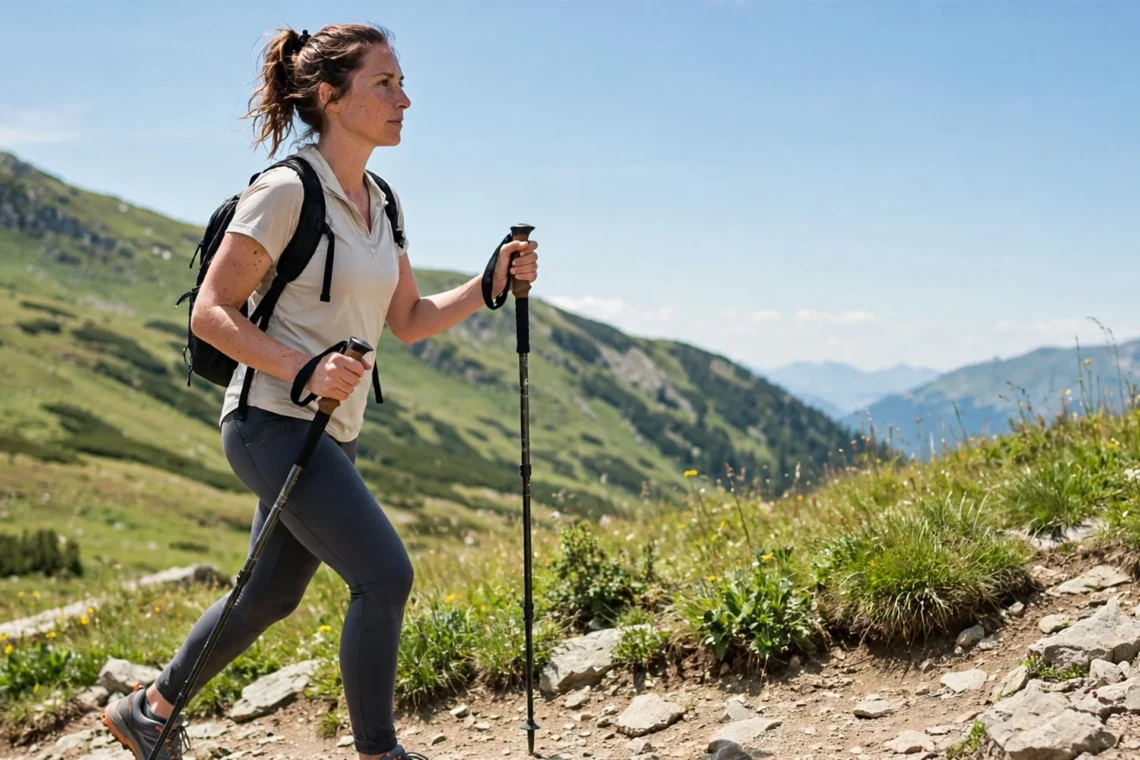
Summer hiking is hot, sweaty, and hard on your legs. The wrong leggings make it worse — they cling when they are wet, rub in the wrong places, and slide down every time you climb. The right ones disappear on the trail. You forget you are wearing them, and that is exactly the point. This guide explains how to choose summer hiking leggings women: fabric, fit, sun protection, pockets, and durability. It is not a fashion list. It covers day hikes and multi-day trips, on maintained trails and rougher ground, in warm and hot weather. By the end, you will know what to look for, what to avoid, how leggings compare with hiking pants, and a few example models to start from, with prices given as ranges only.
Quick Answer
For summer hiking, choose women’s leggings in a nylon or polyester blend with spandex, UPF 50+ sun protection, flatlock seams, a high-rise waistband, and real pockets. Avoid cotton and fleece-lined pairs in hot weather.
Quick-Guide Table
| Hike type | Best choice | What to check |
| Day hike, maintained trail | Lightweight nylon or polyester leggings, UPF 50+ | Side pockets, flatlock seams |
| Multi-day hike | Durable blend, reinforced knees, quick-dry fabric | Odor-control finish; wash between days |
| Rocky scramble, alpine trail | Abrasion-resistant leggings or hiking pants | Reinforced panels, gusseted crotch |
| Hot, exposed ridge | Full-length UPF 50+ leggings, light colors, thin fabric | Sunscreen on face, neck, and arms |
| Light rain or mist | DWR-finish leggings; carry rain pants | Quick-dry matters more than water resistance |
| Buggy or tick country | Close-woven hiking pants, not leggings | Tuck legs in; check for ticks after |
| Cool mornings, shoulder season | Leggings over a base layer, or a fleece-lined pair | Only for cool weather, not summer heat |
Helpful List: Before You Buy: A Quick Checklist
- Check the fabric label — nylon or polyester with spandex; no cotton in the blend
- Check the UPF rating — look for UPF 50+ on the label, not just in the marketing
- Check the seams — flatlock seams that lie flat, plus a gusseted crotch
- Test the pockets — put your phone in the side pocket, walk, climb stairs, and sit
- Test the opacity — bend forward in the fitting room; the fabric should stay opaque
- Try them with your pack — squat and climb to check the waistband stays put
- Check the size chart and returns — sizes vary by brand, so buy where you can exchange
Why Leggings Work So Well On Summer Trails
Leggings work on summer trails because they move with you. The stretch follows your body on high steps, steep switchbacks, and scrambles over rock, without pulling tight or holding you back. There is no bulky waistband or belt digging in under a pack hip belt, and no loose fabric flapping in the heat. On a long climb, that freedom matters more than it sounds.
Comfort is the second reason. Flat seams and a close fit reduce chafing on long days, unlike loose shorts that rub the inner thighs raw by the afternoon. A snug pair stays in place, so you are not adjusting it every few minutes on the trail.
Coverage is the third. Full-length leggings protect your legs from sun, light brush, and insects better than shorts, without the weight of a full hiking pant. On a hot day on an exposed ridge, that cover is worth a lot. The honest limit is durability: leggings are not the toughest option. Thin knit snags on brambles and scrapes on granite, so the trail you hike matters. Leggings are a comfort choice, and they work best when the fabric and the fit are right.
What Makes A Legging A Hiking Legging?
Not every pair of leggings belongs on a trail. Hiking leggings are built for the outdoors, while ordinary yoga or fashion leggings are built for indoors. The difference is in the features, and there are six that matter most.
First, moisture-wicking fabric that pulls sweat away from your skin and dries fast. Second, four-way stretch, so the fabric moves in every direction and snaps back instead of bagging at the knees. Third, flatlock seams that lie flat against your skin instead of standing up in a ridge — the difference between a happy descent and raw, rubbed thighs. Fourth, a high-rise, wide waistband that sits above the hips and stays put under a pack. Fifth, a gusseted crotch, a shaped panel that gives you freedom on big steps and scrambles. Sixth, opaque fabric that stays opaque when you bend, squat, or fold forward.
On durability, some models add reinforced knees and seat panels, an abrasion-resistant knit, or a DWR finish that sheds light rain. A quick test tells you whether a pair is a real hiking legging: if it has no pockets, no sun rating, and cotton in the blend, it is not one. Keep this list as your checklist — the rest of this article builds on it.
The Best Fabrics For Hot Weather
Fabric decides how a legging feels on a hot day more than anything else. The best summer blends are nylon or polyester mixed with spandex or elastane. Nylon is strong and abrasion-resistant. Polyester is light, quick-drying, and holds its shape. Spandex or elastane gives the stretch. Together they make a knit that wicks sweat away from your skin, dries fast when you stop, and moves with you on the trail.
That wicking is what keeps you cool. Sweat that sits on your skin makes you feel sticky and hot, and wet fabric against skin is what causes chafing. A good synthetic blend moves the moisture out, so you stay drier and more comfortable on a long climb.
The cotton rule is plain: do not hike in cotton leggings. Cotton traps heat and moisture, stays wet for hours, and causes chafing. A cotton blend is no better — even a small amount of cotton slows drying and holds sweat against your skin.
Merino wool is worth a brief mention. It breathes naturally and resists odor better than synthetics, which is why some hikers love it. But it dries more slowly and usually feels warmer than a synthetic knit, so it is less common for hot days and more useful in cooler weather.
Fabric weight matters too. Lightweight knits breathe better in summer, while heavy or fleece-lined fabric overheats quickly — fleece lining starts to feel too warm above about 50°F (10°C). When you shop, read the fabric label before the price tag. The label tells you more about how a pair will feel on the trail than the brand name does.
How To Get The Fit Right
Fit is where most hiking leggings fail, and it is the easiest thing to get right if you try before you buy. Start with rise. High-rise leggings sit above the hips and stay put under a loaded pack hip belt, so you are never tugging your waistline back into place on a climb. Low-rise pairs slip, bunch, and need constant adjusting.
The waistband should be wide and soft. A wide band spreads the pressure and stays comfortable for hours, while a narrow band digs in. A drawcord gives a more personal fit and stops the waistband rolling down on steep climbs — a small feature that makes a real difference.
On compression, aim for snug and supportive, not tight. A close fit reduces chafing and bunching and gives you a full range of motion. Too tight restricts your steps and feels hot; too loose bags at the knees and slides down. The right pair feels like a second skin without squeezing.
Length is a personal choice. Full-length leggings give the most sun and brush protection. Capri or 7/8 length feels cooler on the hottest days and suits hikers who run hot. Where a brand offers inseam options — short, regular, and tall — use them, because a legging that is too long bunches at the ankle and one that is too short rides up.
Try leggings on with your pack and hiking shoes, and does a test walk with stairs before a long hike. Squat, climb, and sit — if anything pulls, slips, or digs in, it will only get worse on the trail. Sizes vary from brand to brand, so trust the fit, not the label.
Pockets: What To Look For
Pockets change the whole hike. A phone, keys, trail snacks, and a map should be within reach without taking your pack off. On a trail, that means you take more photos, check the map more often, and stop less.
The useful types are simple. Deep side thigh pockets hold a phone flat and secure — the best place for it on a hike. A zippered pocket keeps keys and cards safe, so nothing falls out on a scramble. A small waistband pocket is handy for cash or a lip balm. Some models have one pocket, some have six or seven, and more is not always better: pockets that pull, bounce, or sit in the wrong place are worse than no pocket at all.
Does the phone test before you buy. Put your phone in the side pocket, then walk, climb a few stairs, and sit down. It should stay flat and secure through all of it, without bouncing or pressing into your leg. If a pair has no pockets at all, carry a small waist pack or choose another pair. On a long day, you will miss them.
Sun, Sweat, And Skin: Staying Comfortable In The Heat
Sun is the quiet problem on summer trails. Tightly woven summer fabrics with a UPF 50+ rating shield your legs from UV on exposed ridges without needing constant sunscreen reapplication on your legs. Check the rating on the label, not the marketing — a pair that claims sun protection without a UPF number has not been tested to a standard.
Sweat management comes next. Moisture-wicking fabric does most of the work, and some models add mesh panels or ventilation in the waistband or behind the knees to keep you drier on steep climbs. On a long ascent, that airflow is the difference between damp and soaked.
Chafing is the problem that ends hikes early. Flatlock seams, a gusseted crotch, and a snug fit prevent the rubbing that ruins long descents. Anti-chafe balm is a useful backup, but it is not a fix for bad seams — if the seams are the problem, the pair is the problem.
Leggings cover your legs, but sunscreen is still needed on your face, neck, arms, and any exposed skin. And on very hot days, lighter colors and thinner fabric feel cooler, while dark, heavy fabric absorbs heat. Choose the color for the weather, not just for the look.
Leggings Vs Hiking Pants: Which One For Your Trail
This is the honest comparison, and there is no single winner. Leggings win on comfort, stretch, and freedom of movement. They feel lighter, move better on high steps, and never need a belt. Pants win on protection and durability. A woven pant takes brambles, bark, and granite far better than a thin stretch knit, and many add reinforced knees and seat panels on top of that.
Trail type decides it. On well-kept trails and day hikes, either works or comfort decides — pick the one you enjoy wearing. On brush, scrambling, or off-trail routes, pants are the safer choice, because a woven fabric slides off brambles that would hook and run a thread in a knit legging.
Bugs and ticks push the same way. A close-woven pant protects better, since tight knit stretches as you move and opens its pores, letting small insects through more easily. In tick country, pants with the legs tucked in are the careful choice.
Weather matters too. Long wet days favor quick-drying fabric and dry layers waiting at camp, whichever bottom you choose. Cold days need fleece-lined leggings or pants over a base layer. The verdict is simple: choose by the trail, not by habit. Many experienced hikers own both and pick per trip — leggings for the smooth summer day hike, pants for the rough one.
Are Hiking Leggings Waterproof?
No. Hiking leggings are not waterproof, and no legging keeps you dry in real rain. That is the direct answer, and it is worth stating plainly, because many listings blur it.
What most listings mean is DWR, a durable water repellent finish. DWR makes light rain and mist bead and roll off the fabric instead of soaking in straight away. It helps in a drizzle and on a dewy morning. But it wears off with washing, and it does not hold up in a downpour — once the fabric is wet through, it stays wet until the rain stops and the sun comes out.
What matters more in rain is quick-drying fabric. A nylon or polyester knit dries fast once the rain stops, so wet legs are a short problem rather than a day-long one. Cotton, by contrast, stays wet for hours and chills you.
For long wet days or multi-day trips, carry rain pants and layer them over your leggings. They pack small, weigh little, and turn a miserable wet day into a manageable one. And when you see “hiking leggings waterproof” in a search or a listing, read it as DWR or water-resistant, not truly waterproof. Do not trust a listing that claims full waterproofing for a knit legging.
Examples Worth A Look
These are example models only — not a ranked best list, and not tested recommendations. Prices change, so check the official brand site before buying, and treat every price as a range.
The Fjällräven Abisko Trail Tights are a common favorite for rough ground, with reinforced knees and seat, a UPF 50 rating, and two leg pockets plus a small zippered pocket. They suit hikers who want durability first. The REI Co-op Active Pursuits are a lighter option with UPF 50 fabric and flat seams built to prevent chafing, suited to long warm days. The Lululemon Cargo Super-High-Rise Hiking Tight uses abrasion-resistant, four-way stretch fabric that is sweat-wicking and quick-drying, with cargo pockets for the trail.
The Patagonia Maipo 7/8 Stash Tights are made from recycled nylon with drop-in side pockets, a good pick for day hikes where you want a lighter, more versatile pair. The Athleta Headlands Hybrid Cargo II Tight offers UPF 50+ sun protection, abrasion-resistant recycled nylon panels, six pockets, and a water-repellent finish, and it transitions easily into casual travel wear. The Arc’teryx Essent has an abrasion-resistant knit, a breathable mesh waistband with an adjustable drawcord, and two roomy thigh pockets, suited to rugged alpine trails and high-output summer scrambles.
For lighter days, the Sprayway Escape is a budget-friendly option with a UPF 50+ rating and a cooling four-way stretch fabric, while the Salomon Cross Multi Tight is an ultralight, quick-drying pair with a wide high waistband for warm-weather day hikes and fast trail walking. On the budget end, BALEAF and Ewedoos are commonly named options with UPF 50+ and pockets, usually at a much lower price than the premium brands. Model names and prices change, so verify on the official site before buying, and buy the pair that fits your trail, not the one with the most reviews.
The Honest Downsides
Some people say hiking in leggings is disgusting, and it is worth answering that honestly instead of ignoring it. Yes, leggings can get sweaty, smelly, and see-through — but only the wrong ones do.
Sweat and smell are the first complaint. Synthetic fabric holds odor after long, hot days, especially if you wear the same pair for several days without washing. The fix is simple: wash after each hike, and look for odor-control finishes where they are offered. Merino blends resist odor better, but dry more slowly.
See-through fabric is the second. Thin, cheap knit goes sheer when you bend, squat, or stretch, and that is a real problem on the trail. Check opacity before buying — bend forward in the fitting room, or hold the fabric up to the light. Thicker technical fabric stays opaque through every angle.
Snags and pilling are the third. Thin knit catches on brambles and rock, and pills where pack straps rub. Reinforced panels help, but pants are simply tougher, and on rough ground that matters. The fit problem is the last: the wrong size bags at the knees, rolls at the waist, or digs in at the hips. All of it is fixable by trying before you buy. The downsides are real, but they come from the wrong pair, not from leggings in general.
Common Mistakes To Avoid When Buying Summer Hiking Leggings
Most bad purchases come from a short list of avoidable mistakes.
Buying cotton or cotton-blend leggings for the trail is the first. They stay wet, they chafe, and they take hours to dry. Buying fleece-lined leggings for summer is the second — they overheat fast in warm weather and belong in winter. Choosing by looks alone is the third: a pair with no pockets, no sun rating, and thin fabric may look good in the shop and fail on the first climb.
Buying the wrong size online without checking the size chart or the return policy is the fourth, because sizes vary so much between brands. Skipping a test walk with your pack before a long hike is the fifth — a small problem in the shop becomes a big one on mile ten. Assuming one pair works for every season is the sixth: winter needs a different, fleece-lined pair, and this article is about summer. And trusting a “waterproof” claim on a legging listing is the last — check whether it means DWR or a real waterproof layer, because the two are not the same.
Conclusion
The right summer hiking leggings for women are a nylon or polyester blend with UPF 50+, flatlock seams, a high-rise waistband, and real pockets — chosen for your trail, not for the label. Check the fabric label, try the fit with your pack, and pick leggings or pants by the trail you are actually hiking. Comfort and protection will carry you further than fashion ever will, and the best pair is the one you forget you are wearing.
FAQ’s:
Are Hiking Leggings Good For Summer?
Yes, if they are made from a breathable nylon or polyester blend with UPF 50+ sun protection. Avoid cotton and fleece-lined leggings, which trap heat and stay wet on summer trails.
Are Hiking Leggings Waterproof?
No, hiking leggings are not waterproof. A DWR finish sheds light rain and mist, but it wears off with washing and fails in a downpour, so carry rain pants for wet days.
Can I Wear Yoga Leggings For Hiking?
Not really. Yoga leggings are thin, snag easily, and often contain cotton, which stays wet and chafes. Non-cotton yoga leggings are fine only for short, easy walks on smooth trails.
Should I Wear Leggings Or Hiking Pants?
On smooth, maintained trails either works or comfort decides. For brush, scrambling, off-trail routes, or tick country, hiking pants protect better because woven fabric resists snags and bites.
How Do I Stop Leggings From Chafing?
Choose leggings with flatlock seams, a snug fit, and a gusseted crotch, which stop the rubbing that causes chafing. Anti-chafe balm helps as a backup, but it cannot fix bad seams.
Disclaimer
This article is for general information only, and travel conditions, prices, entry requirements, and opening times can change, so please check official travel advice and official sources before you travel. Travel3Ways is an independent travel information website and is not affiliated with any tourism board, airline, hotel, or booking service, and it was created only to provide helpful information to visitors and does not engage in paid promotions or advertising.



2 Comments on “Summer Hiking Leggings For Women: How To Choose The Right Pair For Hot Trails”