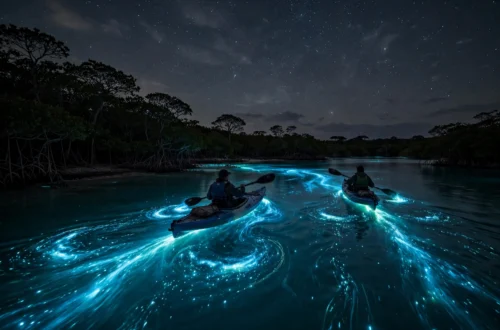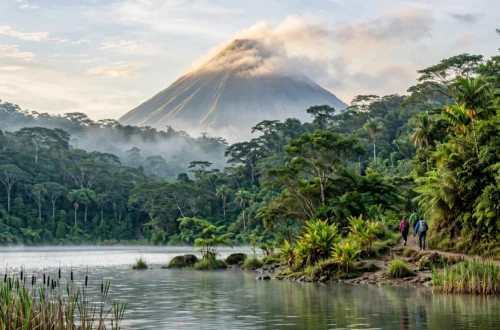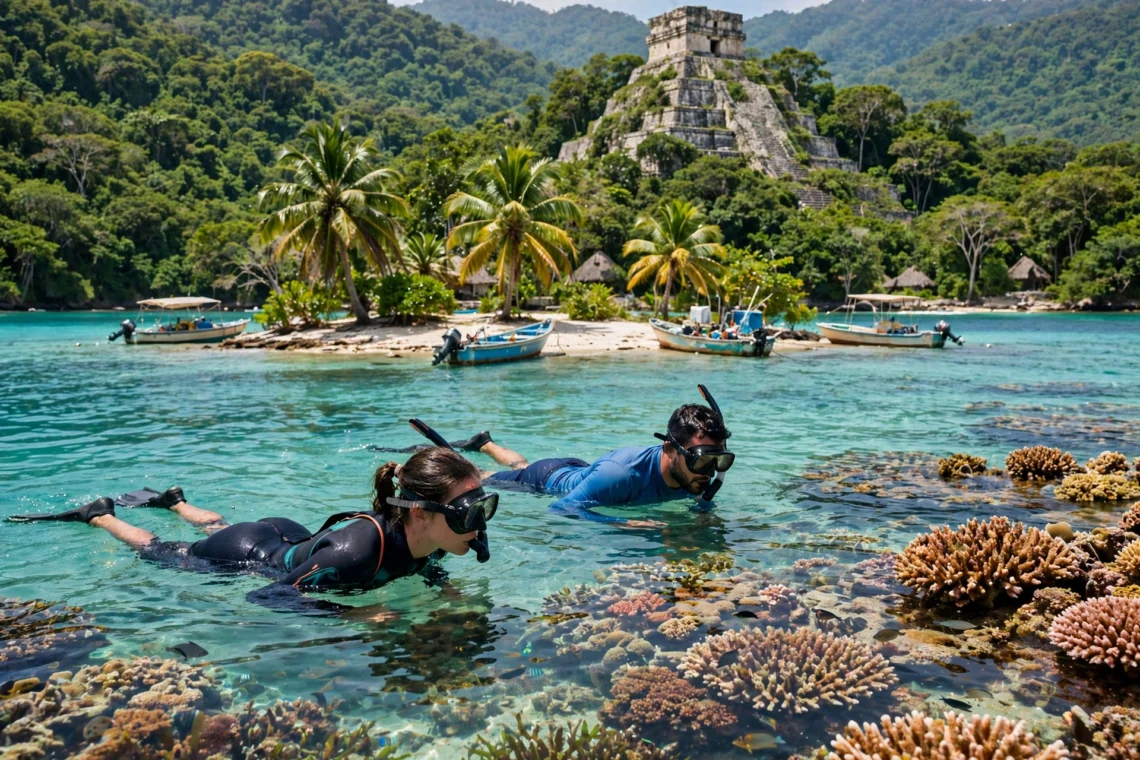
Belize is one of those rare destinations where you do not have to choose between a beach holiday and an adventure trip. In a country smaller than many American states, you can snorkel over a world-class reef in the morning, explore a Maya city in the jungle a few days later, and finish with quiet beach days on the southern coast. Add English as the official language, and it becomes one of the easiest Central American countries for a first-time visitor to navigate.
This Belize travel guide is written for first-time visitors who want a balanced trip, not just a beach stay and not just a ruins tour. It covers the best time to visit, where to base yourself, how to get around, what a trip costs, and what to watch out for, so you can plan with confidence and spend less time worrying about logistics once you arrive.
Quick Answer
For a first Belize trip, split time between San Ignacio for Maya ruins and caves, and Ambergris Caye or Caye Caulker for reef trips. Check advisories, prices, and transport before booking.
Quick-Guide Table
| Possible problem | What to check | Recommended action |
| Trip feels rushed | Number of bases and travel time between them | Pick two or three bases and allow a full day for each move |
| Reef trip is fully booked | Tour availability, especially in peak season | Book reef and cave tours early, and keep a backup day |
| Island costs surprise you | Accommodation, tour, and transport prices for the cayes | Compare mainland and island prices before choosing where to stay longer |
| Safety advice is unclear | Latest official travel advisory and local hotel advice | Follow current guidance, use trusted transport after dark, and avoid isolated areas late at night |
| Old prices or times do not match | Date of the guide and current operator information | Confirm prices, schedules, and inclusions directly with the operator before booking |
Helpful Steps: Plan A First Belize Trip
- Choose two or three bases that match your interests, such as San Ignacio, a caye, and the south coast.
- Check the latest travel advisory, entry requirements, and seasonal weather before booking.
- Book flights, reef tours, cave tours, and accommodation early in peak season.
- Arrange transport between bases, including water taxis, domestic flights, or rental cars where needed.
- Pack for reef and jungle days, including reef-safe sunscreen, insect repellent, and a dry bag.
- Recheck weather, schedules, and tour inclusions on the day of travel.
Belize At A Glance: What To Know Before You Go
Belize sits on the Caribbean coast of Central America, between Mexico to the north and Guatemala to the west and south. Despite its small size, it feels both Caribbean and Central American. The offshore islands, called cayes, have a relaxed island rhythm, while the mainland is covered in jungle, dotted with Maya sites, and shaped by rivers, caves, and mountain pine forest.
English is the official language, which makes signs, menus, tours, and everyday conversations much easier than in many neighbouring countries. Spanish and Belizean Creole, known as Kriol, are also widely spoken, and you will hear them often in towns, markets, and villages.
The currency is the Belize dollar, pegged at two Belize dollars to one US dollar. US dollars are widely accepted in tourist areas, but you should still carry some local cash, especially outside main towns. Small shops, local buses, market stalls, and remote lodges may not take cards, and ATMs are not always nearby. It is sensible to keep a small amount of cash separate from your main wallet, and to check card fees with your bank before you travel.
Entry requirements depend on your nationality, and they can change, so check the current official guidance before you book. Many visitors from the United States, Canada, the United Kingdom, and the European Union can enter for a short tourist stay with a valid passport and no visa, but you should confirm the length of stay and any arrival form required for your trip. Belize suits a combined reef-and-jungle trip better than a single-base holiday, because its highlights are spread across islands, coast, and inland districts. Trying to see everything from one base means long travel days. Choosing two or three bases is usually much more rewarding.
When Is The Best Time To Visit Belize?
Belize has a tropical climate with a dry season and a wet season, and the difference matters for planning. The dry season generally runs from late November to April, with sunnier days, calmer seas, and better conditions for snorkelling and diving. This is also peak season, especially from December through February, when prices are highest and popular hotels and tours on the cayes book out early.
The wet season runs roughly from May to October. Rain often falls in short, heavy showers rather than all day, and the jungle becomes greener and lusher. Prices drop, crowds thin out, and you may find better deals on accommodation and tours. The trade-off is higher humidity, rougher seas at times, and a greater risk of tropical storms, particularly from August to October. The shoulder months of May to July can be a good compromise for flexible travellers who do not mind some rain.
How to choose dates depends on your trip type. Divers and snorkellers usually prefer the dry season for calmer seas and clearer visibility. Ruins and jungle trips work well in either season, though trails can be muddier in the wet months. If you mainly want a relaxed beach stay and are flexible about weather, the shoulder or wet season can offer good value. Whatever season you choose, book early for peak months, and allow extra buffer time for weather delays in the wetter months.
Where To Go In Belize: Cayes, Cayo, And The South Coast
Belize’s highlights fall into three broad areas, and most first trips combine at least two of them.
The northern cayes are the go-to bases for reef adventures. Ambergris Caye, the largest island, is home to San Pedro, a busy town with resorts, restaurants, nightlife, and easy access to reef excursions. It suits travellers who want comfort, choice, and a livelier atmosphere. Caye Caulker, a short water-taxi ride away, is smaller and slower, with a laid-back feel, budget-friendly guesthouses, and a famous motto to “go slow.” It is split by a narrow water channel called The Split, where people swim, relax, and watch the sunset.
The Cayo District, around San Ignacio, is the inland adventure centre. From here you can visit Maya sites, explore caves, hike through jungle and pine forest, and enjoy river activities. San Ignacio itself is a friendly market town with a good range of hotels, restaurants, and tour operators, making it a practical base for several days.
The southern coast offers a quieter pace. Placencia is a narrow beach peninsula with boutique lodges, fishing villages, and calm beaches, ideal for travellers who want to slow down after busier days. Hopkins, a Garifuna village further north along the coast, is the best place to experience Garifuna culture through music, drumming, and food, and it is close to the Cockscomb Basin Wildlife Sanctuary, a large protected area known for jungle trails and wildlife.
Choose bases by interest, not by trying to stay everywhere. Reef lovers should spend more time on the cayes. History and adventure lovers should spend more time inland. Travellers who want a mix should split their time, and those who want rest should add the south coast at the end.
Getting To Belize And Getting Around
Most international visitors arrive through Philip S. W. Goldson International Airport (BZE), near Belize City. From there, you connect onward by domestic flight, water taxi, shuttle, bus, or rental car, depending on your first base.
Domestic flights, run mainly by Tropic Air and Maya Island Air, are the fastest way to reach the cayes and Placencia. A flight to San Pedro takes only about fifteen minutes, compared with a longer road and water-taxi journey. Water taxis are the affordable alternative to the cayes, running regularly from Belize City to Caye Caulker and San Pedro. They are a good experience in themselves, but allow extra time for connections and weather delays.
On the mainland, rental cars give the most freedom, especially around San Ignacio and the southern coast. Roads on main highways are generally paved, but rural roads can be rough, unpaved, and slow, particularly in the wet season. A four-wheel-drive vehicle is useful for remote areas, but not essential for main routes. Buses are cheap and widely used, though timetables can be flexible and journeys can be slow. Private and shared shuttles are a comfortable middle option on popular routes, such as airport to San Ignacio or Belize City to Placencia.
On the cayes, golf carts, not rental cars, are the norm. Ambergris Caye and Caye Caulker are small, and most places are reached on foot, by bicycle, or by golf cart. This is part of their charm, but it also means you should not expect to drive yourself around the islands in a car.
Belize City works best as a transport hub for most visitors, not as a long base. It is the arrival point and the departure point for water taxis and domestic flights, but most travellers move on quickly to the cayes, San Ignacio, or the south coast. If you do stay in Belize City, ask your hotel which areas are sensible to visit, and take extra care at night.
A Simple Belize Itinerary For 7 To 10 Days
A balanced Belize itinerary usually follows a “surf and turf” split: part inland, part island. A common shape is to start inland and finish on the coast, though the reverse works too if your flights suit it better.
For seven to ten days, a simple plan is three or four nights in San Ignacio, followed by three or four nights on Ambergris Caye or Caye Caulker. Inland days can cover a Maya site such as Xunantunich, a cave or river trip, and a jungle walk or waterfall visit. Island days can focus on a full reef snorkelling trip, a relaxed beach day, and time exploring town by golf cart or on foot. A Tahiti travel guide covers another Pacific island option for lagoon trips.
If you have fourteen days, you can add Placencia or Hopkins for quieter beach days and Garifuna culture, or add a longer dive trip, including the Great Blue Hole for experienced divers. You can also add a second Maya site, such as Caracol, which needs a full day and a guided trip because of its remote location.
Couples travelling together often prefer a slower version of the same plan. Quieter bases, such as Caye Caulker or Placencia, private tours instead of large group trips, and fewer base changes can make the trip feel more relaxed without turning it into a special honeymoon package. The key is the same for everyone: fewer bases, more time in each place, and at least one completely unplanned day.
Top Things To Do In Belize
Snorkelling and diving are the headline activities. A Hawaii travel guide covers another reef and island option for snorkeling. Hol Chan Marine Reserve, just off Ambergris Caye and Caye Caulker, is one of the easiest and most rewarding reef trips in Belize. Nearby Shark Ray Alley is known for nurse sharks and stingrays, and the wider Belize Barrier Reef, the second-largest barrier reef system in the world, offers coral gardens, turtles, and colourful fish. The Great Blue Hole, a large underwater sinkhole, is a famous dive for experienced divers, while others can see its circular shape from the air on a scenic flight.
Maya sites are the inland highlight. Xunantunich, near San Ignacio, is one of the most visited sites, with a tall main temple offering views across the jungle and into Guatemala. Cahal Pech, also near San Ignacio, is smaller and quieter, while Caracol, deep in the jungle, is the largest Maya site in Belize and needs a full-day guided trip. Guides add a lot of value at these sites, explaining history, carvings, and jungle context that you would otherwise miss.
The Actun Tunichil Muknal Cave, known as the ATM Cave, is widely considered one of the world’s great adventure experiences. It is a guided trek that involves swimming and wading through an underground river to reach chambers containing ancient Maya pottery and skeletal remains. It requires a licensed guide, good fitness, and a willingness to get wet and climb through tight spaces. It is not suitable for everyone, and you should check fitness and age requirements with your tour operator before booking.
Jungle activities round out the trip. Cave tubing on rivers near San Ignacio, zip-lining through forest canopy, river trips, waterfall swims, and wildlife walks all work well as half-day or full-day trips. Cockscomb Basin Wildlife Sanctuary, near Hopkins, offers jungle trails, river pools, and a chance to learn about jaguar conservation, though jaguars themselves are rarely seen. These activities are best done with established operators who know the rivers, trails, and weather conditions.
How Much Does A Belize Trip Cost?
Belize is more expensive than many neighbouring countries, and that surprises some visitors. Accommodation, tours, and transport, especially on the islands, cost more than in Mexico or Guatemala. Island prices also run higher than mainland prices, because almost everything must be brought in by boat or plane.
Daily budgets vary by travel style, and prices change, so treat any figure as a guide, not a promise. As a rough guide, budget travellers using hostels, guesthouses, local buses, and street food might spend around fifty to eighty US dollars per person per day, excluding international flights. Mid-range travellers staying in comfortable hotels and taking a few paid tours might spend around one hundred fifty to two hundred thirty dollars per day. Luxury travellers in resorts with private tours and diving can spend three hundred fifty dollars or more per day. These ranges exclude international flights and major splurges, and they rise in peak season.
The main cost drivers are accommodation, tours, transport between bases, and reef trips. A full-day snorkelling tour, an ATM Cave trip, and a Great Blue Hole dive are all significant expenses, but they are also the experiences most visitors remember. Transport between bases, especially domestic flights and private shuttles, can add up if you change bases often.
Money-saving habits that do not cut safety include booking early in peak season, choosing bases wisely, and comparing tour operators. Staying in one place for several nights is usually cheaper than moving every night, because you save on transport and can negotiate better rates. Cooking some meals, choosing local restaurants over resort dining, and travelling in the shoulder season can also help, without skipping the experiences that make Belize special.
Is Belize Safe? Practical Safety Advice
Safety is one of the most common questions about Belize, and it deserves a balanced answer. Official travel guidance generally advises visitors to exercise increased caution in Belize because of crime, with a higher level of concern for parts of Belize City, particularly the south side, especially at night. This guidance can change, so check the latest official advisory for your country before departure, and follow local advice once you arrive.
Most violent crime in Belize is concentrated in specific areas and is often gang-related, rather than aimed at tourists. Tourist areas such as the cayes, Placencia, Hopkins, and San Ignacio are generally visited safely with normal precautions, but petty theft, traffic risks, and ocean hazards are real concerns everywhere. Do not let a relaxed island atmosphere make you careless with valuables, bags, or phones.
Safe habits make a big difference. Keep valuables discreet, avoid carrying large amounts of cash, and use trusted transport after dark, such as hotel-arranged taxis or shuttles. Avoid walking alone in unfamiliar or poorly lit areas late at night, and do not leave valuables visible in vehicles or on beaches. Use established tour operators for caves, diving, reef trips, and remote jungle visits, and follow their safety briefings closely.
Health and nature basics also matter. Use insect repellent, especially around dawn and dusk, because mosquito-borne illnesses such as dengue can occur. Wear reef-safe sunscreen, drink bottled or filtered water where recommended, and take care in strong currents and on boat trips. If you need help, Belize’s emergency number is 911, and your hotel can usually connect you with local assistance faster than a general helpline. Travel insurance that covers medical emergencies and trip disruption is strongly recommended.
Common Mistakes To Avoid In Belize
The most common mistake is trying to cover the whole country in a few days. Belize looks small on a map, but travel between inland bases, the coast, and the cayes takes time. Changing bases every night leaves you tired and means you see transport hubs more than highlights. Pick two or three bases and give each one proper time.
Another mistake is relying on outdated information. Prices, schedules, and services change, and a guidebook or blog post from 2022 may no longer reflect current costs, ferry times, or tour availability. Use recent sources, confirm prices and times with operators, and be wary of articles that promise exact fares without a date.
A third mistake is assuming a tour or package includes everything. Some tours include transport, park fees, lunch, and equipment, while others do not. Read what is actually covered before you book, and ask about extras such as marine park fees, tips, and transport to the departure point. This avoids surprises on the day.
Finally, do not underestimate travel time. A journey from San Ignacio to the cayes involves a road transfer plus a water taxi or flight, and connections do not always line up neatly. Allow buffer time, especially on departure days, and avoid booking a tight international flight immediately after a long internal transfer.
Practical Tips For A Smooth Belize Trip
Packing well makes a Belize trip much smoother. For reef days, bring swimwear, a rash guard, reef-safe sunscreen, and a dry bag for your phone and camera. For jungle days, bring light, quick-drying clothes, sturdy walking shoes or sandals with grip, insect repellent, and a reusable water bottle. For boat trips, pack light and keep valuables in a waterproof pouch.
Staying connected is usually straightforward in towns and on the cayes, where hotels and restaurants offer Wi-Fi, but signal can be weak in remote jungle areas. Download offline maps, save hotel addresses and booking confirmations on your phone, and consider a local SIM or eSIM if you need reliable data for navigation and messaging.
Respect local communities, Maya sites, caves, and marine reserves. Follow guide instructions, do not touch coral or remove artefacts, and stay on marked trails. In villages, ask before taking photos of people, support local businesses where you can, and learn a few basics about Garifuna, Maya, and Creole culture. These small courtesies are appreciated and make the trip richer.
Use a local guide or tour operator for caves, diving, and remote areas, rather than going alone. The ATM Cave, for example, can only be visited with a licensed guide, and many jungle and reef trips are safer and more informative with someone who knows the area. For simple town walks, beach days, and well-marked trails, independent exploring is perfectly fine.
Conclusion
The simple formula for a first Belize trip is easy to remember. Pick two or three bases, split your time between jungle and reef, and leave room to slow down. San Ignacio for ruins and caves, plus Ambergris Caye or Caye Caulker for reef time, gives you the heart of Belize in seven to ten days. Add Placencia or Hopkins if you have more time and want a quieter finish.
Before you finalize plans, check current travel advisories, prices, and schedules, because these change. Book early in peak season, choose established operators for caves and diving, and allow buffer time for travel between bases.
Belize rewards travelers who plan the basics well and then let the reef, ruins, and jungle set the pace. With a balanced itinerary and a little flexibility, you will come home with a trip that feels both adventurous and unhurried, and with a clear sense of why this small country leaves such a lasting impression.
FAQ’s:
What Is The Best Time To Visit Belize?
Late November to April usually offers drier weather and calmer seas, but prices are higher and popular places book out early, so plan ahead.
Do I Need A Visa To Visit Belize?
It depends on your nationality. Many visitors from the USA, Canada, the UK, and the EU can enter for a short tourist stay with a valid passport, but check current official requirements first.
Is Belize City Worth Staying In For Several Days?
For most visitors, no. Belize City works best as a transport hub for flights and water taxis, with longer stays in San Ignacio, the cayes, or the south coast.
Can I Visit The Atm Cave Without A Guide?
No. The ATM Cave can only be visited with a licensed guide, and the trek involves swimming, wading, and climbing, so check fitness requirements before booking.
How Long Should A First Belize Trip Be?
Seven to ten days works well for a first trip, giving time for inland ruins and caves plus reef days, without changing bases every night.
Disclaimer
This article is for general travel information only. Travel advisories, entry requirements, prices, schedules, and tour conditions change, so please check current official and operator information before booking. Travel3Ways is not an official tourism authority or tour operator and is not affiliated with any carrier, hotel, or tour company mentioned here.