
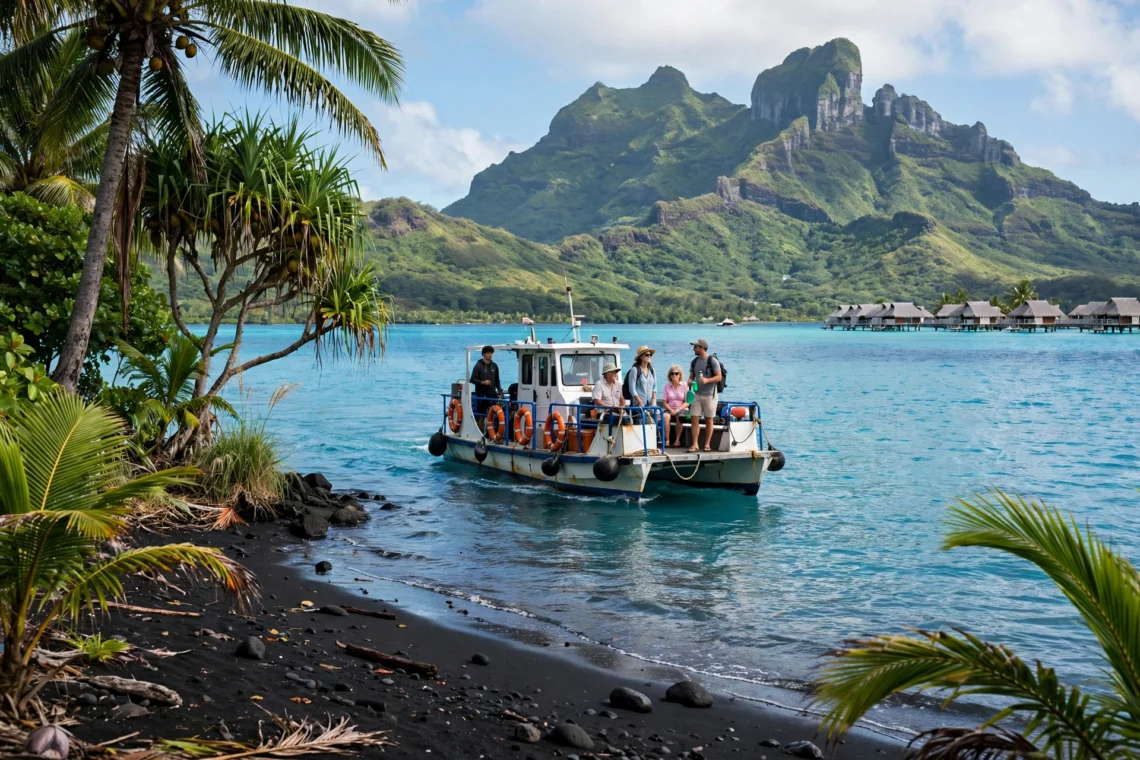
Tahiti is one of those places that looks simple in photos and turns out to be more interesting once you start planning. The name itself can be confusing. Tahiti is the largest island in French Polynesia, with its capital, Papeete, and its international airport. It is also the name many people use for the whole of French Polynesia, a spread of 118 islands and atolls across five archipelagos in the South Pacific.
This tahiti travel guide is written for a first trip. It is for first-time visitors, honeymooners, and travellers who want to combine Tahiti with Moorea and Bora Bora without rushing from island to island. It is not a list of beaches. It answers the practical questions that decide whether a trip works: where Tahiti is, when to go, how to get there, where to stay, what it costs, what to do, and how to plan it safely.
Quick Answer
Tahiti is French Polynesia’s largest island and gateway, best visited May to October. Start in Papeete, combine it with Moorea, add Bora Bora if budget allows, and check flights, ferry times, prices and entry rules before booking.
Quick-Guide Table
| Possible problem | What to check | Recommended action |
| Confusing “Tahiti” with all of French Polynesia | Which island your hotel and flight actually serve | Plan by island name — Tahiti, Moorea, Bora Bora — not by “Tahiti” alone |
| Trip costs much more than expected | What the room rate includes, and transfer costs | Budget transfers and meals separately, and compare Moorea with Bora Bora |
| Missed island connection | Ferry and flight times, and weather on the day | Allow a buffer day and spend the night before your international flight on Tahiti island |
| Entry trouble at the airport | Passport validity, onward travel, and current visa rules | Check official entry guidance for your nationality close to travel |
| Bad weather spoils the plan | Season, local forecast, and cyclone advice in the wet season | Travel May–October for the best weather, or keep wet-season plans flexible |
Helpful List — Planning Steps
- Start in Papeete: Book a night there on arrival, as international flights often land late in the evening.
- Pick your season: Choose May–October for the best weather, or May, June, September or October for a balance of weather, crowds and price.
- Choose two or three islands: Tahiti and Moorea for a first trip, plus Bora Bora if the budget allows.
- Compare transport: Check Air Tahiti passes against separate flights, and use the Tahiti–Moorea ferry where it fits.
- Check what is included: Confirm transfers, breakfast and cancellation terms before booking a room.
- Confirm before you pay: Check current flights, ferry times, prices and entry rules, as all of these change.
Where Is Tahiti?
Tahiti sits in the South Pacific, about halfway between Los Angeles and Sydney. It is part of French Polynesia, a French overseas collectivity, and lies in the Society Islands archipelago. The main island is divided into two parts joined by a narrow strip of land: Tahiti Nui, the larger, busier northwest part, and Tahiti Iti, the smaller, quieter peninsula to the southeast.
Papeete, on the northwest coast of Tahiti Nui, is the capital and the centre of daily life. This is where the international airport, the main port, the municipal market, government offices, shops, and most hotels are found. Tahiti Nui also holds the island’s black-sand beaches, waterfalls, valleys, and mountain interior. Tahiti Iti is more rural, with dramatic cliffs, coastal roads, and hiking trails, and it feels a long way from Papeete even though it is part of the same island.
The wider picture matters for planning. French Polynesia covers an ocean area roughly the size of Western Europe, but its total land area is small. The islands are grouped into five archipelagos: the Society Islands, the Tuamotu Islands, the Marquesas, the Austral Islands, and the Gambier Islands. Most first-time visitors see only the Society Islands, and usually only Tahiti, Moorea, and Bora Bora.
Tahiti island has just under 200,000 people, and French Polynesia as a whole has under 300,000. That small population, spread across so much ocean, explains a lot about travel here. Services are concentrated in Papeete and in the main resort islands. On smaller islands, shops, restaurants, and transport are limited, and schedules can be thin.
The official languages are French and Tahitian. English is widely spoken in hotels, resorts, and tourist areas, but less so in small shops and rural villages. A few basic French phrases are useful and are usually welcomed. The local currency is the CFP Franc, known as XPF, which is pegged to the euro. Credit cards are widely accepted at hotels and larger restaurants, while cash is handy for markets, food trucks, and small purchases. Tahiti is behind much of the world in time: it is 10 hours behind Coordinated Universal Time, which means it is several hours behind the west coast of the United States and a full day behind much of Asia and Australia, depending on the date.
How To Get To Tahiti
All international flights land at Faa’a International Airport, known as PPT, about 5 kilometres southwest of central Papeete. There is no other international gateway into French Polynesia, so every trip starts here.
Flights to Tahiti from the USA are the most common route for North American travellers. Direct flights run from Los Angeles and San Francisco, and the flight from Los Angeles takes roughly eight hours. Other direct routes include Paris, Tokyo, Auckland, Honolulu, and several Pacific hubs. A Hawaii travel guide covers another Pacific island chain with similar island-hopping choices. Air Tahiti Nui is the main carrier, with Air France, United, French Bee, and other airlines serving PPT from different cities. Many travellers from Europe fly through Paris or Los Angeles, while travellers from Australia and New Zealand usually fly through Auckland.
Before you book, check three things. First, your passport must be valid for your trip, and many sources recommend at least six months of validity beyond your arrival date. Second, you will usually need proof of onward or return travel. Third, entry rules can change, so check the current official guidance for your nationality close to your travel date. Most trips start with a night in Papeete, and that is sensible. International flights often arrive late in the evening, and domestic flights and ferries to other islands do not run all night. A night in Papeete also gives you time to recover from the long flight, buy supplies, and sort out onward transport in daylight.
When Is The Best Time To Visit Tahiti?
Tahiti has two seasons, not four. The dry season runs from May to October, and the wet season runs from November to April. Temperatures stay warm all year, usually in the mid-20s to around 30 degrees Celsius, but humidity, rain, and sea conditions change with the season.
The dry season offers the best overall weather. Skies are sunnier, humidity is lower, and the southeast trade winds bring cooler air. The water is also clearer in the dry season, which matters for snorkelling and diving. July and August are the driest and brightest months, and they are also the busiest and most expensive. School holidays, festivals, and peak demand all fall in this period, so flights and resorts need to be booked well ahead.
The shoulder months — May, June, September, and October — are often the best balance. You get most of the dry-season weather with fewer people and better prices than in July and August. June in particular tends to be bright and pleasant before the July rush. September and October are also good for whale watching.
The wet season is hotter and more humid, with short, heavy afternoon showers that usually pass within the hour. Landscapes are at their greenest, crowds are smaller, and prices are lower. The main risk is not daily rain but the small chance of a larger storm. The wet season, especially January to March, carries the highest risk of tropical depressions or cyclones, although direct hits are not common. If you travel in the wet season, keep your plans flexible and allow a buffer day.
Whale watching is a strong reason to favour the later dry season. Humpback whales migrate to the warm waters of French Polynesia to mate and give birth, and the season runs roughly from July to November, with the peak for sightings from mid-August to late October. The Heiva festival, a major celebration of dance, song, and sport, takes place in July in Papeete. It brings the islands alive, but it also brings crowds, so book early if you want to be there for it.
Where To Go In Tahiti And French Polynesia
Choosing islands is the most important decision in a Tahiti trip. The islands look similar in photos, but they feel very different in person, and travel between them takes time and money.
Tahiti island itself is the cultural heart. Papeete has the municipal market, the waterfront, food trucks, museums, and shops. The north and east coasts have black-sand beaches, including the beach at Point Venus, with its historic lighthouse. Inland, the Papenoo Valley has waterfalls, lush forest, and volcanic scenery that is best explored on a guided 4×4 tour. The west coast has resorts, white-sand stretches, and the Museum of Tahiti and the Islands. Tahiti Iti, the peninsula, is quieter, with coastal cliffs, hiking trails, and the famous surf break at Teahupo’o.
Moorea is the easiest second island. It is a short ferry ride from Papeete, and it offers the postcard view without the remoteness of Bora Bora. Moorea has sharp green mountains, a calm lagoon, beaches, snorkelling, hiking, and 4×4 tours. It is less developed than Tahiti, and it works well for travellers who want nature and adventure without a long flight.
Bora Bora is the island most people picture when they think of Tahiti. Its lagoon is wide and clear, its central peak, Mount Otemanu, rises above the water, and its overwater bungalows sit on small islets, known as motu, around the lagoon. It is the most romantic and the most expensive island, and it is best for a short, special stay rather than a whole trip.
For a quieter Society Islands experience, Huahine, Raiatea, and Taha’a are worth considering. Huahine has archaeological sites, quiet beaches, and a slower pace. Raiatea is known for its cultural history and as a sailing base. Taha’a is a vanilla-growing island with a calm lagoon and one luxury resort. These islands suit travellers who have already seen Moorea and Bora Bora, or who prefer to avoid the busiest resorts.
The Tuamotu atolls, such as Rangiroa and Tikehau, are different again. They are low, flat atolls with deep passes, clear water, and some of the best shark diving in the world. They are remote, with fewer hotels and restaurants, and they suit divers and travellers who want seclusion. The Marquesas, further away, are volcanic islands without a barrier reef, with dramatic cliffs, waterfalls, and a distinct culture. They are a longer journey and are best left for a second trip.
Choose islands by trip length and travel style, not by photos alone. A short trip should focus on two islands. A longer trip can add a third. Trying to see five islands in a week means spending most of the trip in transit.
Getting Around Between The Islands
Air Tahiti is the main domestic carrier, flying from Faa’a Airport to almost every inhabited island in French Polynesia. Most Society Islands hops take under an hour, while flights to the Marquesas and Tuamotu atolls can take several hours. Air Tahiti offers multi-island passes for travellers combining several stops. A pass can save money, but it is not always cheaper than buying individual flights, so compare the pass price with separate one-way fares before you buy.
The Tahiti to Moorea ferry is the exception to flying. Fast ferries run by Aremiti and Terevau cross from Papeete in 30 to 45 minutes, several times a day. Fares are much lower than a flight, and the ferry is the simplest way to add Moorea to a trip. Ferries to other Society Islands also run, but less often, and schedules change with the season and weather. Check the current timetable before you plan around a ferry, and allow extra time if you have a flight to catch.
Flights to Bora Bora take about 45 minutes from Tahiti, but the journey is longer than the flight time suggests. You need to allow for check-in, the flight, and the boat transfer from Bora Bora airport, which sits on a motu, to your hotel. That transfer can add a few hundred dollars per couple at some resorts, and it is often not included in the room rate. The same applies to other resort islands, where a boat transfer is part of the arrival.
On the islands themselves, transport varies. A rental car is the most flexible way to explore Tahiti and Moorea, where a coastal road circles the island. Cars are also available on Raiatea and other larger islands. On smaller islands, a scooter or bicycle is often enough, and Bora Bora is small enough to explore by bicycle. Buses and taxis operate mainly around Papeete and the west coast of Tahiti. On Moorea, a round-island bus runs from the ferry terminal. On many smaller islands, public transport is limited, and hotels arrange transfers.
Buffer days matter in French Polynesia. Inter-island schedules are thin for some destinations, flights and ferries can be delayed by weather, and a missed connection can cost a day. If you have an international flight home, plan to be back on Tahiti island the night before, rather than trying to connect from another island on the same day.
Is Tahiti Expensive?
The honest answer is yes. Tahiti is a high-cost destination, and the two costs that matter most are accommodation and inter-island travel. Food and activities add up too, but where you sleep and how you move between islands will decide your budget.
For a typical one-week trip for two people, excluding international flights, costs can range from about $4,000 at the lower end to $15,000 or more at the luxury end. A week in a standard hotel on Tahiti island, eating at local food trucks, and using ferries will sit near the lower end. A week in an overwater bungalow on Bora Bora, with fine dining and private lagoon tours, will sit near the upper end. These are broad ranges, and prices change with season, island, and resort.
Accommodation is the biggest variable. Basic guesthouses and small family-run pensions on Tahiti and Moorea can cost roughly $80 to $150 a night. A comfortable mid-range hotel will usually run $200 to $400 a night. Overwater bungalows start at roughly $600 to $900 a night on Tahiti and Moorea, and $900 to $1,500 or more for a better resort or premium category. The well-known Bora Bora motu resorts often start near $1,800 a night and climb steeply in peak weeks and for sunset or end-of-row bungalows. Top suites can cost far more.
A room rate does not always mean what it seems to mean. It usually covers the room, taxes, and often breakfast, but it rarely covers the airport-to-resort boat or air transfer, and resort meals are extra. On Bora Bora, the transfer alone can add a few hundred dollars per couple. Always check what is included before you compare prices.
Food costs vary just as much. Markets, groceries, and roulottes are the cheapest way to eat well. A meal at a food truck in Papeete is far cheaper than dinner at a resort restaurant, and it is often just as good. Resort meals, cocktails, and wine add up fast, especially if you eat every meal at your hotel. A simple plan is to eat breakfast at your hotel if it is included, have lunch at a market or cafe, and choose one special dinner rather than eating at the resort every night.
There are practical ways to control costs without spoiling the trip. Travel in the shoulder months of May, June, September, or October, or in the wet season, when rates can be 20 to 40 percent lower. Stay on Tahiti or Moorea rather than Bora Bora for most of the trip, and save the overwater bungalow for one or two nights. Book flights and hotels well ahead, and look for stay-three-pay-two offers and free-breakfast promotions. Compare an Air Tahiti island pass with separate flights. And book 90 to 150 days ahead when you can, as last-minute prices in peak season are rarely cheaper.
Where To Stay In Tahiti
Where you stay should follow your island plan, not the other way round. Tahiti island offers the widest range, from budget guesthouses to luxury resorts. Papeete has practical hotels for arrival and departure nights, while the west coast has larger resorts with lagoon views and direct access to Moorea across the water. The InterContinental Tahiti Resort and Spa is the main overwater option on Tahiti island itself, and it is often the most affordable way to sleep over a lagoon in French Polynesia.
Pensions and guesthouses are the best value and the most local way to stay. They are small, family-run places, often with simple rooms, shared meals, and helpful hosts who know the island. They are common on Tahiti, Moorea, Huahine, and other islands, and they suit travellers who want to explore rather than stay in a resort all day. Mid-range hotels and resorts offer more comfort, pools, restaurants, and organised tours, and they are a good choice for honeymooners and families who want a base with services.
Overwater bungalows are the iconic stay, but they are not the same everywhere. Moorea offers a similar lagoon experience to Bora Bora for less money and with a much cheaper transfer from Tahiti. Bora Bora offers the most famous setting, with motu resorts, direct lagoon access, and the best water clarity, but at the highest price. Taha’a and the Tuamotu atolls offer more seclusion, with fewer rooms and a quieter atmosphere. For most first trips, one to three overwater nights are enough. Waking up over the water is a real experience, but paying for a full week in an overwater bungalow leaves little budget for anything else.
Stay in Papeete for your first and last nights. It is practical for late arrivals and early departures, and it gives you time to see the market, the waterfront, and the food trucks. When you book, check the location, the transfer from the airport or ferry, whether breakfast is included, and the cancellation terms. A cheap rate with a costly transfer and no breakfast is not always cheap.
Top Things To Do In Tahiti
The lagoon is the centre of a Tahiti trip. Snorkelling and diving are the main activities, and the dry season offers the clearest water. On Moorea and Bora Bora, you can snorkel from the beach or take a lagoon tour to see rays, reef sharks, turtles, and coral gardens. A Belize travel guide covers reef snorkeling, Maya ruins, and jungle in one trip. On Rangiroa and other Tuamotu atolls, diving in the passes is world-class, with strong currents and large marine life, and it suits experienced divers.
Whale watching is a highlight from July to November. Humpback whales come to the warm, protected waters to mate and give birth, and tours run from Moorea and other islands. The peak for sightings is from mid-August to late October. Choose a licensed operator, follow the rules on distance and swimming, and remember that sightings are never guaranteed.
On land, hiking and waterfalls are the best way to see the interior. Tahiti has trails to waterfalls, viewpoints, and valleys, and Moorea has hikes to Belvedere Lookout and mountain passes. A 4×4 tour into the Papenoo Valley is a good option if you do not want to hike, as it covers waterfalls and volcanic scenery in a day. Black-sand beaches are a distinct feature of Tahiti island, formed from volcanic rock, and they contrast with the white-sand beaches of the motu around Bora Bora and Moorea.
Surfing is part of Tahitian culture, and Teahupo’o, on Tahiti Iti, is one of the most famous surf breaks in the world. It is a powerful reef break for experienced surfers only, and it should not be attempted by beginners. There are gentler surf spots and lessons for beginners on other parts of the coast, and local surf schools can advise on conditions.
In Papeete, the municipal market is the best place to start. It sells tropical fruit, flowers, pareos, pearls, and local crafts, and it is busiest in the morning. The Robert Wan Pearl Museum explains the history of Tahitian black pearls, and the Museum of Tahiti and the Islands covers Polynesian culture, history, and natural history. In the evening, the roulottes, or food trucks, gather on the Papeete waterfront, serving grilled fish, steak frites, Chinese food, and crepes at reasonable prices.
Food is a highlight in itself. Poisson cru is the dish to try first: raw tuna marinated in lime juice and coconut milk, often served with rice. Grilled mahi-mahi, fresh tuna, and French-Polynesian fusion pastries are also common. Meals are often French in style, with local fish and tropical fruit, and portions are generous.
Culture and etiquette are simple. French and Tahitian are the official languages, and English is widely spoken in tourist areas. Tipping is not customary in French Polynesia, and service staff do not expect it, although a small tip for exceptional service is appreciated. Dress is casual, and beachwear is for the beach, not for shops, restaurants, or churches. Respect for local customs, especially at marae, or ancient temple sites, matters. Ask before taking photos of people, and follow local guidance at cultural sites.
Is Tahiti Safe?
French Polynesia is generally safe for travellers. The US State Department advises travellers to exercise normal precautions, which is its lowest advisory level. Violent crime is low, but petty theft, such as pickpocketing and purse snatching, does occur, especially in busy areas of Papeete. The usual precautions apply: secure your valuables, do not leave bags unattended on the beach, stay aware at night, and use a hotel safe when one is available.
Ocean and outdoor safety need more attention than street crime. Reefs, currents, and waves can be strong, even in a calm-looking lagoon. Check local advice before swimming, snorkelling, or hiking, and do not swim alone in unfamiliar water. Wear reef-safe sunscreen, a hat, and sunglasses, as the sun is strong year-round. If you hike, carry water, wear proper shoes, and tell someone where you are going, especially on remote trails. For surfing and diving, use a licensed operator and follow their safety briefing.
Weather is the other safety factor. In the wet season, from November to April, tropical showers are common, and there is a small risk of tropical cyclones, especially from January to March. Monitor local weather advisories, follow instructions from local authorities, and keep a buffer day in your plan. French Polynesia lies in an active seismic zone, so heed any tsunami warnings and move to higher ground if advised.
Health basics are straightforward. No vaccinations are required for entry, but it is sensible to be up to date with routine vaccinations and to consult a travel health professional before you go. Mosquitoes can carry dengue, chikungunya, and Zika virus, so use insect repellent, wear long clothing at dawn and dusk, and use a mosquito net where one is provided. Papeete has a well-equipped public hospital and private clinics, but medical care on smaller islands is limited. Comprehensive travel insurance that covers medical emergencies, emergency evacuation, trip cancellation, and lost luggage is strongly recommended.
Entry rules are part of safety planning too. Citizens of the United States, Canada, Mexico, the European Union, Australia, New Zealand, and many other countries do not need a visa for tourist stays of up to 90 days. Your passport must be valid for your trip, and many sources recommend at least six months of validity beyond your arrival date. French Polynesia is French territory but is not part of the Schengen area, so a Schengen visa does not automatically grant entry. If your nationality needs a visa, you need a specific short-stay visa for French overseas territories, applied for through French consular channels. Entry requirements can change, so check the current official rules before you travel, and do not rely on a single old guide.
A Simple Tahiti Itinerary For 7 To 10 Days
A first trip works best when it is simple. A 7 to 10 day trip can cover Tahiti, Moorea, and Bora Bora without feeling rushed, if you give each island enough time.
A realistic 7-day plan is two nights on Tahiti island, three nights on Moorea, and two nights on Bora Bora. Start in Papeete, see the market and the west coast, then take the ferry to Moorea. Spend your Moorea days on the lagoon, hiking, and a whale-watching or lagoon tour. Fly to Bora Bora for your final nights, stay in an overwater bungalow if your budget allows, and fly back to Tahiti the day before your international flight home.
A 10-day plan gives you more breathing room: three nights on Tahiti island, three nights on Moorea, and three or four nights on Bora Bora. The extra days let you add a 4×4 tour, a diving trip, or a day with no plans at all. A slower trip is often better than a faster one in French Polynesia, where transport and weather can change your plans.
A shorter 5-day trip should focus on two islands, not three. Two nights on Tahiti island and three nights on Moorea is a good option, with a day trip to Bora Bora only if you are comfortable with the cost and the early flight. Trying to fit Tahiti, Moorea, and Bora Bora into five days means spending most of the trip in transit, and you will see less, not more.
What to leave out on a first trip is just as important as what to include. Do not try to add the Marquesas, the Tuamotu atolls, and the Society Islands in one trip. Do not plan a tight connection from Bora Bora to an international flight on the same day. And do not fill every day with tours. Tahiti rewards slow travel: a morning in the lagoon, a long lunch, and an evening at the roulottes is a full day, not a wasted one.
Common Mistakes To Avoid In Tahiti
The most common mistake is treating Tahiti as one small island. French Polynesia is vast, and travel between islands takes time, money, and planning. A second mistake is booking only Bora Bora and missing Moorea and Tahiti island. Bora Bora is beautiful, but it is also the most expensive and the most resort-focused. Moorea and Tahiti offer mountains, culture, markets, and a wider range of prices, and they make the trip feel complete.
Another mistake is assuming an overwater bungalow price includes everything. Transfers, meals, and activities are often extra, and the total cost can be far higher than the headline rate. Always check what is included, and budget for transfers and food separately.
Travelling in peak season without booking ahead is a costly mistake. July and August are the busiest months, and flights, ferries, and resorts sell out. Book international flights four to six months ahead, and book hotels 90 to 150 days ahead when you can. Skipping travel insurance and buffer days is another risk. A delayed flight or a cancelled ferry can cost a day, and medical evacuation from a remote island is expensive without insurance.
Finally, do not rely on a single fixed price from an old guide. Prices, fares, ferry times, and entry rules change with the season and from year to year. Use ranges for planning, and confirm current prices, schedules, and requirements with the hotel, airline, or official tourism site before you book. A guide that gives you a single price for a bungalow or a flight is likely out of date.
Conclusion
A first trip to Tahiti works best when it is simple. Start in Papeete, pick the dry or shoulder season, combine Tahiti with Moorea, and add Bora Bora only if your budget allows. Give each island enough time, allow buffer days for weather and connections, and check what your room rate actually includes before you book.
Confirm current flights, ferry times, prices, and entry rules before you commit, as these change often. Tahiti rewards slow, well-planned travel more than a rushed island count. If you plan for the lagoon, the mountains, the food, and the culture — and leave room for a quiet day — you will come home with the trip you pictured when you first searched for a Tahiti travel guide.
FAQ’s:
How Many Days Do I Need In Tahiti?
Seven to ten days works well for a first trip. Give Tahiti island two to three days, Moorea three days, and Bora Bora two to three days, with a buffer day for weather and connections.
Is Tahiti The Same As Bora Bora?
No. Tahiti is the largest island and the gateway, with Papeete and the international airport. Bora Bora is a separate island, reached by a short domestic flight, and is best known for its lagoon and overwater bungalows.
Do I Need A Visa To Visit Tahiti?
Many nationalities, including the US, Canada, UK, EU, Australia and New Zealand, can visit visa-free for up to 90 days for tourism. Check current official entry rules for your nationality before travelling.
Can I Visit Tahiti On A Budget?
Yes, with planning. Stay in pensions on Tahiti or Moorea, eat at markets and food trucks, use the ferry to Moorea, and travel in the shoulder or wet season for lower rates.
Is It Better To Stay On Tahiti Or Moorea?
Stay on Tahiti island for arrival, culture and markets, and on Moorea for mountains, lagoon and a quieter stay. Most first trips work best with both, rather than only one of them.
Disclaimer
This article is for general travel information only. Prices, flight and ferry schedules, hotel inclusions, and entry and visa rules change often and can differ by season, island, and nationality. Please check current official sources — the airline, hotel, ferry operator, and your government’s travel guidance — before booking or travelling. Travel insurance is recommended, and local advice should be followed for ocean, hiking, and weather safety.



One comment on “Tahiti Travel Guide: Islands, Costs, And A First Trip That Actually Works”