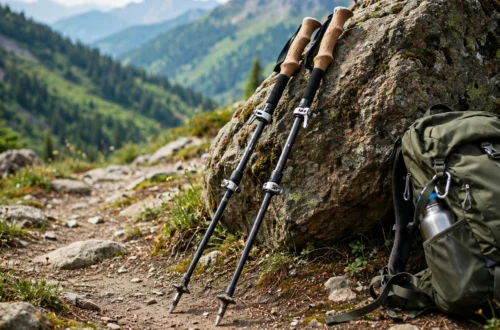
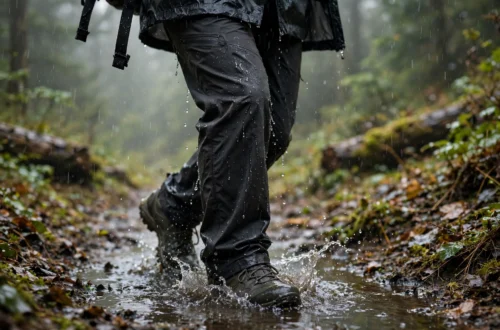
Lightweight hiking shoes are the middle ground of trail footwear: lighter and more flexible than hiking boots, tougher and more protective than trail runners. They sit below the ankle, weigh far less than a boot, and still give you grip, toe protection, and enough support for day hikes and light backpacking.
This guide is for day hikers, travellers, and light backpackers who want to buy the right pair before their next trip. It covers what lightweight hiking shoes are, how they compare with boots and trail runners, how to get the fit right, waterproofing, ankle support, the best picks by use, and the mistakes to avoid. By the end, you should be able to choose a pair that fits your trail, your pack, and your feet.
Quick Answer
Lightweight hiking shoes are low-cut, flexible shoes weighing roughly 10 to 14 ounces each. They suit day hikes and light packs on maintained trails, but boots suit heavy packs and rough terrain.
Quick-Guide Table
| Trip type | Best places or options | When to go |
| Day hike, easy trail | Merrell Moab Speed 2, breathable mesh | Hot, dry weather |
| Rocky mountain trail | Salomon X Ultra 5 Gore-Tex | Cold, wet, or muddy conditions |
| Long miles, hard trails | Hoka Anacapa 2 Low GTX, max cushion | Long days with a light pack |
| Fastpacking, wide feet | Altra Lone Peak 9, zero-drop | Dry trails, fast miles |
| Travel, trail-to-town | Danner Trail 2650, versatile | Trips needing one pair for trail and town |
Helpful List: Choose The Right Pair In 5 Steps
- Decide your trail and pack — terrain, distance, pack weight, and season.
- Try shoes on with hiking socks; check heel slip and toe room.
- Choose waterproofing by weather — waterproof for cold and wet, breathable for hot and dry.
- Check traction and cushioning for your terrain.
- Test new shoes on short walks before a long hike.
What Are Lightweight Hiking Shoes?
Lightweight hiking shoes are low-cut shoes built for walking on trails. The collar sits below the ankle, so your ankle moves freely. The midsole is stiffer than a trail runner’s, the upper is tougher, and most models have a protective toe cap.
A typical lightweight hiking shoe weighs roughly 10 to 14 ounces per shoe. That is a little heavier than a trail runner, which is often 9 to 11 ounces per shoe, and far lighter than a midweight hiking boot, which is often 20 to 28 ounces per boot. The difference adds up over a long day: lighter shoes mean less leg fatigue, especially on the way up.
These shoes suit day hikes, maintained trails, a light pack, and warm weather. They are a good choice for travellers who want one pair that works on the trail and around town.
They are not the right choice for every trip. A heavy pack, rough or off-trail ground, snow, or technical terrain calls for a boot. Lightweight shoes have less protection and less ankle coverage, and they wear out faster on rough ground. The lightest shoe that fails on a remote trail creates bigger problems than a few extra ounces.
Hiking Shoes Vs Boots Vs Trail Runners
Hiking shoes are low-cut, with a stiffer midsole and a protective toe cap. They suit day hikes and light packs on maintained trails. They are lighter than boots, need little break-in, and dry faster after a stream crossing.
Boots rise above the ankle. The extra collar adds protection from rocks and brush, and more ankle coverage on loose, uneven ground. Boots suit heavy packs, rough terrain, and cold or wet conditions. The cost is weight, warmth, and a longer break-in. A boot is heavier, stiffer, and slower to dry.
Trail runners are the lightest option. They use running-shoe midsoles and flexible uppers, so they feel fast and comfortable on long, smooth miles. They suit fastpacking, dry trails, and thru-hiking. The cost is protection: trail runners wear out faster, offer less toe protection, and give less support under a heavy pack.
The real dividing line is not ankle height. It is the weight on your back and the ground under you. A day hike with a light pack, water, layers, and lunch, under roughly 20 pounds total, is shoe territory. Most weekend backpacking with a modern, reasonably light kit on maintained trails is shoe territory too. Somewhere between a 25- and 35-pound total load, the equation starts to change, and a stiffer boot platform spreads that weight across the whole foot.
You may have heard the saying that one pound on your feet equals five pounds on your back. That is a rule of thumb, not fixed science. It captures a real idea, that weight on your feet costs more energy than weight on your back, but do not treat the number as exact.
How To Choose The Right Pair
Start with your trail and your pack. What terrain will you walk on, how far, how heavy is your pack, and what season? A rocky mountain trail needs grip and protection. A flat, dusty trail needs breathability. A wet, cold trip needs waterproofing.
Fit matters more than any other factor. Try shoes on with the hiking socks you will actually wear. A common recommendation is to go about half a size larger than your casual shoes, because feet swell on long walks and need room on downhills. Your heel should not slip when you walk, and your toes should not hit the front when you go downhill. The toe box should have room for your toes to spread.
Weight matters, but do not chase the lightest shoe at any cost. A shoe that is a few ounces lighter but offers no toe protection and no grip will cost you more on a rocky trail than the weight saves.
Traction matters on every trail. Look at the lug pattern on the outsole. Deeper lugs bite into loose dirt and scree, while shallower lugs feel better on hardpack. Sticky rubber compounds, such as Vibram Megagrip, grip better on wet rock.
Cushioning and drop are personal. Maximum cushion, as in Hoka models, protects your joints on long, hard days. A firmer, lower-profile shoe, as in the Danner Trail 2650, gives better stability on technical rock. Zero-drop shoes, as in the Altra Lone Peak, have no height difference between heel and toe, and suit only hikers who are already used to that feel. Do not switch to zero-drop on a big trip without a gradual transition.
Budget is a range, not a fixed price. Lightweight hiking shoes in this guide cost roughly $130 to $210, depending on the model and version. There is no single best pair for everyone, so spend your money on the fit and features that match your trail.
Waterproof Or Breathable?
A waterproof membrane, such as Gore-Tex, keeps rain, puddles, and wet snow out while letting some sweat vapour escape. It suits cold, wet conditions, muddy trails, and snow. The trade-off is warmth and breathability: waterproof shoes are always less breathable than non-waterproof ones, and once water gets in over the cuff, they dry very slowly.
A breathable mesh shoe lets air in and water out. It suits hot, dry conditions, and stream crossings where you expect to get wet anyway and want shoes that drain and dry fast. The trade-off is that water gets in easily, so your feet will get wet in rain and mud.
The choice is simple: pick waterproof for mud, rain, and cold weather. Pick breathable mesh for hot climates, dry trails, and stream crossings. In summer, quick-dry materials often beat waterproof membranes, because a waterproof shoe traps sweat and feels like a sauna for your feet.
Do not call any hiking shoe fully waterproof. Water can enter over the cuff, through seams, or after the membrane wears. Waterproof means water-resistant under normal trail conditions, not waterproof in every situation.
Ankle Support: What Low-cut Shoes Can And Cannot Do
Low-cut hiking shoes do not support your ankle. That is the most common misunderstanding about this category. The collar sits below the ankle, so it cannot limit ankle movement or prevent a roll.
What actually supports your ankle is a combination of a mid-cut collar, a good fit, a reasonable pack weight, and your own ankle strength. A mid-cut boot wraps around the ankle bone and gives more lateral stability. A well-fitting shoe keeps your foot from sliding inside, which reduces the chance of a roll. A lighter pack shifts your centre of gravity less, which also helps.
Low-cut shoes are fine when your pack is light, the trail is maintained, and your footing is good. They are a good choice for day hikes and easy to moderate trails.
Boots are better when your pack is heavy, the ground is loose scree or rough rock, or you have a history of ankle injuries. If you have foot or ankle problems, talk to a professional before you choose. This guide is general information, not medical advice.
Best Lightweight Hiking Shoes By Use
The Salomon X Ultra 5 Gore-Tex is the best overall pick for rugged, rocky trails. It weighs about 13.3 ounces per shoe, has a Gore-Tex waterproof membrane, a durable upper, and a protective toe bumper. It pairs trail-runner agility with a supportive chassis, so it feels stable on steep, rocky ground. It suits narrow feet best, and it is less good for very wide feet.
The Hoka Anacapa 2 Low GTX is the best pick for long, cushioned miles. It weighs about 14.1 ounces per shoe, with a sugarcane EVA midsole, a Vibram Megagrip outsole, and Gore-Tex Invisible Fit waterproofing. The maximum cushioning helps combat foot fatigue on long days. It suits hikers who want joint protection on hard trails, and it is less good for technical rock, where a thinner sole gives better ground feel.
The Merrell Moab Speed 2 is the best pick for hot weather and value. The non-waterproof version has a breathable synthetic upper and a Vibram TC5+ outsole, so it stays cool on hot trails and feels comfortable out of the box. It suits easy to moderate trails and budget-conscious hikers. It is less good for wet, muddy conditions, where the non-waterproof version will let water in.
The Altra Lone Peak 9 is the best pick for wide feet and fastpacking. It has a zero-drop platform, a roomy toe box, and lightweight trail-runner construction. It suits hikers with wide feet and those who want natural toe splay on long, fast miles. It offers less underfoot stiffness for heavy packs, so it is less good when you carry a heavy load.
The Danner Trail 2650 is the best pick for trail-to-town travel. It has a TPU midfoot shank and Vibram outsoles, packs easily, and doubles as an everyday walking sneaker. It suits travellers who want one shoe for the trail and the town. Its weight figure is unverified in the sources used for this guide, so check the official spec on Danner’s website before you compare it by weight.
Lightweight Hiking Shoes For Women And Men
Women’s and men’s hiking shoes differ mainly in fit, not in function. Women’s models are usually built with a narrower heel and a different volume, while men’s models are usually wider. The same models in this guide come in women’s and men’s versions, including the Salomon X Ultra 5, the Merrell Moab Speed 2, and the Hoka Anacapa 2.
The right way to choose is by your foot shape, not by the gender label. Try the shoe on with hiking socks, check the heel slip, and check the toe box. If a women’s model fits your foot better, wear it. If a men’s model fits better, wear that.
For wide feet, roomy options such as the KEEN Targhee and the Altra Lone Peak are worth trying. They have wider toe boxes and more volume, which helps hikers who find most shoes too narrow.
Lightweight Hiking Shoes For Travel
Lightweight hiking shoes are a good choice for travel because they are light, easy to pack, and versatile. One pair can work on the trail and around town, so you do not need to pack a second pair of walking shoes.
For a one-pair trip, choose a versatile model such as the Danner Trail 2650 or the Merrell Moab Speed 2. They look like everyday sneakers, so they work in a city, and they have enough grip and protection for a day hike.
Pack your shoes at the bottom of your bag, with socks stuffed inside to save space. Bring a spare pair of laces, and a spare pair of hiking socks. If your shoes get wet, stuff them with newspaper or dry cloth and let them air-dry overnight.
Do not wear new shoes for the first time on a trip. Break them in at home first, on short walks, so you know they fit before you are far from home. Our guides to the best hiking poles, backpacking versus hiking, and a good backpacking pack cover the rest of your trail kit if you are building a full packing list.
How To Break In New Shoes And Avoid Blisters
Lightweight hiking shoes need less break-in than boots, but they still need testing. Wear them around the house first, then on short walks of 1 to 2 miles on pavement or packed dirt. This softens the materials, moulds the midsole to your gait, and reveals any pressure points before a long hike.
Wear moisture-wicking hiking socks, not cotton. Cotton holds sweat, softens your skin, and makes blisters more likely. Change your socks if they get wet, and carry a spare pair on longer hikes.
If you feel a hot spot, stop and check it. Cover it with moleskin or tape before it becomes a blister. Do not ignore it and keep walking, because a blister in the first hour can end a hike early.
Never wear new shoes for the first time on a long hike. That is the most common mistake, and the easiest to avoid. Test them on short walks first, under real conditions, with the pack weight you plan to carry.
How To Care For Your Hiking Shoes
Clean mud and debris after each hike with a soft brush and lukewarm water. Do not use a washing machine or harsh detergent, because they can damage the upper and the membrane.
Dry your shoes naturally, away from direct heat. Do not put them on a radiator or near a heater, because direct heat can warp the midsole and damage the glue. Air-dry them away from sunlight, with the insoles removed.
If your shoes have a waterproof membrane, reapply a waterproofing treatment every 6 to 12 months, or when water stops beading on the upper. This keeps the outer fabric from soaking up water, which helps the membrane work.
Replace your shoes when the outsole is worn smooth, the cushioning feels flat, or the upper is torn. There is no fixed mileage for every shoe, because terrain, pack weight, and body weight all affect wear. Check the tread and the midsole after each season, and replace them when they no longer grip or support you.
Common Mistakes To Avoid When Buying Lightweight Hiking Shoes
The first mistake is choosing the lightest shoe on the shelf and forgetting protection and durability. A shoe that is a few ounces lighter but has no toe cap and no grip will fail on a rocky trail.
The second mistake is ignoring fit. Buying by size or brand alone, without trying the shoe on with hiking socks, is how blisters happen. Fit matters more than any feature.
The third mistake is thinking waterproof is always better. In hot weather, a waterproof shoe traps sweat and feels clammy. Choose waterproof for cold and wet, and breathable for hot and dry.
The fourth mistake is expecting ankle support from a low-cut shoe. Low-cut shoes do not support your ankle. If you need ankle support, choose a mid-cut boot, lighten your pack, and build ankle strength.
The fifth mistake is wearing new shoes on a long hike without breaking them in. Test them on short walks first.
The sixth mistake is treating prices and weights as fixed. Prices and weights change by size, version, and retailer, and some figures in shopping listings are wrong. Check the brand’s official website before you buy. Budget retailers such as Decathlon offer cheaper options, but compare their specs and fit the same way you would compare any other brand.
Conclusion
The right lightweight hiking shoes are the ones that match your trail, your pack weight, your season, and your foot shape. They are not the lightest pair on the shelf, and they are not the most expensive pair. They are the pair that fits well, grips your terrain, and keeps your feet comfortable for the miles you plan to walk.
Put fit first, choose waterproofing by the weather, and test new shoes on short walks before a long hike. Check prices and weights on official sources before you buy, because they change.
With the right shoes, the trail feels easier, and you can focus on the walk, not on your feet.
FAQ’s:
Are Lightweight Hiking Shoes Good For Beginners?
Yes, they suit beginners on day hikes and maintained trails with a light pack. They need little break-in, feel comfortable out of the box, and are easier to walk in than heavy boots.
Are Lightweight Hiking Shoes Waterproof?
Some are, some are not. Waterproof models use a membrane such as Gore-Tex and suit rain and mud, while breathable mesh models suit hot, dry trails and dry faster after stream crossings.
Do Lightweight Hiking Shoes Support Ankles?
No, low-cut shoes do not support your ankle. Ankle support comes from a mid-cut boot, a good fit, a lighter pack, and ankle strength, so choose boots for heavy packs and rough ground.
How Much Should Lightweight Hiking Shoes Weigh?
A typical pair weighs roughly 10 to 14 ounces per shoe. Trail runners are lighter at 9 to 11 ounces, while midweight boots are far heavier at 20 to 28 ounces per boot.
How Do I Break In Lightweight Hiking Shoes?
Wear them at home first, then on short walks of 1 to 2 miles with hiking socks. Check for hot spots early, and never wear new shoes for the first time on a long hike.
Disclaimer
This content is for general information only. Prices, specs, sizes, and availability can change, so please check the brand’s official website or an authorized retailer before you buy. Travel3Ways is an independent travel information website and is not affiliated with any gear brand, manufacturer, or retailer. Travel3Ways was created only to provide helpful information to visitors and does not engage in paid promotions or advertising.