
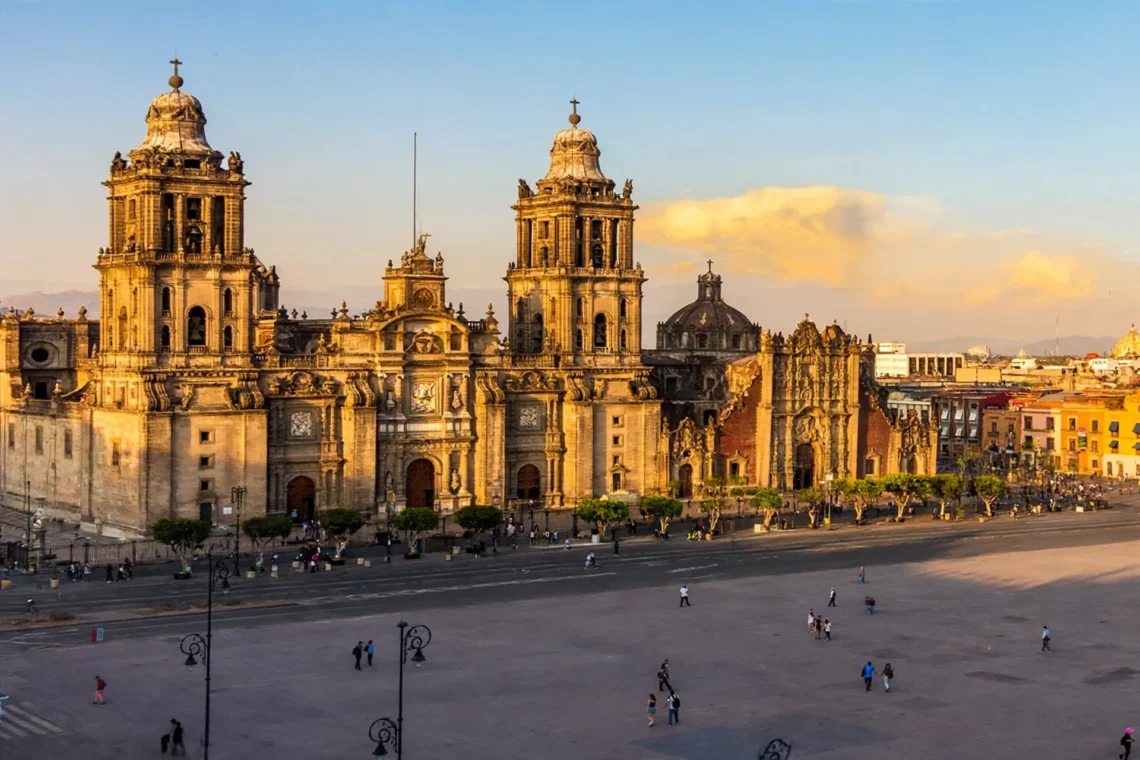
Mexico City is one of the great city trips in the world, and it is also one of the easiest to plan badly. This Mexico City travel guide answers the questions every first-time visitor asks: where to stay, what to see, how to get around, when to go, what it costs, and how to stay safe. Two facts shape every plan. The city sits at 2,240 meters (7,350 feet), so the first day must be gentle. And the metro area holds about 22 million people, so plan by neighborhood instead of trying to see everything.
Quick Answer
A trip to Mexico City takes 4 to 5 days. Stay in Roma Norte, Condesa, or the Centro Histórico, see the Zócalo and the Anthropology Museum, take day one easy at 2,240 meters, and add a day trip to Teotihuacán.
Quick-Guide Table
| Trip type | Best base | Top sights |
| First trip | Roma Norte | Zócalo, Anthropology Museum, Chapultepec Castle |
| History and museums | Centro Histórico | Templo Mayor, Palacio Nacional, Bellas Artes |
| Food and markets | Roma Norte or Condesa | Mercado de San Juan, street tacos, Mercado Roma |
| Art and Frida Kahlo | Coyoacán | Casa Azul, plazas, market |
| Nature and day trips | Centro Histórico | Teotihuacán, Xochimilco canals |
| Relaxed stay | Condesa | Parque México, cafés, Chapultepec Park |
| Upscale stay | Polanco | Museums, fine dining, Chapultepec |
Helpful List: Plan Your First Trip In 5 Steps
- Pick your season — November to April is dry, and March to May is the warmest stretch.
- Choose your base — Roma Norte for a first trip, Condesa for a calmer stay, the Centro for history, Polanco for an upscale trip.
- Keep day one light for the altitude, and drink more water than feels necessary.
- Book Casa Azul tickets online in advance, since they sell out weeks ahead.
- Plan around museum Mondays, and use app rides after dark.
Mexico City At A Glance
Mexico City proper has about 9.2 million people, and the metro area has about 22 million, which makes it the largest metropolitan area in North America. The city has 16 boroughs, called alcaldías, but most of what visitors come for sits in a fairly compact band: the Centro Histórico at the east end, Roma and Condesa in the middle, Chapultepec Park and Polanco at the west end, and Coyoacán and San Ángel to the south.
The altitude is the first thing to respect. At 2,240 meters the air holds noticeably less oxygen than at sea level, so stairs feel harder and headaches are common on day one. Drink more water than feels necessary, keep the first day light, and go easy on alcohol until your body adjusts. Plan on 4 to 5 days for a first visit, plus day trips. The city stays on Central Standard Time all year. The currency is the Mexican peso. Cards are widely accepted at hotels, restaurants, and major museums, but carry small bills and coins for street taco stands, market stalls, and tips.
When To Go To Mexico City
The best time to visit is the dry season, from November to April, when you get sunny days and comfortable temperatures. March to May is the warmest stretch, with daytime temperatures around 20 to 25 degrees Celsius and evenings that can feel chilly, so pack a layer. The rainy season runs roughly June to October, when afternoon showers are common, though they often pass quickly and mornings can still be clear. Hotels often lower their prices in the wet months, and the crowds thin out.
Autumn is a good compromise. The rains taper off by October, the air turns crisp, and the city fills with marigolds for Día de los Muertos in late October and early November. Independence Day on 16 September fills the Zócalo with celebrations, and the Christmas season brings lights and markets to the main square.
Where To Stay In Mexico City
Where you stay shapes the trip, because you will eat, drink, and wander near your door every day. Roma Norte is the best base for most first-timers: tree-lined streets of early-1900s mansions and more restaurants, cafés, and mezcal bars per block than anywhere else in the city. Condesa sits next door, built around the leafy Parque México and Parque España, and suits travellers who want parks and a calmer, more residential feel.
The Centro Histórico suits history lovers and budget travellers: you wake up steps from the Zócalo, the cathedral, and the Templo Mayor, and the hotels here are among the best value in the city, though many side streets empty out after about 10 pm. Polanco is the upscale choice: embassies, hotel towers, and designer shops beside Chapultepec Park, quieter and more polished, and the best base if museums are your priority. Coyoacán feels like a village inside the city, with cobbled lanes and shaded plazas, and it suits families and slower stays, though it is further from the center. Juárez and Zona Rosa sit between Reforma and Roma, central and lively. Hotel prices vary by season, so check official sites rather than trusting a fixed figure in any guide.
What To Do In Mexico City
Start in the Centro Histórico. The Zócalo is the vast main square, lined by the Metropolitan Cathedral, the Palacio Nacional, and the ruins of the Templo Mayor, the great temple of the Aztec capital Tenochtitlán. Inside the Palacio Nacional, Diego Rivera’s murals tell the history of Mexico across the walls. A short walk west along pedestrian Calle Madero brings you to the Palacio de Bellas Artes, the white-marble palace with its Art Deco interior.
The Museo Nacional de Antropología in Chapultepec Park is the best introduction to Mexico’s ancient cultures, and the one museum no first-timer should skip. It holds the Aztec Sun Stone and the colossal Olmec heads, and it needs a full morning. Chapultepec Castle sits on the hill above the park, holding the National Museum of History and offering views over Paseo de la Reforma. In Coyoacán, the Casa Azul preserves the bright-blue home where Frida Kahlo lived and worked. Tickets sell out weeks in advance and must be booked online, and the museum is closed on Mondays. South of the city, Xochimilco keeps the last canals of the old lake system, where brightly painted trajineras carry passengers past the floating gardens. It has been a UNESCO World Heritage site since 1987. Most state-run museums close on Mondays, so use that day for neighborhood walks, markets, or private museums like Museo Soumaya.
Day Trips From Mexico City
Teotihuacán is the day trip that belongs on every first visit. The vast pyramid city sits about 45 minutes northeast of Mexico City, and its Avenue of the Dead runs past the Pyramids of the Sun and Moon. Go early and allow a full morning or a whole day. Carry water and sun protection, because there is almost no shade, and keep the next day light.
Puebla and Cholula make a longer day out, with colonial streets, churches, and a pyramid topped by a church, but check current transport and times before going, because the journey is longer and the options change with the season. Start early and build in a buffer, because traffic out of the city can double a journey time.
Getting To Mexico City
Most visitors fly into Benito Juárez International Airport (MEX), about 8 km from the center. A second airport, Felipe Ángeles (AIFA), sits about 50 km north, so check which airport your flight uses. From MEX, the cheapest sensible option is the Metrobús Line 4 airport service, which costs about MXN 30 per person and drops you in the Centro Histórico and on Reforma. The Metro is cheaper still, at about MXN 5 from the Terminal Aérea station on Line 5, but it involves stairs, transfers, and crowds, so it only works with one small bag.
An app ride is the easiest option for most visitors, and an authorized prepaid taxi bought at a counter inside the terminal suits night arrivals, families, and heavy luggage. Do not take a ride from someone who approaches you inside the terminal, and do not hail a taxi off the street. The Metro and Metrobús stop at midnight, so late arrivals should plan a car in advance.
Getting Around Mexico City
The Metro is the fastest way across the city, with a flat fare of about MXN 5 per ride no matter the distance. It is cheap and quick, but very crowded at rush hour, and stations have stairs and transfers. The Metrobús costs about MXN 6 per ride on most lines and runs in its own lanes for much of its route, which makes it less affected by traffic than a taxi. Both run on the rechargeable MI card, and contactless cards work too.
Rideshare apps like Uber and DiDi are the easiest door-to-door option, especially at night. Check that the plate, car, and driver match the app before you get in, and ride in the back. Walking is the best way to explore within neighborhoods like Roma, Condesa, Centro, and Coyoacán, but the city is far too big to cross on foot, so combine walking with the Metro or a ride.
What To Eat In Mexico City
The food scene starts on the street. Do not miss tacos al pastor carved straight from a vertical spit, suadero, tlacoyos made from blue-corn masa, tamales, and chilaquiles for breakfast. Markets are the best classrooms. Mercado de San Juan is the chefs’ market, known for its seafood raw bars, gourmet cheeses, and pre-Hispanic foods like chapulines. Mercado de Coyoacán is celebrated for its tostadas piled with ceviche or chicken tinga. Mercado Roma is a modern food hall with artisanal tacos and a rooftop beer garden. La Ciudadela is the big covered artisan market, with hundreds of stalls selling textiles, pottery, and silver.
Drink bottled or filtered water, never tap water. Be careful with unpeeled street fruit if you have a sensitive stomach. Eat where locals eat and where food is cooked fresh in front of you, and carry small bills, because market stalls and taco stands often cannot break large notes. This guide names types of food and places to find them, not specific restaurants.
How Much Does Mexico City Cost?
Mexico City is good value for a capital city, and the ranges below exclude international flights. Budget travellers manage on about $40 to $60 a day, covering a hostel or basic guesthouse, street tacos and market lunches, Metro rides, and a paid museum every couple of days. Mid-range travellers spend about $90 to $150 a day, with a comfortable hotel, sit-down lunches, and rideshares. The peso moves, so check a live rate before you budget.
A Metro ride costs about MXN 5, a Metrobús ride about MXN 6, and the airport Metrobús line about MXN 30. A ride across neighborhoods by app usually runs in the region of MXN 60 to 150, depending on traffic. Museum entry for foreign visitors is around MXN 210 at the big federal museums, and prices tend to rise each January, so check official sites before you go. Street tacos run roughly MXN 15 to 20 each.
Is Mexico City Safe?
Mexico City is an ordinary large Latin American capital, and the risks to a visitor are overwhelmingly opportunistic rather than violent. The US State Department rates Mexico City at Level 2, Exercise Increased Caution, the same level as France, Spain, and Italy. The UK does not list Mexico City among the areas it advises against visiting. The things most likely to spoil a trip are a snatched phone, a badly chosen taxi, a stomach upset, and a first day scheduled too hard at altitude.
Neighborhood selection matters most. The tourist core — Centro Histórico, Roma, Condesa, Juárez, Polanco, Coyoacán, and Del Valle — is comfortable to explore by day, and people walk around in the evening as a matter of routine. The areas to avoid are mostly outside the zones you would naturally visit: Tepito, parts of Iztapalapa after dark, Ecatepec, and the outer northern and eastern districts. Go easy on side streets east and north of the Zócalo at night.
A few practical checks cover most of your exposure. Use an app ride, a hotel car, or an authorized sitio rank, and never hail a cab off the street. Keep your phone out of your back pocket, and check your route before stepping out. Split your valuables between a bag and a hidden pocket instead of keeping cards, cash, and passport in one wallet. Use ATMs inside bank branches or shopping centers during the day, and cover the keypad. Keep an eye on drinks in nightlife areas. For official advice, read your government’s travel advisory for Mexico in full before you go, and check entry requirements on official sources.
A Simple 4-day Plan For Mexico City
Day one should be gentle, because altitude punishes a hard first day. Spend it in the Centro Histórico: the Zócalo, the cathedral, the Templo Mayor, and Bellas Artes, with a slow lunch and an early night. Day two belongs to Chapultepec: the Anthropology Museum in the morning, the park and castle in the afternoon and Polanco in the evening. Day three goes south. Visit the Casa Azul in Coyoacán in the morning, wander the plazas and the market, then ride a trajinera through the canals of Xochimilco in the afternoon.
Day four is the Teotihuacán day trip, or a slow day in Roma and Condesa if you would rather rest. This plan is a starting point, not a rule. Museum Mondays mean swapping days around, so check opening days before you fix the order, and keep one afternoon free.
Common Mistakes To Avoid
The most common mistake is scheduling a hard first day at altitude. Drink water, walk slowly, and save the big climb for day two or three. The second is forgetting that most state-run museums close on Mondays, which ruins a plan built around a Monday museum visit. The third is hailing a street taxi instead of using an app or an authorized rank. The fourth is trying to see the whole city in two days. Pick two or three neighborhoods and travel slowly, because the distances are longer than they look on a map.
Do not drink tap water, and do not skip sun protection at altitude. Do not carry all your valuables in one wallet, and do not walk with your phone in your hand at street corners, where snatchers on scooters and bikes operate.
Conclusion
Mexico City rewards a slow, neighborhood-by-neighborhood trip, and 4 to 5 days is the right length for a first visit. The simple rule is to pick one base neighborhood, plan around altitude and museum Mondays, and use app rides after dark. Choose a season, book a stay in Roma, Condesa, or the Centro, and check transport times and official safety advice before you go.
FAQ’s:
How Many Days Do You Need In Mexico City?
Four to five days is right for a first visit, plus a day trip to Teotihuacán if you have time. That covers the Centro Histórico, Chapultepec, Coyoacán, and Xochimilco without rushing.
Is Mexico City Safe For Tourists?
Mexico City is rated Level 2, Exercise Increased Caution, the same level as France, Spain, and Italy. Stay in the tourist core, use app rides after dark, and watch for pickpockets on crowded transport.
What Is The Best Area To Stay In Mexico City?
Roma Norte is the best base for most first-timers, with restaurants, cafés, and walkable streets. Condesa suits a calmer stay, the Centro suits history lovers, and Polanco suits an upscale trip.
Do Museums Close On Mondays In Mexico City?
Yes, most state-run museums, including the Anthropology Museum and Chapultepec Castle, close on Mondays. Use that day for neighborhood walks, markets, or private museums like Museo Soumaya.
How Do I Get From Mexico City Airport To The Center?
Take the Metrobús Line 4 for about MXN 30, use an app ride, or buy an authorized prepaid taxi at a counter inside the terminal. The Metro costs about MXN 5 but only works with one small bag.
Disclaimer
This article is for general information only. Travel conditions, prices, entry requirements, and opening times can change, so please check official travel advice and official sources before you travel. Travel3Ways is an independent travel information website and is not affiliated with any tourism board, airline, hotel, or booking service. Travel3Ways was created only to provide helpful information to visitors and does not engage in paid promotions or advertising.



One comment on “Mexico City Travel Guide: How To Plan Your First Trip, From The Zócalo To Teotihuacán”