
If you are planning a trip to Greece, it helps to know which cities are actually the biggest, and which of them are worth your time. The answer is not as simple as it looks, because Greek population figures change a lot depending on how you count. This article ranks the biggest Greek cities by the size of their built-up urban area, using rounded figures from Greece’s 2021 census, with recent urban-area estimates for the smaller cities where the census counts only the historic core. Athens is in a league of its own: Greater Athens holds about a third of the country’s roughly 10.4 million people. After Athens and Thessaloniki, the cities get much smaller. Below is the top 10 list, a short guide to each city, and help choosing between them, plus when to go and how to get around.
Quick Answer
Athens is the biggest city in Greece, with about 3.15 million people in its urban area, followed by Thessaloniki at about 800,000 and Patras at about 197,000. After the top three, every Greek city is much smaller.
Quick-Guide Table
| City | Best for | When to go |
| Athens | First trip, ancient sites, museums | April–May, September–October |
| Thessaloniki | Food, history, city break | April–June, September–October |
| Patras | Ferries to Italy, Peloponnese base | May–June, September |
| Heraklion | Knossos, eastern and central Crete | April–June, September–October |
| Chania | Venetian harbour, west Crete beaches | May–June, September–October |
| Volos | Mount Pelion, quieter mainland trip | May–June, September |
| Ioannina | Lakes, mountains, off the beaten path | May–September |
Helpful List: Plan Your Greek Cities Trip In 5 Steps
- Pick one base city — Athens for a first trip, Thessaloniki for food, Heraklion or Chania for Crete.
- Add one or two more cities that match your trip type, and keep the rest for another visit.
- Choose your season — April to May or September to October for the most comfortable weather.
- Check train, bus, and ferry times on official sites before booking, and keep a buffer day if you rely on ferries.
- Pack for the season — sun protection and water for summer sightseeing, and a layer for cooler northern cities.
What “Biggest” Means In Greece
Greek cities are counted in three ways. The municipality is the small administrative area, usually the historic center and its nearest neighborhoods. The urban area is the continuous built-up city, including the suburbs that run into each other. The metro area is wider still, taking in the surrounding towns and countryside.
This article uses the urban area, because it is the fairest way to compare cities. Athens shows why. The Municipality of Athens had about 643,000 residents in the 2021 census, but that covers only the historic core. The urban area had about 3.15 million people, and the wider metro area reaches about 3.6 to 4 million. The same gap exists everywhere else, so a list that mixes municipalities with metro areas gives a misleading ranking.
The Biggest Greek Cities At A Glance
Here are the 10 biggest cities in Greece, ranked by urban-area population, with the region and what each is best known for.
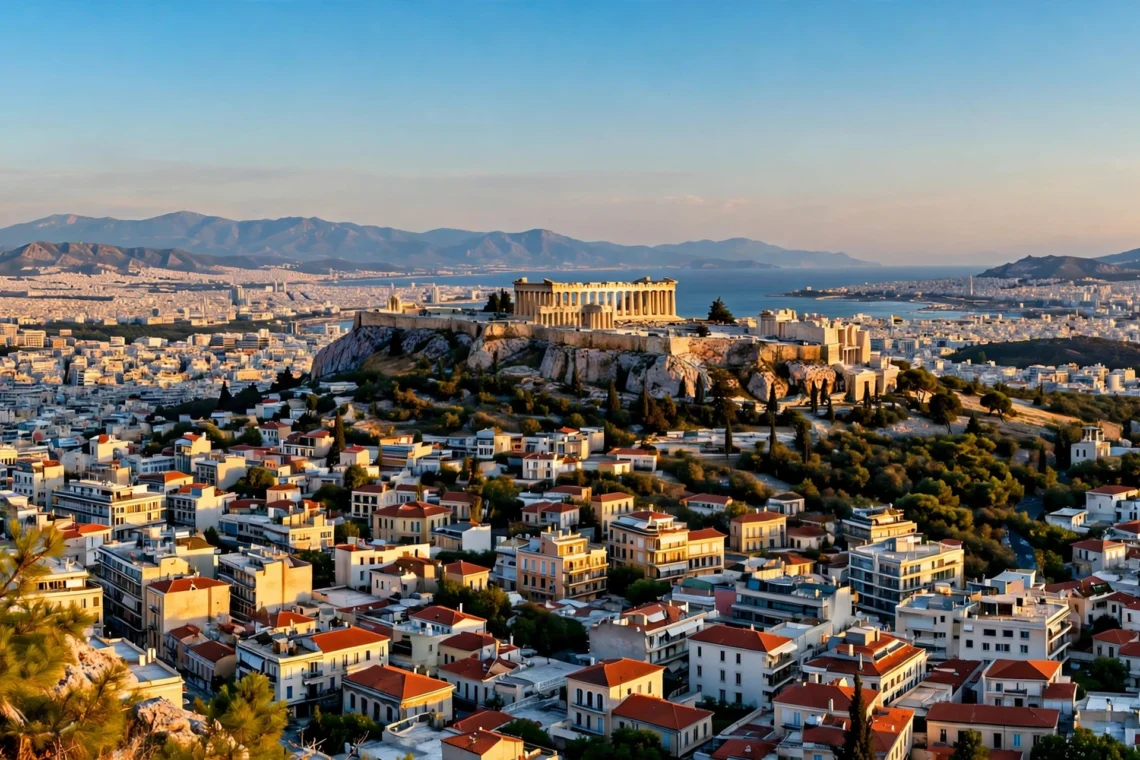
Athens, Attica, about 3.15 million. The capital, home of the Acropolis, and the country’s main transport hub.
Thessaloniki, Central Macedonia, about 800,000. Greece’s second city, known for food, history, and a lively waterfront.
Patras, Western Greece, about 197,000. The main ferry port to Italy and the gateway to the western Peloponnese.
Heraklion, Crete, about 163,000. The largest city on any Greek island and the base for the Palace of Knossos.
Larissa, Thessaly, about 146,000. The main city of the Thessaly plain and a transport crossroads.
Volos, Thessaly, about 127,000. A port city and the gateway to Mount Pelion.
Chania, Crete, about 91,000. A Venetian harbour town on the west coast of Crete.
Ioannina, Epirus, about 89,000. A lakeside city with a castle and an old town in the northwest.
Chalkida, Central Greece, about 84,000. The capital of Evia, on the narrow Euripus Strait.
Rhodes, Dodecanese. The island’s capital, known for its medieval Old Town. Its town is far smaller than the island-wide municipality figure suggests.
Only three cities stand clearly apart: Athens, Thessaloniki, and Patras, the 3 major cities in Greece. Every other city here is under 200,000 people. Piraeus is missing on purpose: with about 168,000 residents it looks like a top-five city, but it is part of Greater Athens and the country’s main ferry port, not a separate city. Figures are rounded; the top six are 2021 census urban areas, and the Chania, Ioannina, and Chalkida figures are recent estimates.
Athens, Greece’s Only True Metropolis
Athens is not just the biggest city in Greece. It is the country’s political, economic, and cultural center, and the wider Athens area holds about a third of the entire population. No other Greek city comes close. The city is built around the Acropolis, and most visitors spend their first days in Plaka and Monastiraki below it. The Acropolis Museum and the National Archaeological Museum hold the finds that make the ancient city come alive.
Athens also works as a base, with the best transport links in the country. Day trips run to Delphi, the Saronic islands, and the Peloponnese, and Piraeus connects to almost every island by ferry. Plan around the heat. Athens averages about 33 degrees Celsius in July, the Acropolis has very little shade, and the crowds peak in high summer. Visit early in the morning, carry water, and if you can choose your dates, come in spring or autumn instead.
Thessaloniki, Greece’s Second City And Cultural Capital
Thessaloniki is the second city of Greece, with about 800,000 people in its urban area, and it feels very different from Athens. It is a northern port city where Roman, Byzantine, and Ottoman layers sit side by side, and locals call it the country’s cultural capital. The White Tower and the waterfront promenade are its landmarks, and the Rotunda and Byzantine churches are worth a slow morning. The food markets and the Ladadika district show its other side: small tavernas, bars, and shops that stay busy late into the night.
Travelers often call it the best food city in Greece, and the large student population keeps it lively and affordable. It is less crowded with foreign tourists than Athens, which makes it a good choice for a relaxed city break. The weather is cooler and wetter than in the south, especially in winter. Halkidiki’s beaches, Mount Olympus, and the monasteries of Meteora all work as day trips or short stays from here.
Patras, The Western Gateway
Patras is the third-largest city in Greece, with about 197,000 people in its urban area, on the northern coast of the Peloponnese. For most travelers it is a gateway rather than a destination. Its harbour is Greece’s main ferry port to Italy, and the starting point for the Ionian Islands and the western Peloponnese. If you are arriving in Greece by ferry from Italy, Patras is probably the first Greek city you will see.
The city has a working harbour, a waterfront promenade, a castle above the town, and a Roman Odeon. It is also famous for the Patras Carnival, held in the weeks before Lent, which is one of the biggest festivals in Greece. Most visitors pass through rather than staying long. Stay a night if you are catching a ferry, or use it as a base for the Peloponnese coast and the mountains behind it.
Heraklion, Crete’s Capital And The Doorway To Knossos
Heraklion is the largest city on any Greek island, with about 163,000 people in its urban area, and it is the commercial and tourism hub of Crete. Most visitors come for the Palace of Knossos, the great Minoan site just outside the city. The Archaeological Museum in the center holds the finds from Knossos and the rest of the island, and it is worth a visit before or after the palace. The old town has a Venetian fortress and harbour, narrow shopping streets, and squares that fill with locals in the evening.
Heraklion is the best base for eastern and central Crete, with the island’s main airport and ferry port. Be ready for a busy working city rather than a pretty resort town. The old town and the coast are the pleasant parts, and the real charm of Crete is in the day trips around it.
Larissa, Volos, And The Rest Of The Top 10
Larissa is the main city of the Thessaly plain and a transport crossroads. It is not a classic tourist city, but it is a useful base for Meteora and Mount Olympus.
Volos is a port city on the Pagasetic Gulf and the gateway to Mount Pelion. Its seafront is lined with tavernas, and its harbour is the starting point for the Sporades islands. Come for Pelion’s mountain villages and beaches, and for a slower pace than the big tourist towns.
Ioannina sits beside a lake in the mountains of Epirus, in the northwest. Its castle and old town hold the history of an old trading center. It suits travelers who want a greener, cooler, less visited corner of Greece.
Chania is the western city of Crete, built around a Venetian harbour and old town that are among the prettiest in Greece. It is the base for the Samaria Gorge, the western beaches, and the White Mountains, and it is smaller and more relaxed than Heraklion.
Chalkida is the capital of Evia, on the narrow Euripus Strait, a short trip from Athens. It is rarely visited by foreign tourists, which is part of its charm. The old bridge, the waterfront, and the strait’s strange tidal current are the things to see.
Rhodes is the capital of its island, and its medieval Old Town is one of the best preserved in Europe. The town itself is far smaller than the island-wide municipality figure of about 125,000 suggests, because that figure counts the whole island.
How Many Cities Are In Greece?
Greece has about 83 urban areas with more than 10,000 people, and two-thirds of Greeks live in urban areas. There is no single official count of “cities” in Greece, because the number depends on the definition you use.
If you are looking for the top 20 biggest cities in Greece, the list continues past the top 10 with Kavala, Kalamata, Agrinio, Katerini, Alexandroupoli, Corfu town, Xanthi, and Lamia, among others. These are smaller regional centers, mostly well under 100,000 people in their urban areas, and a few thousand people either way would reshuffle their order. For a full alphabetical list of cities in Greece, see the published list of Greek cities and towns, which covers every settlement above 10,000 people. This article sticks to the ranked top 10, because that is what most travelers need.
Which Greek City Should You Visit?
Choose by trip type, not by size. For a first trip to Greece, Athens is the obvious base: the ancient sites, the museums, and the transport links to everywhere else. For ancient history, Athens is again the answer, with Thessaloniki as a strong second for its Roman and Byzantine layers. For food, Thessaloniki wins, with its markets, tavernas, and student energy.
For beaches and island bases, look to Crete. Heraklion is the practical base for the east and center of the island, while Chania is the prettier base for the west. For ferries and the Peloponnese, Patras is the gateway. For a quieter mainland trip, Volos opens up Mount Pelion, and Ioannina opens up the mountains of Epirus. Most of the biggest cities are on the mainland, not the islands. If you dream of island-hopping, plan Athens plus one or two island bases, and use the big cities as your arrival points.
When To Go To Greece’s Cities
The best windows for Greece’s cities are April to May and September to October. The weather suits long days of walking, the crowds are thinner, and the light is kind to the old towns. September is often the single best month, because the sea is still warm from summer and the school holiday crowds have gone home.
Summer is hot and busy. Athens averages about 33 degrees Celsius in July, and the Acropolis has almost no shade, so start early and rest in the middle of the day. Crete stays warm later into autumn, so October works well there. Winter is mild in Athens and Crete, and colder and wetter in Thessaloniki and the north. Some island services thin out in winter, so check ferries and hotels before you go. A few dates can change a visit: Orthodox Easter in April or May, Carnival season in Patras in February and March, and the summer ferry season from late spring to early autumn.
Getting Between Greece’s Biggest Cities
Mainland cities connect by train and long-distance bus. Athens to Thessaloniki is the main north-south route, served by both, and Athens to Patras is a straightforward bus journey. Crete and the islands need a ferry or a domestic flight. Athens to Heraklion runs as an overnight ferry or a short flight, and Chania has its own airport and ferry links.
Check current times and prices before you travel, because timetables change with the season. Keep a buffer day in your plan if you are relying on ferries in summer, because the meltemi wind can delay or cancel sailings. Watch your belongings in crowded sites and on public transport. Driving is straightforward on the main roads, but slower on mountain and island roads, where you should allow more time than the distance suggests.
Common Mistakes To Avoid
The most common mistake is treating Piraeus as a separate city. It is part of Greater Athens, so counting it on its own double-counts the capital. The second is quoting Rhodes’ whole-island population as the town’s size, when the town itself is far smaller. The third is mixing municipality and metro figures when comparing cities, which makes small cities look big and big cities look small.
Do not try to visit all ten cities in one short trip. Pick two or three and travel slowly. Do not plan Athens sightseeing for midday in July without shade, water, or an early start. And do not assume the biggest cities are the prettiest. Several of them are working cities, and their charm is in the food, the waterfront, and the day trips around them.
Conclusion
Athens is by far the biggest city in Greece, Thessaloniki is a clear second, and after Patras the cities get much smaller. That is the whole answer in one line. The useful rule is simple: choose by trip type, not by size. Use the top three as your bases, add one or two smaller cities that match your interests, and leave the rest for another trip. Pick a season, pick a base city, and check ferry and train times before you book.
FAQ’s:
What Is The Biggest City In Greece?
Athens is the biggest city in Greece, with about 3.15 million people in its urban area. Greater Athens holds about a third of the country’s roughly 10.4 million people.
What Are The 3 Major Cities In Greece?
Athens, Thessaloniki, and Patras are the three biggest cities in Greece. Athens has about 3.15 million people in its urban area, Thessaloniki about 800,000, and Patras about 197,000.
Is Piraeus One Of The Biggest Cities In Greece?
No. Piraeus has about 168,000 residents, but it is part of Greater Athens and Greece’s main ferry port, so it is not counted as a separate city in this list.
Which Greek City Should I Visit First?
Visit Athens first. It has the Acropolis, the main museums, and the best transport links in the country, so it works as a base for day trips and island ferries.
When Is The Best Time To Visit Greece’s Cities?
April to May and September to October are the best months. The weather suits long walks, crowds are thinner, and September often has the warmest sea of the shoulder season.
Disclaimer
This article is for general information only. Travel conditions, prices, entry requirements, and opening times can change, so please check official travel advice and official sources before you travel. Travel3Ways is an independent travel information website and is not affiliated with any tourism board, airline, hotel, or booking service. Travel3Ways was created only to provide helpful information to visitors and does not engage in paid promotions or advertising.



2 Comments on “Biggest Greek Cities: The 10 Largest Cities In Greece And Which Ones To Visit”