
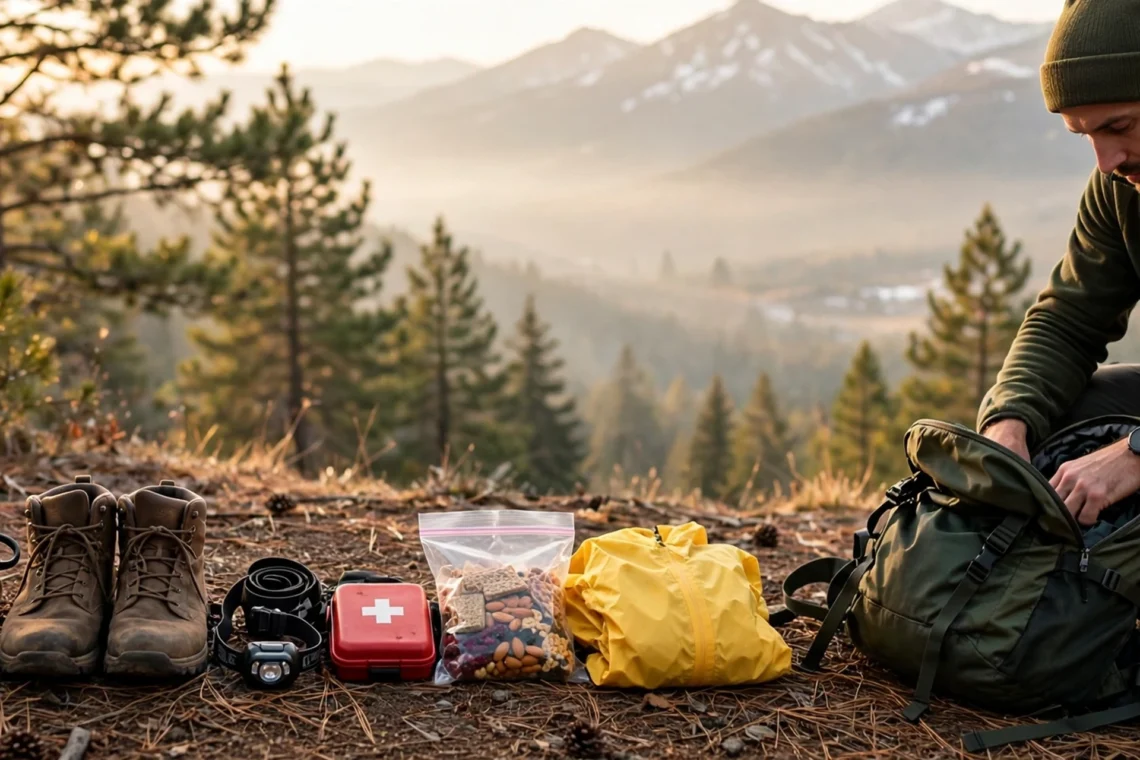
Learning how to prepare for a hiking trip comes down to four things: choosing the right trail, getting your body ready, packing the right gear, and having a safety plan. Get those four right and most of the problems hikers run into simply never happen.
Most hiking troubles do not start on the trail. They start at home, the night before, when the pack is too heavy, the shoes are brand new, or nobody knows where you went. This guide walks you through every step, from picking a trail to the morning you set off, so you can head out confident instead of guessing. It works for beginners on their first short hike and for anyone attempting a longer or higher trail for the first time.
Quick Answer
To prepare for a hiking trip, choose a trail that matches your fitness, check the weather and trail conditions, train with a loaded pack, and carry the Ten Essentials. Share your trip plan with someone before you go.
Quick-Guide Table
| Hike type | How to prepare | What to pack |
| First short hike | Pick a flat, well-marked trail; walk 2–3 times that week | Water, snacks, sun protection, charged phone |
| Day hike | Check weather, permits, and trail reports the night before | Ten Essentials in a 15–25 liter daypack |
| Steep or high hike | Train 4–8 weeks with hills and a loaded pack | Extra layers, more water, headlamp |
| Hike in one week | 2–3 practice walks; rest the day before | Gear check: shoes, rain jacket, first aid kit |
| Overnight hiking trip | Plan food, water, and campsite; check overnight forecast | Tent, sleeping bag, stove, water filter |
| Hiking with a group | Choose for the least fit member; share the trip plan | Group first aid kit, extra food and water |
Helpful List: The Night Before
- Check your pack against the Ten Essentials
- Recheck the weather forecast and think through your Plan B
- Lay out your clothes and shoes for the morning
- Plan your breakfast
- Share your trip plan with a trusted person
- Get to bed early for an early start
Start With The Right Trail
The first step in preparing for a hiking trip is knowing your own limits. Before you look at a single trail, ask yourself honestly how fit you are, how much hiking you have done before, and how much weight you can comfortably carry for hours. A trail that looks easy on a map can feel very different on a steep, rocky slope.
Check the details before you commit: total distance, elevation gain, terrain type, and how well the trail is marked. A flat 10-kilometre walk and a 10-kilometre climb are not the same hike. Beginners on uneven terrain typically average about 2 to 3 kilometers per hour, so use that pace to estimate your time, then add extra for breaks, photos, and lunch. If the maths says you will finish after dark, pick a shorter trail.
If you are hiking with a group, choose for the least experienced or least fit person, not the strongest. A trail everyone can finish safely is a good trail. Ask a ranger or check the park website for difficulty ratings if you are unsure.
Check The Weather, Permits, And Trail Conditions
Check the weather forecast for the elevation you will actually reach, not just the town at the bottom. Temperatures drop quickly as you climb, and a sunny valley can hide rain, wind, or even snow on a ridge. Check the forecast again the night before and the morning of the hike, because mountain weather changes fast.
Look up recent trail reports for closures, mud, snow, or water availability. A trail that was fine last month may be washed out or closed for repairs now. Check whether the park requires permits, parking passes, or reservations, and sort those out before the day, not at the trailhead. Park alerts and the visitor center or ranger station are the most reliable sources for this information, and a quick question to a ranger can save you a wasted trip.
Train For Your Hike: Fitness And Elevation
For a bigger hike, start training weeks ahead. Four to eight weeks is a good target for a longer or steeper trip, and it gives your body time to build endurance without injury. The training does not need to be complicated: walk or hike three to four times a week, gradually increasing your distance and adding hills, stairs, or treadmill inclines as you get fitter.
Add twice-weekly strength sessions focused on squats, lunges, step-downs, and calf raises. These protect your knees on steep descents, which is where most hiking injuries happen. And train with your pack: practice walking with your loaded backpack so your shoulders, back, and hips get used to the weight before the real day.
For elevation, the rule is to go slowly. Climb at a steady pace, take breaks, and give your body time to adjust to the thinner air. Drink more water than usual at altitude, and do not push through headaches or dizziness. If you feel unwell at height, the right move is to stop climbing and head down.
What To Eat Before Hiking
What you eat before a hike matters as much as what you carry. The night before and the morning of, eat a meal built on complex carbohydrates and some protein: pasta, rice, oats, bread, eggs, or yoghurt. Avoid heavy, greasy food that sits in your stomach, and avoid trying anything new on hike day.
On the trail, pack calorie-dense, no-cook snacks that are easy to eat while walking: nuts, dried fruit, trail mix, and energy bars. Eat small amounts regularly instead of waiting until you are exhausted. Always carry extra food, at least a day’s worth of emergency snacks, in case the hike takes longer than planned.
Plan your water the same way. A rough guide is about half a liter per hour of moderate hiking, and more in heat, at altitude, or on steep ground. Carry at least two liters for a day hike, and more if there is no reliable water source on the route.
What To Wear: Layers And Footwear
Dress in layers, because the weather on the trail changes fast. The three-layer system works for most hikes: a base layer of synthetic or merino wool that pulls sweat away from your skin, a mid-layer of lightweight fleece or a packable insulated jacket for warmth at rest stops or higher elevations, and an outer shell, a breathable waterproof and windproof rain jacket, for when the weather turns.
Do not wear cotton. It traps sweat, stays wet, and makes you cold, even on a mild day. Choose quick-drying hiking pants, leggings, or shorts, and wear merino wool or synthetic socks, which help prevent blisters. A wide-brimmed hat or cap, sunglasses, and sunscreen protect you from the sun, which is stronger at altitude.
Break in your footwear before the trip. Wear your hiking boots or trail runners on shorter local walks first. Never start a major hike in brand-new shoes: that is how blisters happen, and blisters can end a hike in the first hour.
The Ten Essentials: Your Hiking Preparation List
The Ten Essentials are the standard safety framework hikers have used for decades. They are ten systems, not ten products, and they cover what you need to handle an injury, a change in weather, or an unplanned night outdoors. Carry them on every hike, even a short day hike.
Navigation: a map, a compass, and a GPS device or offline phone map, and the knowledge to use them
Sun protection: sunglasses, sunscreen, and a hat
Insulation: an extra warm layer and a rain shell
Illumination: a headlamp with spare or fully charged batteries
First aid supplies: a small kit with blister care, bandages, and any personal medication
Fire: a lighter and waterproof matches or a fire starter
Repair kit and tools: a knife or multi-tool and some duct tape
Nutrition: extra food beyond what you plan to eat
Hydration: extra water and a way to treat water from streams
Emergency shelter: a lightweight emergency blanket or bivy
Think of the list as a framework, not a shopping list. Adjust it to the trip: a short local trail needs less than a remote mountain route, but the ten systems stay the same.
Pack Your Bag The Right Way
For a day hike, a 15 to 25 liter daypack is usually plenty. For an overnight trip, you will need a 45 to 65 liter pack to fit a tent, sleeping bag, and food. Either way, how you pack matters as much as what you pack.
Put heavy items close to your back and centered, with lighter items on top and around them. That keeps the weight balanced and stops the pack pulling you backwards. Keep water, snacks, and your rain jacket where you can reach them without taking the pack off. Before you leave, lift the pack and walk around the house with it. If it feels heavy now, it will feel twice as heavy on the third hour of a climb.
The Night Before Your Hike
The night before is when good preparation pays off. Lay out your pack and check it against the Ten Essentials, then check your water, food, and headlamp batteries one more time. Look at the weather forecast again and think through your Plan B: what will you do if the weather turns, or the trailhead car park is full?
Lay out your clothes and shoes so the morning is easy, and plan your breakfast. Then share your trip plan with a trusted person who is not coming with you: the trailhead, the planned route, and the time you expect to be back. Get to bed early. A tired hiker is a slow hiker, and an early start gives you the best light and the most time.
Preparing For A Hike In One Week
If you only have a week, you can still prepare well, as long as you are realistic. Do not try to cram a month of training into seven days. Instead, do two or three short practice walks with your loaded pack, on hills if you can, to test your shoes, your pack fit, and your pace.
Use one day for the logistics: research the trail, check permits and parking, read recent trail reports, and check the weather. Use another day for a full gear check: boots, rain jacket, headlamp, first aid kit, and water bottles, all working and packed. The day before the hike, rest. A tired body on hike day is worse than an undertrained one.
Safety On The Trail: The Checks That Matter Most
Leave a trip plan with someone you trust, and check in with them when you return. That single habit is the most important safety step in hiking. If something goes wrong and you do not come back on time, someone knows where to look.
Do not rely on your cell phone. Coverage is unreliable in the mountains, and a dead battery leaves you with nothing. In remote areas, consider a personal locator beacon. Carry a whistle: three blasts is the international distress signal.
Stay on the trail. Shortcuts and social trails damage the landscape and are how people get lost. If you do get lost, stop, stay calm and think before you move. Retrace your steps only if the way back is short and clear.
Keep your distance from wildlife, and never approach or feed animals. Watch for fast-rising streams after rain, and always have a second way out. In a thunderstorm, get off ridges and away from lone trees, and seek lower ground.
Hiking And Camping: Extra Preparation For Overnight Trips
An overnight trip needs more than a day hike. Add a tent, sleeping bag, sleeping pad, camp stove, fuel, and cookware to your pack. Plan food and water for the whole trip, and carry a water filter or purification tablets if you will refill from streams.
Nights in the mountains are colder than the day, so pack extra insulation for sleeping. Check the overnight forecast, not just the daytime one. Follow Leave No Trace: pack out all your rubbish, leave your campsite clean, and use established campsites where they exist. A good campsite is one nobody can tell you were there.
Common Mistakes To Avoid When Preparing For A Hike
The most common mistake is overpacking. Beginners often carry everything they own, and then spend the whole hike fighting the weight. Pack the Ten Essentials, then stop. If you have not used something on your last three hikes, you probably do not need it.
The second mistake is hiking in brand-new shoes. Blisters in the first hour can end a whole day. The third is skipping the weather check, or checking it once and never looking again. The fourth is carrying too little water or trusting a phone for navigation in a place with no signal. The fifth is choosing a trail harder than your fitness, because the distance looked short on the map. Elevation gain, not distance, is what makes a hike hard.
Conclusion
Preparing for a hiking trip comes down to four stages: pick the right trail, train your body, pack the Ten Essentials, and plan for safety. None of them needs expensive gear or expert knowledge. They need a little time, an honest look at your fitness, and a checklist used properly.
Start with a short hike, test your gear and your pace, and build up to longer and higher trails over time. Good preparation does not mean more stuff in your pack. It means the right stuff, a solid plan, and an early start, so the trail itself is the only challenge left.
FAQ’s:
How Long Should I Train Before A Hiking Trip?
For a longer or steeper hike, train 4 to 8 weeks ahead, walking 3 to 4 times a week with hills. For a short, easy trail, a few practice walks in the same week are enough.
What Should I Eat Before Hiking?
Eat complex carbs and some protein the night before and the morning of, like pasta, oats, or eggs. Avoid heavy, greasy food, and do not try anything new on hike day.
How Much Water Should I Carry On A Hike?
A rough guide is half a liter per hour of moderate hiking, more in heat or at altitude. Carry at least 2 liters for a day hike, and more if there is no water on the route.
Can I Hike In Brand-new Shoes?
No. Wear new boots or trail runners on shorter walks first to break them in. Starting a major hike in brand-new shoes is the fastest way to get blisters.
What Is The Most Important Safety Step Before Hiking?
Leave a trip plan with a trusted person who is not coming with you: the trailhead, route, and expected return time. Check in with them when you get back.
Disclaimer
This guide is for general information only, and travel conditions, prices, entry requirements, and opening times can change, so please check official travel advice and official sources before you travel. Travel3Ways is an independent travel information website and is not affiliated with any tourism board, airline, hotel, or booking service. Travel3Ways was created only to provide helpful information to visitors and does not engage in paid promotions or advertising.



One comment on “How To Prepare For A Hiking Trip: A Practical Guide For Beginners And Beyond”