
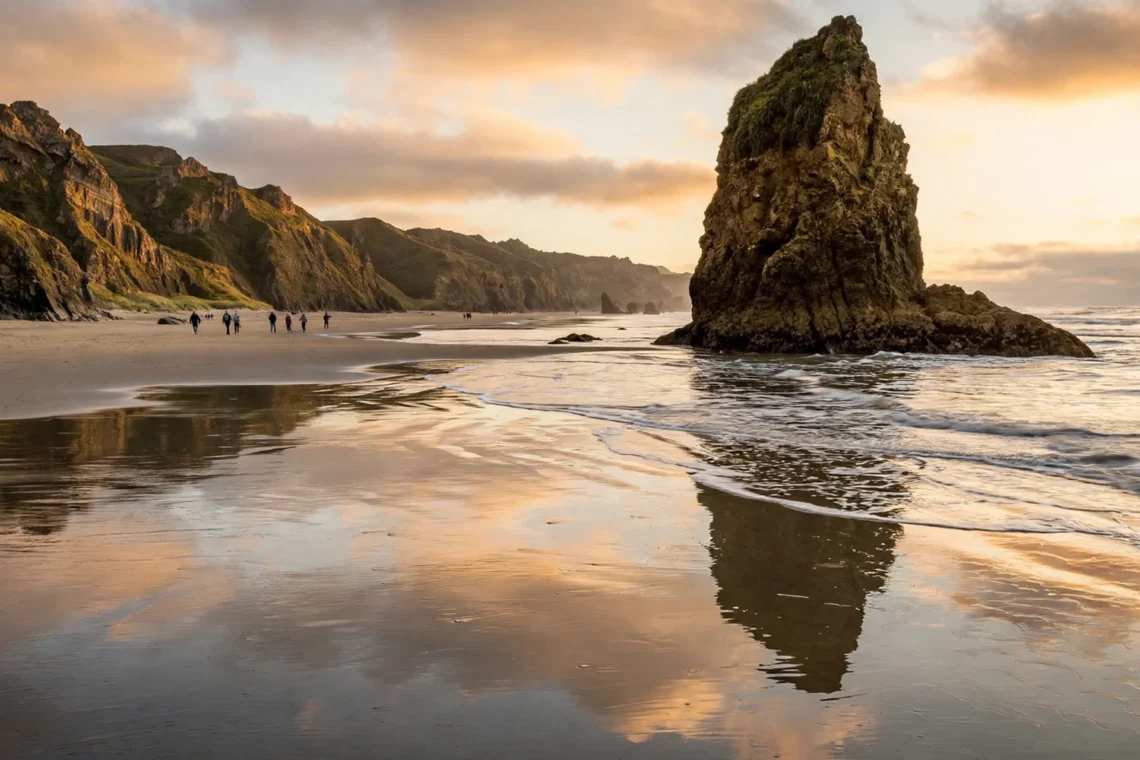
The US West Coast means the Pacific shores of California, Oregon, and Washington — over 1,200 miles of coastline and the three states feel very different from each other. Southern California is warm and sunny, with wide sandy beaches and classic beach towns. Northern California is dramatic and often foggy, with cliffs, coves, and long coastal drives. Oregon and Washington are rugged and wild, with sea stacks, tide pools, driftwood, and beaches that feel a long way from anywhere.
This guide covers the best beaches by state, the best picks for swimming, families, and surfing, the best time to go, a simple north-to-south road-trip route, planning tips, and the safety rules that matter on this coast. One quick note before we start: “west coast beaches FL” means Florida’s Gulf coast, which is a different place — this guide covers the Pacific West Coast. East Coast beaches are a different trip entirely and are not covered here.
Quick Answer
The best West Coast beaches are in California, Oregon, and Washington. Southern California is best for swimming and families, while Oregon and Washington offer wild scenery, sea stacks, and tide pools.
Quick-Guide Table
| Trip type | Best places or options | When to go |
| Family swimming | Coronado Beach, La Jolla Shores, Santa Monica | June–September, Southern California year-round |
| Surfing | Huntington Beach, Santa Monica, Malibu | Summer for beginners; year-round for experienced surfers |
| Tide pooling and photography | Cannon Beach, Ruby Beach, Rialto Beach, Pfeiffer Beach | Low tide, June–October |
| Wild scenery and quiet walks | Ruby Beach, Manzanita, Neskowin, Long Beach Peninsula | June–September |
| Road trip, north to south | Seattle to San Diego via Oregon and Big Sur | Late spring to early fall |
Helpful List: Before You Go
- Check the weather and surf forecast for the beach you plan to visit.
- Check the tide table — low tide is best for tide pooling and cove walks.
- Check the water temperature and pack a wetsuit if you plan to swim north of Southern California.
- Pack layers and a windproof jacket, even in summer.
- Swim only near a lifeguard, and never turn your back on the ocean.
- Check parking, passes, and dog rules for the beach before you drive there.
West Coast Beaches At A Glance
Southern California is the warm, swimmable end of the coast. The water is mild, the beaches are wide and sandy, and most have lifeguards, parking, and a town nearby. It is the part of the West Coast where a classic beach day — swimming, sunbathing, and a walk along the pier — works exactly as you would expect.
Northern California is cooler and moodier. Fog rolls in most mornings, the cliffs are steep, and the beaches are better for walking, photography, and coastal drives than for swimming. The scenery is some of the best on the whole coast, but you will want a jacket even in summer.
Oregon’s coastline is rugged and public — the entire 363 miles of coast is open to the public, with sea stacks, tide pools, and long sandy stretches. The water is cold and the surf is rough, so Oregon beaches are for walking, exploring, and watching the ocean rather than swimming.
Washington’s beaches are the wildest of all. Most of the best ones sit inside Olympic National Park, where the coast meets old-growth rainforest. They are dramatic, remote, and often empty — and the water is cold all year.
Water temperature drops as you go north, and Southern California is the only region where swimming without a wetsuit is normal. Remember that “best” depends on the trip: swimming, photography, surfing, or a quiet walk each need a different beach.
The Best West Coast Beaches In Washington
Ruby Beach is the most famous beach in Olympic National Park, and it earns the name. Sea stacks rise out of the surf, massive driftwood logs lie scattered across the sand, and rainforest trails start right behind the beach. It is best visited in summer, when the weather is driest and the light is best for photography.
Rialto Beach is wilder and less crowded. A long stretch of dark sand and driftwood leads to Hole-in-the-Wall, a natural rock arch you can walk through at low tide. It is a favourite with photographers, and a good surf spot for experienced surfers — but check the tide table before you go, because high tide cuts off the route to the arch.
La Push is a series of three small beaches near the town of Forks. Second Beach is the most popular: a short walk through the forest brings you to a beach framed by sea stacks, with tide pools at low tide. It feels remote even though the trail is short.
Long Beach Peninsula is the opposite of remote — miles of flat, wide sand, perfect for long walks, kite flying, and horseback riding. It is one of the longest beaches on the West Coast, and a good choice if you want space to yourself.
Alki Beach in Seattle is the city’s beach: a gentle, urban shore with skyline views across the water, a bike path, and restaurants nearby. It is the easiest Washington beach to visit, and a good first stop on a West Coast trip.
The Best West Coast Beaches In Oregon
Cannon Beach is the most photographed beach in Oregon, and it is easy to see why. Haystack Rock, a 235-foot sea stack, stands just offshore, and at low tide the rock pools around its base fill with sea stars, anemones, and crabs. The town is an easy walk from the sand, with shops and cafes for after the beach. Bring warm layers for the coastal wind, and check the tide chart before exploring the rock’s base.
Seaside is the classic family beach town. A historic oceanfront promenade runs along a wide, flat beach, with shallow, gentle wading water, beach swings, evening bonfires, and an aquarium and arcades a short walk away. The shoreline is wide and flat, with easy access for strollers and wheelchairs.
Manzanita is quieter — seven miles of sand with a small, relaxed town at one end. It is a good choice for long walks and for travellers who want a beach without the crowds. Neskowin is quieter still, a small cove with sea stacks and a peaceful, uncrowded feel.
Sunset Bay State Park, near Charleston on the southern Oregon coast, is one of the few calm, swimmable coves on the Oregon coast. Towering sea cliffs shelter the bay, creating calmer water than the open beaches nearby. It is still cold, but on a warm summer day it is the closest Oregon gets to a swimming beach.
One thing to know about Oregon: the beaches are public along the whole coast, so you can walk almost anywhere. But parking lots fill up in summer, especially at Cannon Beach and Seaside, so arrive early.
The Best West Coast Beaches In California
Coronado Beach in San Diego is one of the best family beaches in California. The sand is wide and flat, the waves are gentle, lifeguards are on duty, and there is a grassy park nearby for picnics. The sand even sparkles in the sun, thanks to the mineral mica mixed into it.
La Jolla Cove and La Jolla Shores, also in San Diego, are two beaches in one place. The Cove is a small, sheltered bay where sea lions rest on the rocks and snorkelers explore the clear water. La Jolla Shores is the wider, gentler beach next door, with gentle summer waves that suit families and beginner surfers.
Santa Monica is the classic Southern California beach day: a wide sandy shore, a bike path, a pier with an amusement park, and lifeguards on duty. It is busy in summer, but it is also one of the easiest beaches to visit, with parking, food, and public transport all close by.
Malibu has two very different beaches. Zuma Beach is wide, sandy, and good for surfing and sunbathing. El Matador State Beach is smaller and more dramatic — hidden pocket coves framed by tall bluffs and sandstone arches, with walk-in sea caves and golden-hour photography. It is reached by a steep dirt trail and stairs, there is no food or water on the sand, and the small blufftop car park fills early, so arrive before midday.
Carmel Beach, near Monterey, is scenic, dog-friendly, and close to town. Dogs can run off-leash on the sand, which is rare in California, and the beach is a short walk from Carmel-by-the-Sea’s shops and restaurants.
Pfeiffer Beach in Big Sur is famous for its patches of purple-tinted sand and the Keyhole Arch, a rock formation the sun shines through at sunset. It sits at the end of a narrow, winding road, and it is frequently windy with rough surf — better for photography and walks than for swimming.
Baker Beach in San Francisco sits beneath the cliffs of the Presidio, with unbeatable views of the Golden Gate Bridge. It has picnic areas and coastal trails, and it is a great place to watch the sunset. Strong currents make swimming unsafe here, so enjoy the view from the sand.
Best West Coast Beaches For Swimming
The honest answer is that the best swimming beaches are almost all in Southern California. Coronado Beach, La Jolla Shores, Santa Monica, and Laguna Beach all have gentle waves, lifeguards, and water warm enough to swim in without a wetsuit in summer. These are the beaches to choose if swimming is the main point of your trip.
Sunset Bay in Oregon is the rare northern exception — a sheltered cove with calmer water than the open Oregon beaches. It is still cold, but on a warm day it is swimmable.
North of Southern California, the water is cold — often around 55 to 60 degrees Fahrenheit — and most beaches have rough surf. Wetsuits are normal for anyone getting in the water, and many beaches are not safe for swimming at all. Baker Beach in San Francisco, Pfeiffer Beach in Big Sur, and most Oregon and Washington beaches fall into this group: beautiful to look at, dangerous to swim in.
Wherever you swim, swim only near a lifeguard and check local conditions the same day. Conditions change with the tide, the wind, and the swell and a beach that was calm yesterday can be rough today.
Best West Coast Beaches For Families
Seaside in Oregon is one of the best family beaches on the coast. The sand is wide and flat, the water is shallow and gentle for wading, and the promenade, aquarium, and bonfire pits keep children busy all day.
In San Diego, Coronado Beach and La Jolla Shores are the family favorites: lifeguards on duty, gentle summer waves, wide flat sand, and grassy parks nearby for picnics. Santa Monica is another easy choice, with its pier, playground, and bike path.
Cannon Beach is a hit with children for a different reason: tide pooling at low tide. Walking around Haystack Rock’s base and finding sea stars and anemones in the rock pools is the kind of thing children remember for years. Check the tide table first — the pools are only visible at low tide.
One practical note: bring layers for children too. Coastal wind and fog are normal even in summer, and a child in a swimsuit can get cold fast when the fog rolls in.
Best West Coast Beaches For Surfing
Huntington Beach, known as “Surf City USA”, is the heart of California surf culture. The waves are consistent, the beach is wide, and the surf is good for beginners and pros alike. Surf schools and board rentals are easy to find, and the pier area has a lively, friendly atmosphere.
Santa Monica and Malibu are good for beginners too, with gentler waves and surf schools nearby. Zuma Beach in Malibu is a popular choice for learning, while the waves at Huntington suit more experienced surfers.
On the Oregon coast and at Rialto Beach in Washington, the surfing is colder and wilder. Wetsuits are essential, the water is rough, and these beaches suit experienced surfers rather than beginners. The scenery is spectacular, but the conditions are serious.
Surf conditions change daily, so check the local surf forecast before you go, and never surf alone. If you are new to surfing, take a lesson — the ocean on this coast does not forgive mistakes.
When Is The Best Time To Visit West Coast Beaches?
The best time depends on which part of the coast you are visiting. The Washington coast is best from June to September, when the weather is driest and warmest. The Oregon coast is best from June to October. Northern California is best from May to October. Southern California is good year-round, with the warmest water in late summer.
Summer, from June to August, is the warmest season and the busiest. Beaches fill up, parking lots are crowded, and accommodation costs more. Spring and fall are quieter, with milder weather and fewer people — often the best time to visit if you can be flexible. Winter is storm-watching season in the Pacific Northwest: dramatic waves, empty beaches, and cosy towns, but also rain and cold wind.
One thing to expect is coastal fog. Southern California has “June gloom”, a layer of morning cloud that usually clears by afternoon. Northern California has morning fog for much of the year. It is normal, and it usually burns off — but pack a jacket either way.
West Coast Beaches By Road: A Simple North-to-South Route
The simplest way to see the West Coast’s beaches is to drive north to south. Start in Seattle with Alki Beach, then head down the Washington coast to Long Beach Peninsula and Ruby Beach in Olympic National Park. Continue through Oregon — Cannon Beach, Seaside, and Newport — then into California: Big Sur and Pfeiffer Beach, Carmel, Santa Monica, and finally San Diego.
The full drive is long, so plan one region per trip rather than trying to see everything. A week in Southern California, or a week driving the Oregon coast, will give you a better trip than a rushed drive through all three states.
Before you drive, plot the beaches on a map. Some of the best ones sit at the end of narrow roads — Pfeiffer Beach in Big Sur and Ruby Beach in Olympic National Park are both a drive from the main highway, and the roads are slow. Knowing the route in advance saves time and frustration.
Parking and passes are worth checking too. Many California state beaches charge for parking, and the car parks at popular beaches fill up early in summer. Olympic National Park beaches need a park pass, which you can buy at the park entrance or online.
How To Plan Your West Coast Beach Trip
Start by picking one region per trip: Southern California, Northern California, Oregon, or Washington. Each one has enough beaches for a full holiday, and trying to cover all three states in one trip usually means spending most of your time driving.
Check the tide table before visiting a beach for tide pooling or a remote cove walk. Low tide is when the rock pools appear and when you can walk to places like Hole-in-the-Wall at Rialto Beach. At high tide, those same places can be cut off or dangerous.
Pack layers, sunscreen, water, and a windproof jacket. Coastal weather changes fast — a sunny morning can turn foggy and windy by afternoon, especially in Northern California and the Pacific Northwest. Sunscreen matters even on cloudy days, because the sun reflects off the sand and water.
Book accommodation early in summer, especially in Cannon Beach, Big Sur, and San Diego, where the best places fill up months ahead. And check whether the beach allows dogs, and whether a leash is required — the rules vary by beach, and they are enforced.
Safety Tips For West Coast Beaches
Rip currents are the most serious danger on this coast. They are strong currents that pull swimmers out to sea. If you are caught in one, stay calm, do not swim against the current, and swim parallel to the shore until you are out of it, then swim back to the beach. If you cannot escape, float and call or wave for help.
Sneaker waves are a real West Coast hazard. These are larger-than-average waves that suddenly surge far up the beach after a period of calm surf. They can knock you down and drag you into the ocean. Never turn your back on the ocean, and watch the waves for at least 15 minutes before getting close to the water’s edge.
Cold water is a danger even on hot days. Pacific water is often around 55 to 60 degrees Fahrenheit, and cold water drains body heat far faster than cold air. Wear a wetsuit if you plan to swim or surf north of Southern California, and do not stay in the water longer than you are comfortable.
Tides and cliffs need respect too. High tide can cut off the way back on remote beaches, so check the tide table before you walks. Stay off jetties, rocks, and wet logs during high surf — the waves can sweep you off without warning.
Swim only near a lifeguard, and check the local surf and weather forecast before going in the water. If a beach has no lifeguard, treat the water as a place to look at, not to swim in.
Common Mistakes To Avoid
The most common mistake is expecting warm water everywhere. Only Southern California is reliably swimmable — north of there, the water is cold and the surf is rough. Pack a wetsuit or plan to stay on the sand.
Another common mistake is visiting a tide-pool beach at high tide and finding nothing to see. The rock pools only appear at low tide, so check the tide table before you goes.
Forgetting layers is another one. Coastal wind and fog are normal even in summer, and a sunny morning can turn cold by afternoon. A windproof jacket and a warm layer will save your day.
Trying to see all three states in one short trip is a mistake too. The coast is over 1,200 miles long, and the driving is slow. Pick one region and enjoy it properly.
Never turn your back on the ocean for a photo. Sneaker waves do not give warnings, and a moment of inattention is all it takes. And do not assume every beach has lifeguards, food, or parking — many northern beaches have none of these, so bring what you need.
Conclusion
The best West Coast beach depends on your trip. Southern California is the choice for swimming and families, with warm water, lifeguards, and classic beach towns. Oregon and Washington are the choice for wild scenery and tide pools, with sea stacks, driftwood, and beaches that feel like the edge of the world. Northern California is the choice for cliffs and photography, with Big Sur, the Golden Gate, and foggy, dramatic shores.
Before you go, check three things: the weather and surf forecast, the tide table, and the water temperature. Those three checks will tell you whether the beach is safe to swim at, whether the tide pools will be visible, and whether you need a wetsuit or just a towel.
Pick one region, go in the right season, pack layers, and respect the ocean. It is beautiful, but it is not a swimming pool — and that is exactly what makes it worth visiting.
FAQ’s:
What Is The Best West Coast Beach?
There is no single best beach. Southern California suits swimming and families, Oregon and Washington suit wild scenery and tide pools, and Northern California suits cliffs and photography.
Can You Swim At West Coast Beaches?
Yes, in Southern California, where beaches like Coronado and La Jolla Shores have gentle waves and lifeguards. Further north the water is cold and rough, so swimming is often unsafe.
When Is The Best Time To Visit West Coast Beaches?
It depends on the region. Washington is best from June to September, Oregon from June to October, Northern California from May to October, and Southern California is good year-round.
Are West Coast Beaches Safe?
They can be, if you respect the ocean. Watch for rip currents and sneaker waves, never turn your back on the sea, swim only near a lifeguard, and check the forecast before going in.
Which West Coast Beach Is Best For Families?
Seaside in Oregon, Coronado Beach and La Jolla Shores in San Diego, and Santa Monica are great for families, with lifeguards, gentle waves, wide sand, and easy access.
Disclaimer
This article is for general information only, and travel conditions, prices, entry requirements, and opening times can change, so please check official travel advice and official sources before you travel. Travel3Ways is an independent travel information website and is not affiliated with any tourism board, airline, hotel, or booking service, and it was created only to provide helpful information to visitors and does not engage in paid promotions or advertising.




2 Comments on “West Coast Beaches: The Best Shores In California, Oregon, And Washington”