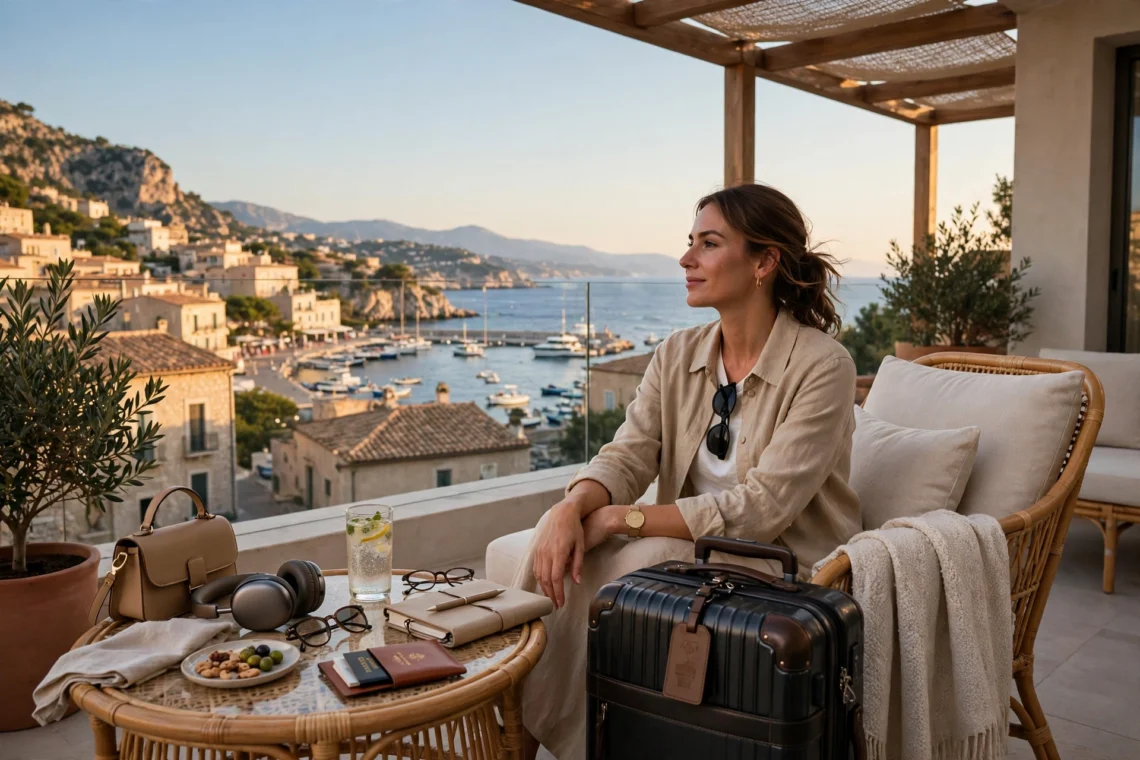
Luxury solo travel is not about spending the most money. It is about travelling alone with privacy, control over your schedule, comfort, and good service. You choose where to go, when to wake up, what to eat, and how long to stay. No one else decides the pace. That freedom is the real luxury.
This is a planning guide, not a sales list. It is for first-time solo travellers, for solo women, and for travellers over 40 and over 50 who want to travel alone in comfort. It answers the questions that decide whether a solo trip works: where to go, what it costs, how to avoid paying double for a room made for two, how to stay safe, and how to plan it well.
Quick Answer
Luxury solo travel means travelling alone with privacy, comfort, and control over your schedule. Choose a safe, easy destination first, ask about the single supplement, and book trusted transfers and a good hotel.
Quick-Guide Table
| Possible problem | What to check | Recommended action |
| Paying double for a room | Single supplement, room rate, and what is included | Ask if the supplement can be reduced or waived, especially for longer stays or shoulder season |
| First trip feels stressful | First-day logistics, hotel location, and transport | Book VIP airport fast-track, a private driver, and a half-day private city orientation |
| Feeling unsafe alone | Hotel safety features, area, and trusted transport | Choose a hotel with 24-hour reception and key-card lift access, and use drivers arranged through the hotel |
| Trip is too rushed | Number of places, travel time, and rest days | Choose 2–3 places, not 6, and leave time to rest |
| Costs are higher than expected | What is included, what is extra, and cancellation terms | Get a clear written quote before you pay, and confirm flights, transfers, meals, and tips |
Helpful List — Planning Your Luxury Solo Trip
- Choose your trip type: Rest, culture, food, wildlife, or a cruise — pick one main theme.
- Pick a safe, easy destination: Check official travel advice, season, and how easy it is to move around alone.
- Ask about the single supplement: Ask before you book, especially for longer stays and shoulder season.
- Book first-day logistics: VIP airport fast-track, a private driver, and a half-day private orientation.
- Check what is included: Stay, transfers, guides, meals, and cancellation terms — get it in writing.
- Share your plans: Share your itinerary with a trusted contact, buy travel insurance, and check entry and visa rules.
What Luxury Solo Travel Really Means
At its simplest, luxury solo travel means a trip that is built around one person. Privacy is the first part. You have a private room, a quiet base, and time that is fully your own. You are not sharing a bathroom with strangers, waiting for a group to be ready, or eating at a table set for two when you are alone.
Discreet service is the second part. A good hotel or villa will notice what you need without hovering. Staff will remember your name, your coffee order, and that you prefer a quiet table. They will arrange a trusted driver, a private guide, or a table at a good restaurant without making a fuss. That kind of service matters more when you travel alone, because there is no one else to sort out a problem.
A safe location and easy transport are the third part. A luxury stay in a good area, close to the centre, with a 24-hour reception and a trusted driver, means you can walk out in the evening without worrying about how to get back. That is comfort, not just convenience.
Luxury alone is different from luxury as a couple. A couple’s room is built for two people, a couple’s table is set for two, and a couple’s pace is a compromise. A solo trip is built for one. The room is yours, the table is yours, and the pace is yours. That is why a solo trip can feel more luxurious than a couple’s trip at the same price.
A private trip fits best when you want total control — a restful week, a food trip, or a wildlife trip with a private guide. A small group fits better when you want company without giving up independence. Many solo travellers mix the two: a private stay, with a small-group day tour or a cooking class, so they meet people when they want to, and are alone when they do not.
Best Destinations For A First Luxury Solo Trip
A solo-friendly destination has four things: safety, easy movement, good infrastructure, and English widely spoken in tourist areas. It should be easy to get from the airport to your hotel, easy to walk around, and easy to find a good meal alone without feeling out of place.
For culture and food, Paris, Lisbon, and Tokyo are strong first choices. Travelling to Italy alone also suits a first solo trip for culture and food. Paris has world-class museums, food, and hotels, and a good concierge can arrange after-hours museum access, a private culinary tour, or a chef’s table. Lisbon is smaller, warmer, and easier to walk, with good food and a relaxed pace. Tokyo is built for solo travel. Eating alone is completely normal, from ramen bars to chef’s counters, and public transport is clean, safe, and easy to use.
For wellness and calm, Ubud in Bali and Bhutan are good choices. Ubud has private villas, spa rituals, and quiet gardens, with a slower pace that suits a restful trip. Bhutan has guided monastery hikes, meditation, and a sense of space that is hard to find elsewhere. Both work well for a first solo trip because the stay itself is part of the experience, not just a place to sleep.
For wildlife and remote travel, Rwanda and Botswana are strong choices, with a private guide and vehicle. Lodges in Rwanda and Botswana offer private game vehicles, dedicated trackers, and secure suites, so you can explore at your own pace and retreat to privacy at the end of the day. These trips need more planning, and a good operator will arrange transfers, guides, and safety in advance.
Before you choose, check three things. First, check official travel advice for the destination, as safety guidance changes. Second, check the season, as weather and prices change with it. Third, check how easy it is to move around alone — whether you need a driver, whether public transport is safe at night, and whether your hotel can arrange trusted transport.
Luxury Solo Travel Packages — What To Look For
A luxury solo travel package should be clear about what it includes. A good package includes the stay, transfers, guides, and at least some meals or experiences. It should also be clear about what is left out — flights, tips, drinks, or activities that cost extra. If a package does not list what is included, ask before you book.
There are two main types. A private bespoke trip is built just for you, with a private guide, a private driver, and a schedule you choose. It costs more, but it gives you total control. A small-group departure is a set itinerary with a small group, usually 8 to 16 people, with a private room and a guide. It costs less, and it gives you company without giving up your own room.
To compare packages, look at four things. First, what is included and what is extra. Second, the cancellation terms, as luxury trips are often booked months ahead. Third, the group size, as a smaller group means more attention. Fourth, whether the operator has dedicated solo departures, with private rooms and no single supplement on select dates.
When you look for the best luxury solo travel companies, check the same things: solo departures, private rooms, small group size, and clear pricing. Names often mentioned for this kind of travel include Black Tomato and Pelorus for fully private trips, GeoEx, Abercrombie & Kent, and Cox & Kings for small-group and guided journeys, and Haute Retreats for serviced private villas. Do not choose by name alone. Check the current itinerary, the current price, and the current terms, as all of these change.
Use a travel advisor when the trip is complex — a multi-country trip, a safari, or a cruise with several stops. A good advisor will know which operators waive the single supplement, which hotels are solo-friendly, and which dates offer the best value. Book directly when the trip is simple — a city break, a villa, or a hotel you already know.
The Single Supplement — And How To Avoid Paying Double
The single supplement is the extra charge solo travellers pay for a room set up for two. Hotels and cruise lines price rooms for double occupancy. When one person occupies the room, the operator charges extra to make up for the lost second guest. That extra charge is the single supplement.
How much it adds depends on the property, the sailing, and the season. Some properties still charge up to twice the double rate, which means a solo traveller pays the full price for two people. Others now offer solo rates at about 130 to 150 percent of the double rate, instead of 200 percent. Some waive the supplement entirely for standard rooms, or for select departures.
Waived or reduced supplements are most common on select departures, especially in shoulder season or for longer stays. Some cruise lines now offer solo cabins designed and priced for one, with no supplement at all. Luxury cruise lines such as Tauck and Regent Seven Seas, and small-ship lines such as The Ritz-Carlton Yacht Collection, Silversea, and Seabourn, often reduce or waive the supplement on select sailings. Always check the current offer for your specific sailing, as it changes by date and cabin type.
How to ask matters. Ask directly, before you book, whether the supplement can be reduced or waived. Ask about longer stays of seven nights or more, as the supplement is often negotiable for longer trips. Ask about shoulder season, when hotels and cruise lines are more likely to waive it. Book directly, or through an advisor who knows the operator, as the supplement is often not shown clearly online.
The cheapest solo rate is not always the best value. A room with a waived supplement but a poor location, no breakfast, and no transfers can cost more in the end than a slightly higher rate that includes those things. Compare the total cost, not just the room rate.
How Much Does Luxury Solo Travel Cost?
Costs vary widely, so they must be given as ranges, never as a single fixed price. What drives the cost is the destination, the season, the stay, the staffing, and the experiences. A city hotel in shoulder season costs far less than a fully staffed villa in peak season, even in the same country.
As a rough guide, a fully bespoke luxury solo trip typically starts at about $1,000 or more per night, scaling to $10,000 to $40,000 or more per week for a fully staffed villa, private aviation, or an ultra-luxury expedition cruise. These are benchmarks from the travel industry, not quotes. A real price depends on the destination, the dates, the property, and what is included.
Where the money goes is also important. The stay is usually the largest cost, followed by transfers, guides, and food. A private driver, a private guide, and a chef all add to the cost, but they also add to the comfort and safety. A villa with a chef and a driver costs more than a hotel room, but it also means you do not need to arrange transport or meals each day.
You can save without losing comfort. Travel in shoulder season, when prices are lower and crowds are smaller. Stay longer in one place, instead of moving every night, as moving adds transport costs and stress. Choose a boutique hotel with a good location, instead of a large resort far from the centre. Ask about the single supplement, as waiving it can save hundreds of dollars per night.
Before you pay, confirm what is included and what is extra. Check whether flights, transfers, meals, drinks, tips, and activities are included. Check the cancellation terms, and whether travel insurance is required. A clear, written quote is better than a verbal promise.
Luxury Solo Travel Female — Safety And Comfort
Safety matters more when you travel alone, but it should not stop you travelling. Millions of women travel alone safely every year, and the key is preparation, choosing the right destination, and trusting your instincts.
Choosing the right stay is the first step. Look for a hotel with a 24-hour staffed reception, key-card access to guest floors, and a room with a secondary lock — a chain or a deadbolt — and a peephole. Ask for a room on an upper floor, near the lift and staffed areas, not on the ground floor and not at the end of a long corridor. Some hotels offer women-only floors, with female staff on request, enhanced security, and rooms near lifts and reception. Crowne Plaza, for example, offers a women-travelling-solo programme at select properties.
Practical steps make a difference. Share your detailed itinerary with a trusted contact, and check in regularly. Use trusted drivers arranged through your hotel, not unmarked cars. Keep valuables in the in-room safe or the front-desk safe, and keep copies of your passport, cards, and insurance separate from the originals. Trust your instincts — if something feels wrong, leave.
Dress and local customs matter too. Research local dress codes before you travel, and dress in a way that does not make you stand out. Leave flashy jewellery at home, and carry only one credit card and a small amount of cash. Ask a female hotel employee whether she feels safe in the area at night, and ask the concierge to mark any areas to avoid on your map.
When to get help is also important. If you feel unsafe, ask the hotel, your guide, or local emergency services for help. A good hotel will have a 24-hour reception and a concierge who can arrange a trusted driver, a safe route, or a change of room. Do not wait until a problem becomes serious.
Luxury Solo Travel Over 50 — And Luxury Travel For Singles Over 40
Many solo travellers start after 40 or 50. They have more time, more budget, and more freedom to choose. They are not travelling alone because they have no one to travel with. They are travelling alone because they want to.
The best luxury solo travel over 50 is slower, with more time in each place, more wellness, more culture, and smaller groups. A week in one place, with a good hotel, a private guide, and time to rest, is often better than a rushed tour of five cities. Wellness retreats, food trips, and cultural tours all work well at this stage, as they do not require a fast pace or a high level of fitness.
Luxury travel for singles over 40 often means group trips that mix independence with company. Companies such as Flash Pack offer small-group departures for travellers in their 30s and 40s, with a private room and a shared itinerary. That format works well for people who want to meet others without giving up their own room or their own schedule.
What to look for at this stage is the pace, the group size, the activity level, and the single room. A trip with a slower pace, a smaller group, and a private room is usually better than a fast-paced tour with a large group and shared rooms. Check the activity level, as some trips involve long walks, stairs, or hiking, while others are more relaxed.
Health and insurance are also important. Check that your travel insurance covers your destination, your activities, and any pre-existing conditions. Carry enough medication for the trip, plus a copy of your prescription. Check your fitness for the trip, and ask your doctor if you are unsure. A good operator will ask about health and fitness before you book, and will tell you if a trip is not suitable.
How To Plan Your Luxury Solo Trip
Start with the trip you want, not the trip someone else took. Do you want rest, culture, food, wildlife, or a cruise? Choose one main theme, and build the trip around it. A trip that tries to do everything will do nothing well.
Choose two or three places, not six. A week in two places, with time to rest, is better than a week in six places, with no time to enjoy any of them. Leave time to rest, especially on the first day, when you are tired from travel.
Book first-day logistics in advance. Book VIP airport fast-track assistance, a private driver, and a half-day private city orientation. Those three things establish comfort and local bearings on the first day, and they make the rest of the trip easier. A private driver who meets you at the airport, a fast-track through immigration, and a short tour of the city with a local guide are worth the cost.
Book three to six months ahead for peak season, as the best rooms and the best guides sell out early. Check entry, visa, and insurance rules before you book, as they change. Some destinations require a visa in advance, some require proof of onward travel, and some require travel insurance.
A simple planning checklist helps. Flights, stay, transfers, guides, dining, and what to pack. For each, check the current price, the current terms, and what is included. Keep a copy of your itinerary, your bookings, and your emergency contacts with you, and share a copy with someone at home.
Common Mistakes To Avoid
The most common mistake is booking a room for two and paying the supplement without asking. Always ask whether the supplement can be reduced or waived, especially for longer stays or shoulder season.
Packing too much into too few days is another mistake. A trip with no rest time is tiring, not luxurious. Leave time to rest, to eat well, and to enjoy the place you are in.
Choosing a stay far from the centre, or with no trusted transport at night, is a costly mistake. A cheaper hotel far from the centre can cost more in taxis, and can feel unsafe at night. Choose a good location, with a 24-hour reception and trusted transport.
Assuming all prices, offers, and entry rules are the same as last year is a mistake. Prices change, offers change, and entry rules change. Check the current price, the current offer, and the current entry rules before you book.
Travelling without insurance, or without sharing your itinerary with someone at home, is the final mistake. Travel insurance covers medical costs, cancellations, and lost luggage. Sharing your itinerary means someone knows where you are, and can help if something goes wrong.
Conclusion
Luxury solo travel is about comfort, privacy, and freedom — not about spending the most. Choose a safe, easy destination, ask about the single supplement, bWhat Is Luxury Solo Travel?ook good first-day logistics, and leave time to enjoy it. That simple formula works for a first trip, and for a tenth trip.
Confirm current prices, offers, and entry rules before booking, as all of these change. Check the operator’s current terms, the hotel’s current price, and the destination’s current travel advice. Choose the trip that fits you — your pace, your interests, and your budget — not the trip that fits someone else.
FAQ’s:
What is luxury solo travel?
Luxury solo travel means travelling alone with privacy, comfort, and control over your schedule. It is about a good base, discreet service, and time that is fully your own, not just high prices.
How Can I Avoid The Single Supplement?
Ask before you book if the supplement can be reduced or waived. It is often negotiable for longer stays and shoulder season, and some cruise lines offer solo cabins or waive it on select departures.
Is Luxury Solo Travel Safe For Women?
Yes, with preparation. Choose a hotel with 24-hour reception and key-card lift access, share your itinerary, use trusted drivers, keep valuables in the safe, and trust your instincts if something feels wrong.
What Is The Best Luxury Solo Trip Over 50?
A slower trip works best — one place for a week, with wellness, culture, and small groups. Look for a good pace, a private room, and a hotel with a good location and trusted transport.
How Much Does Luxury Solo Travel Cost?
Costs vary widely by destination, season, and stay. As a rough guide, bespoke trips start at about $1,000+ per night, and fully staffed villas can cost $10,000–$40,000+ per week — these are benchmarks, not quotes.
Disclaimer
This article is for general travel information only. Prices, single-supplement offers, entry rules, and travel advice differ by destination, season, and operator, and change often. Please check the operator’s current terms, your hotel’s current price, and official travel advice before booking or travelling. If you have a health condition, or are unsure about fitness for a trip, ask a qualified professional for advice. Travel safely, follow local advice, and use travel insurance for your trip.