
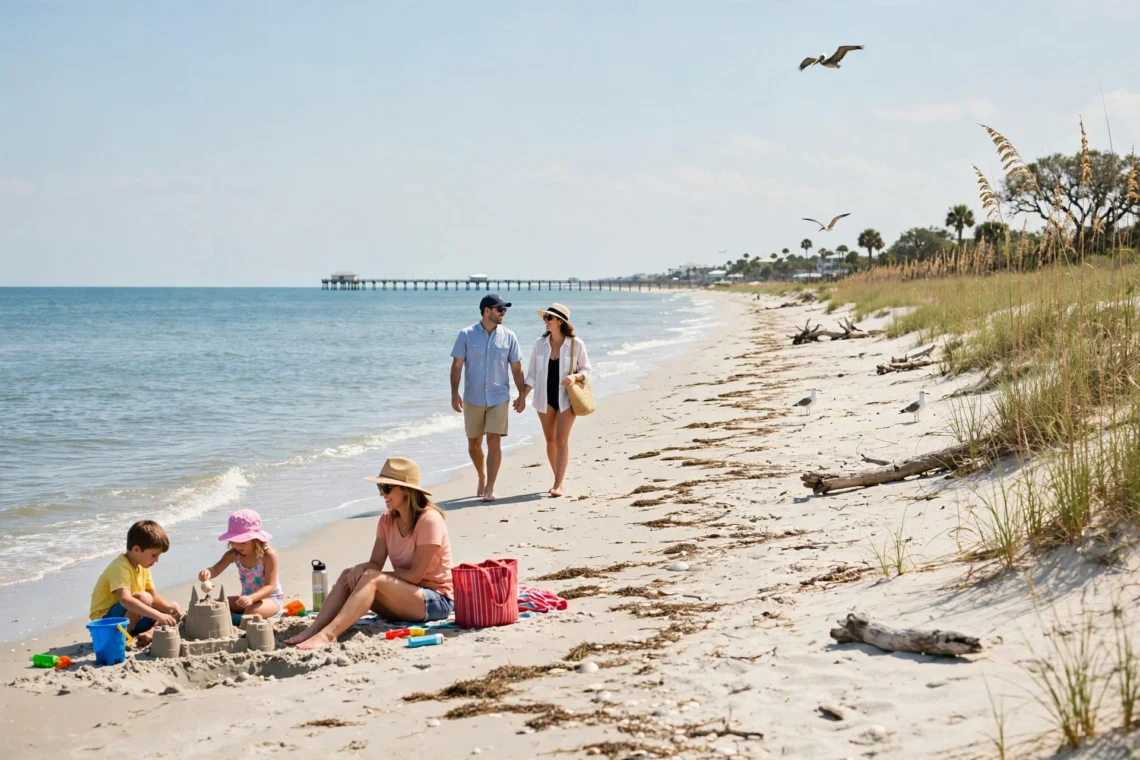
Texas has about 367 miles of Gulf shoreline, but that single number hides how different its beaches really are. One stretch is a busy resort island with hotels, restaurants, and water sports. Another is a calm bay beach where small children can paddle in shallow water. A third is miles of empty sand with no shops, no shade, and no one else in sight. That is why there is no single answer to the question of the best beaches in Texas. The right beach depends on who is travelling, what kind of day they want, and how far they are willing to drive.
This guide groups the coast by trip type, so you can choose quickly and with honest expectations. It covers lively resort beaches, calm family beaches, couples’ beaches, and quiet natural coastline, along with the best time to go, safety, and practical planning. Texas water is warm for much of the year and the sand is wide and flat, but the water is often brownish from river sediment, and conditions change with wind, rain, and season. If you pick by trip type first and check conditions close to your visit, you will have a much better day.
Quick Answer
The best beach in Texas depends on your trip: South Padre Island for a resort stay, Rockport Beach or Stewart Beach for family swimming, and Padre Island National Seashore for quiet nature. Check lifeguards, water conditions, and official rules first.
Quick-Guide Table
| Possible problem | What to check | Recommended action |
| Water looks brown or murky | Wind direction, recent rain, and local beach reports | Choose South Padre Island for clearer water, or wait for southerly winds and calmer conditions |
| No lifeguard on duty | Beach signs, flags, and the park or city page | Swim only in shallow, calm water, stay with others, and do not swim alone |
| Strong currents near a pier or jetty | Surf zone forecast, warning flags, and posted signs | Do not swim near jetties or piers, and leave the water if the current feels strong |
| Beach closed or hard to reach | Official closure notices, including SpaceX launch closures at Boca Chica | Pick another beach for the day and check the closure schedule before driving there |
| Soft sand traps your car | Beach driving rules, permit needs, and tide times | Stay on firm, wet sand, keep to the 15 mph limit, and avoid driving far down the beach without 4WD |
| Sargassum seaweed covers the sand | Local beach conditions and recent reports | Visit a different beach nearby, or plan your trip outside the main spring and summer seaweed season |
Helpful List: Before You Go To A Texas Beach
- Pick the beach by trip type first: resort, family swimming, couples, or quiet nature.
- Check the weather, wind, surf zone forecast, and tide for the day of your visit.
- Check Texas Beach Watch and local advisories, especially after heavy rain.
- Check lifeguard cover, parking, permits, and any closures, including Boca Chica launch closures.
- Pack sun protection, water, food, insect repellent, and a bag to carry out all trash.
- Arrive early on summer weekends and holidays, when parking fills up fast.
What Makes A Texas Beach “best”?
Water clarity is the first thing most visitors notice, and it varies a lot along the coast. South Padre Island, at the southern tip of Texas, usually has the clearest and warmest water in the state. Galveston, further north and closer to the Mississippi River outflow, is often murkier, even on a sunny day. That brown colour is sediment in the water, not a sign that the beach is dirty, but it does mean you should not expect the same look everywhere. Warmth matters too. Gulf water is warmest in summer and coolest in winter, and a strong northerly wind can cool it quickly, even in spring or autumn.
Sand and waves matter just as much. Texas beaches are wide, flat, and easy to walk on, which suits families, beach games, and long walks. The waves are usually gentle, especially on bay beaches, so this is not a coast known for big surf. That is good news for swimming with children, but surfers should keep their expectations modest and check the surf forecast before going.
Facilities are the next difference. Some beaches have restrooms, showers, lifeguards, chair rentals, food stands, and paved parking. Others have nothing at all. A beach with full facilities is easier for a family day out, while a beach with no facilities can feel wilder and quieter, as long as you bring everything you need.
Crowds change the feel of a place completely. The same beach can be calm on a Tuesday in September and packed on a holiday weekend in July. If you want space, arrive early, avoid peak holidays, and consider a weekday visit. Access is the last piece. Galveston is an easy drive from Houston. Port Aransas and Corpus Christi suit a trip from Austin or San Antonio. South Padre Island is a longer drive for most Texans, but it rewards the journey with warmer, clearer water.
Best Beaches In Texas At A Glance
If you want a lively resort day, start with South Padre Island. If you want calm family swimming, look at Rockport Beach, Stewart Beach in Galveston, or McGee Beach in Corpus Christi. If you want a classic beach town, Port Aransas is hard to beat. If you want quiet nature, head for Padre Island National Seashore, Mustang Island State Park, or Boca Chica Beach. The best places to visit in Portugal are a good next step beyond Texas.
For a day trip, Galveston works best from Houston, and Port Aransas works well from Corpus Christi. For a weekend, South Padre Island and Port Aransas both have enough hotels, restaurants, and activities to fill two or three days. For a longer, slower trip, the Corpus Christi area lets you combine Port Aransas, Mustang Island, and Padre Island National Seashore without moving hotels every night.
Lifeguards are not everywhere. Stewart Beach in Galveston has lifeguards in season and is the safest bet for supervised swimming. Most other Texas beaches have no lifeguards, or only limited cover at peak times, so you swim at your own risk. Some beaches need a permit or pass to drive on the sand or to enter a park, and those rules and prices change, so check the official park, city, or county information before you go.
South Padre Island
South Padre Island is the best-known resort beach in Texas, and for good reason. It sits at the southern tip of the state, near the Mexican border, and has about 34 miles of beach. The water here is usually the clearest and warmest on the Texas coast, the sand is soft and white, and the town behind the beach has hotels, condos, restaurants, and shops all within a short walk or drive.
There is plenty to do beyond lying on the sand. Dolphin tours leave from the bay side, Sea Turtle Inc. rescues and rehabilitates sea turtles, and water sports outfits offer parasailing, jet skis, and fishing trips. Beach bars and restaurants line the main road, and the island has a lively evening feel in summer. Families will find calm swimming areas and plenty of space, while couples and groups will find the resort side of the island easy and comfortable.
South Padre suits travelers who want a full beach holiday without having to plan every detail. It is less suited to anyone looking for solitude, because the resort area is built up and busy in peak season. The best time to go is late spring or early autumn, when the water is warm and the crowds are smaller. March brings spring break, when the island is at its busiest and loudest, so families and quiet-seekers should avoid that period if they can.
Best Beaches In Texas For Families
The best beaches in Texas for families are the ones with calm water, shade, restrooms, and lifeguards, or at least a safe place to swim close to the car. Stewart Beach in Galveston is the clearest family choice in the Houston area. It has lifeguards in season, restrooms, showers, a playground, volleyball courts, and a concession stand. The waves are gentle, and the beach is wide enough for children to play without feeling crowded.
Rockport Beach, on Aransas Bay near Corpus Christi, is a different kind of family beach. It is not a Gulf beach at all, but a curved, groomed strip on calm bay water. The water stays shallow for a long way out, which makes it good for small children. It was the first beach in Texas to earn Blue Wave certification for clean water and well-kept sand, and it has picnic areas, a fishing pier, and a walking path.
Port Aransas Beach suits families who want more space and a real beach town. The sand is wide, the town has casual restaurants and shops, and there is room for sandcastles, beach games, and long walks. McGee Beach in Corpus Christi is smaller and calmer, a bay beach along the downtown seawall, close to parking and food. It is a good choice for a short, easy swim with young children.
Before taking children to any Texas beach, check lifeguard cover, rip current flags, shade, and water quality, especially after heavy rain. Bring sun protection, water, and snacks, and keep a close eye on children near the water, because conditions can change quickly.
Port Aransas Beach
Port Aransas, often called Port A, is a classic Texas beach town at the northern end of Mustang Island. The beach itself has about 18 miles of sandy shore, and the town behind it is relaxed and walkable, with seafood restaurants, small hotels, and shops. It feels like a beach holiday rather than a resort, and that is exactly why many families return year after year.
Surfing is best near Horace Caldwell Pier, where the waves are more reliable than on most Texas beaches. Fishing is popular from the pier and the beach, and kayaking and paddleboarding are easy in the calmer bay waters. Birdwatching is good here too, especially during spring and autumn migration, when hundreds of species pass along the coast. The free ferry from Aransas Pass is part of the trip for many visitors, and it saves a long drive around the bay.
Beach driving is allowed on parts of Port Aransas Beach, with a city beach parking sticker and a 15 mph speed limit. That means cars share the sand with walkers, children, and pets, so everyone needs extra care. Keep children in a clear watch zone, stay on firm sand if you drive, and never drive on dunes or vegetation. Port Aransas is busiest in summer and during spring break. Late spring and early autumn are often easier, with warm water, lower prices, and more space on the sand.
Best Beaches In Texas To Swim
The best beaches in Texas to swim are the ones with calm water and, where possible, lifeguards. Rockport Beach and McGee Beach are the calmest choices, because they face protected bays rather than the open Gulf. The water is shallow, the waves are small, and children can paddle safely close to shore. Stewart Beach in Galveston is the best lifeguarded option, with supervised swimming in season and gentle waves.
Gulf water is warmest from June to September, when it is often in the low to mid 80s Fahrenheit. By late October it cools into the low 70s, and by January it is usually in the 50s or 60s, which most swimmers will find cold. South Padre Island stays warmer for longer than beaches further north, which is one reason it is popular in winter.
Wind changes the water more than most visitors expect. Southerly winds usually push warmer, clearer water onto the beaches and make for the best swimming. Northerly winds, especially the cold fronts that arrive from October to March, can push the water offshore and drop the temperature sharply within hours. Check the wind forecast before you go, and plan your swim for the morning if a front is expected later in the day.
Rip currents are the main swimming hazard on Texas beaches. They are narrow channels of water moving away from shore, and they can pull even a strong swimmer offshore quickly. Do not swim near jetties or piers, where currents are strongest. If you are caught in a rip current, do not fight it. Stay calm, float, and swim parallel to the shore until you are out of the channel, then angle back to the beach. If you cannot escape, float and wave for help.
Do not swim after heavy rain, when bacteria levels can rise, or when local advisories or flags say the water is unsafe. Texas Beach Watch posts water quality advisories for Gulf and bay beaches, and it is worth checking before you swim, especially with children.
Best Beaches In Texas For Couples
The best beaches in Texas for couples are the quieter ones, where you can walk, talk, and watch the sunset without crowds. Mustang Island State Park is a good choice, with about five miles of natural beach, camping, and paddling trails, and no commercial buildings on the sand. Matagorda Beach is another quiet pick, with long, empty stretches that suit shelling, fishing, and slow walks. Magnolia Beach, on Lavaca Bay, is small, peaceful, and budget-friendly, with a shell-and-pebble shore, picnic gazebos, and crabbing.
These beaches are not about nightlife or restaurants. They are about space, sea air, and time together. Bring your own food, water, and shade, because there may be no shops nearby. Arrive early for parking, and stay for sunset if the weather allows, because the light on the Gulf in the evening is one of the best parts of a Texas beach day.
South Padre Island suits couples who want a livelier weekend, with restaurants, evening beach walks, and water activities during the day. It is busier and more built-up than the quiet beaches, but it is also easier, with hotels and food close to the sand. Choose the quiet beaches for a slow, private trip, and South Padre for a comfortable resort weekend.
Best Beaches Near Houston
Galveston Island is the easiest beach trip from Houston, about 50 miles south on the interstate. It has 32 miles of Gulf beaches, from family-friendly Stewart Beach to the livelier East Beach, and the quieter West End. Galveston Island State Park, on the west end of the island, has both beach and bay sides, with swimming, fishing, hiking, paddling, and camping. The historic Strand district, with its shops and restaurants, makes Galveston a good overnight trip as well as a day trip.
Surfside Beach, south of Galveston, is a quieter, drive-on beach with a small-town feel. Crystal Beach, on the Bolivar Peninsula east of Galveston, is another drive-on option, reached by ferry from Galveston. Both are good for fishing, beach driving, and escaping the crowds, but they have fewer facilities than Stewart Beach, so bring what you need.
For a day trip from Houston, Stewart Beach or Galveston Island State Park are the simplest choices. For an overnight stay, Galveston town has the most hotels and restaurants. For a quieter day, Surfside or Crystal Beach are better, as long as you are comfortable driving on sand and checking the rules before you go. Arrive early on summer weekends and holidays, because parking fills up fast.
Secluded And Natural Beaches On The Texas Gulf Coast
Padre Island National Seashore, south of Corpus Christi, protects about 66 miles of wild coastline on the longest undeveloped barrier island in the world. Malaquite Beach, near the visitor centre, is the main developed beach, with restrooms, showers, and a campground. Further south, the beach becomes wilder, with no facilities, soft sand, and a need for four-wheel drive past the first few miles. It is a place for beach camping, surf fishing, birdwatching, and long, empty walks, not for a quick family swim.
Mustang Island State Park, between Port Aransas and Corpus Christi, protects about five miles of natural beach, with tent and RV camping, paddling trails, and good birding in spring and autumn. Boca Chica Beach, near Brownsville, is the most remote beach on this list. It is an eight-mile stretch of unspoiled dunes at the southern tip of Texas, with no facilities at all. It lies next to the SpaceX Starbase site, and the beach and the road to it close at short notice for launches and other operations, so check the closure schedule before you go.
Matagorda Beach and Magnolia Beach are quieter still. Matagorda has about 58 miles of beach, with vehicle access on part of it, and is best for fishing, shelling, and solitude. Magnolia Beach is a small bay beach, good for crabbing and a peaceful picnic. On all of these beaches, bring water, food, sun protection, and a way to carry out your trash. Phone signal can be weak, and help can be far away, so tell someone where you are going and when you expect to be back.
When Is The Best Time To Visit Texas Beaches?
The best overall time to visit Texas beaches is April to June and September to October. The water is warm, the air is pleasant, and the crowds are smaller than in peak summer. Late April to mid-May and late September to October are often the sweet spot, with warm water, lower prices, and more space on the sand.
Summer, from June to August, has the warmest water and the longest days, but also the hottest air, the highest humidity, and the biggest crowds. If you go in summer, arrive early, bring shade and plenty of water, and expect busy parking and higher hotel prices. Winter, from November to February, is mild and quiet, with lower prices and empty beaches, but the water is cooler and many swimmers will find it too cold.
Hurricane season runs from June to November, with the highest risk in August and September. That does not mean you should avoid the coast all summer, but it does mean you should check the forecast and official advisories close to your trip, and be ready to change plans if a storm is coming. Sargassum seaweed is common in spring and summer, and the amount varies by beach and year. Beaches work to clear it, but after a big bloom the sand can be covered, so check local conditions before you go.
Staying Safe On Texas Beaches
Rip currents are the hazard to take most seriously. They are the leading surf hazard on United States beaches, and they happen on the Texas coast too. Do not fight a rip current. Float, swim parallel to the shore to escape the channel, then angle back to the beach. If you cannot escape, float and wave both arms for help. Teach children this rule before they swim, and do not let them swim alone.
Sun and heat are the next risk. The Texas sun is strong, even in spring, and heat builds quickly on open sand. Use sun protection, drink water, rest in the shade, and watch children closely for signs of overheating. Jellyfish are most common from April to October, with the highest numbers in late summer. Stingrays rest in shallow water, so shuffle your feet as you walk in, rather than stepping straight down.
Beach driving needs care. In Texas, the beach is a public road, and normal driving laws apply. The speed limit is 15 mph. Stay on firm, wet sand, do not drive on dunes or vegetation, and do not park where the tide can reach your car. Soft sand can trap even four-wheel-drive vehicles, so air down your tyres if you know how, carry a tow strap, and bring recovery gear if you plan to drive far down the beach.
Check water quality before you swim, especially after heavy rain, when runoff can raise bacteria levels for a day or two. Texas Beach Watch posts advisories for Gulf and bay beaches. If you need help, ask a lifeguard where one is on duty, or a park ranger in a state or national park. At a remote beach with no lifeguard, swimming alone is a real risk, so swim with someone else and stay close to shore.
Planning A Texas Beach Trip: Costs, Permits, And Common Mistakes
Costs and permits vary by beach, county, and park, and they change, so check official prices before you go rather than relying on an old guide. Some beaches charge for parking, some need a vehicle permit to drive on the sand, and state and national parks charge an entry fee. Bring cash or a card, and keep your permit or receipt where you can find it.
Pack for a Texas beach day with sun protection, water, food, insect repellent, and a bag to carry out all your trash. Glass containers are banned on many beaches, and dunes and vegetation are protected, so stay on marked paths and the beach itself. If you plan to camp on the beach, check the rules for that beach first, because camping is allowed in some places and banned in others.
The most common mistakes are easy to avoid. Do not expect Caribbean-clear water everywhere, because Texas water is often brownish from sediment. Do not arrive at midday in summer with no shade or water. Do not drive on soft sand without four-wheel drive or recovery gear. Do not leave valuables visible in a parked car. And do not assume a beach is open, because closures happen for storms, water quality, and, at Boca Chica, rocket launches.
Before you leave, check the weather, wind, surf zone forecast, tide, and any closures. The National Weather Service surf zone forecast and Texas Beach Watch are useful starting points, along with the official park or city page for the beach you plan to visit. A five-minute check can save a wasted drive.
Conclusion
The best beach in Texas is the one that matches your trip. South Padre Island is the best choice for a lively resort holiday, with the clearest and warmest water on the coast. Rockport Beach or Stewart Beach are the best choices for calm family swimming, with shallow water, facilities, and lifeguards where they matter. Port Aransas is the best choice for a classic beach town, with surfing, fishing, and space to spread out. Padre Island National Seashore or Boca Chica Beach are the best choices for quiet nature, with miles of empty sand and no crowds.
Pick by trip type first, then check the weather, water, and official rules close to your visit. That simple order, choose the right beach, then check the conditions, is what turns a good Texas beach day into a great one. The coast is long, the sand is wide, and there is a beach here for almost every kind of traveller. The best one is not the busiest one. It is the one that fits the trip you actually want.
FAQ’s:
Which Texas Beach Has The Clearest Water?
South Padre Island usually has the clearest water in Texas, thanks to its southern location and warmer Gulf water. Galveston and Corpus Christi beaches are often murkier from river sediment, even on sunny days.
Can You Drive On Texas Beaches?
Yes, on some beaches, including parts of Port Aransas, Surfside, Crystal Beach, and Matagorda. The beach is a public road with a 15 mph limit, and permits vary by beach, so check local rules before driving.
What Is The Best Time To Visit Texas Beaches?
April to June and September to October are usually best, with warm water and smaller crowds. Summer has the warmest water but the biggest crowds, while winter is quieter with cooler water.
Is It Safe To Swim At Texas Beaches?
Most Texas beaches are safe to swim when conditions are good, but check rip current flags and Texas Beach Watch advisories first, especially after heavy rain. Swim near lifeguards where available and never swim alone at remote beaches.
What Is The Best Beach Near Houston?
Galveston is the closest major beach to Houston, about 50 miles away, with Stewart Beach for families and East Beach for a livelier day. Surfside Beach and Crystal Beach are quieter alternatives for a day trip.
Disclaimer
This article is for general travel information only. Beach conditions, water quality, fees, permits, and closures can change, so please check official park, city, and weather sources before your trip. Safety advice here is general guidance only. For help on the beach, ask a lifeguard or park ranger, and contact emergency services in an emergency. Travel3Ways provides travel information for visitors and does not claim any official role in managing Texas beaches.



One comment on “Best Beaches In Texas: Gulf Coast Picks For Families, Couples, And Quiet Days”