
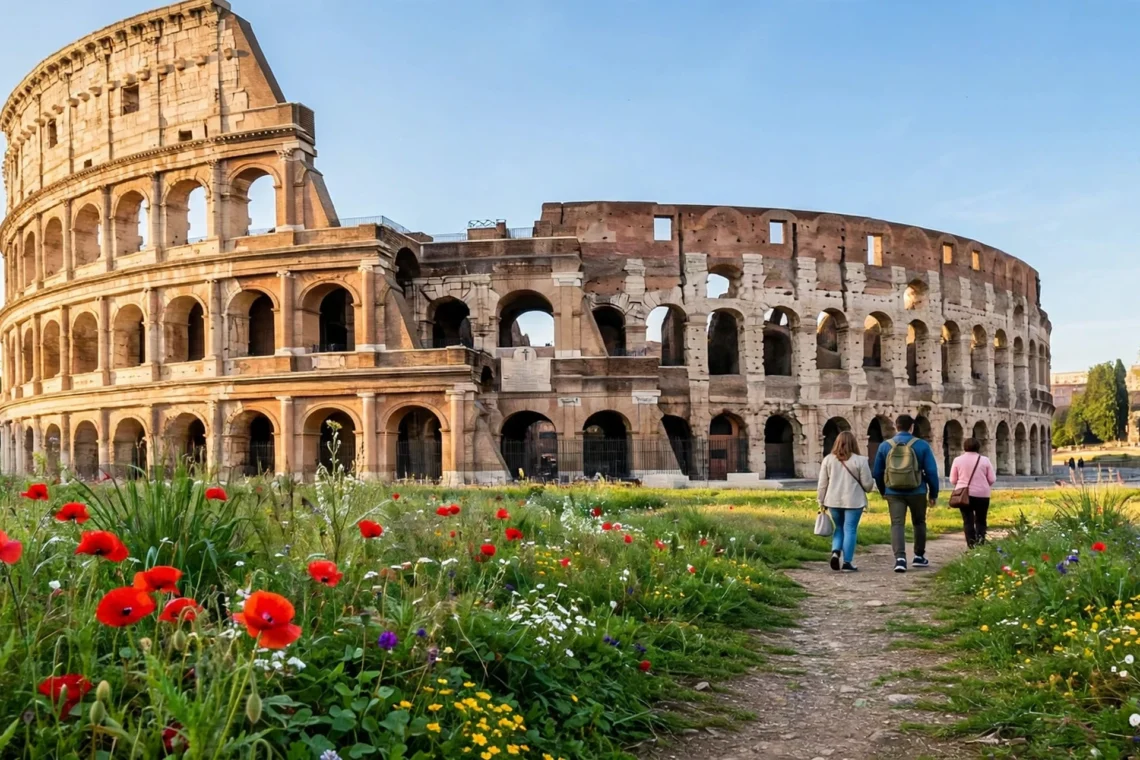
The best time to travel to Italy is April to June and September to October. Those shoulder seasons give you mild weather, manageable crowds, and fair prices, which is the combination most travelers are looking for. But that short answer hides an important truth: there is no single best month for the whole country. Italy stretches more than 1,200 kilometers from the Alps to Sicily, and on the same day it can be snowing in the Dolomites while spring flowers are blooming in Palermo. The right month depends on what you want to do and where you want to go.
September is often called the single best month, and July and August are the most crowded and expensive. This guide explains why, season by season and region by region, so you can match the month to your own trip instead of following a generic list.
Quick Answer
The best time to travel to Italy is April to June and September to October. May and September are the standout months, with mild weather, fewer crowds, and lower prices than July and August.
Quick-Guide Table
| Trip type | Best months | What to expect |
| Cities & sightseeing | April–May, September–October | Mild weather, shorter queues |
| Beaches & coast | June, September | Warm sea, thinner crowds than July–August |
| Food & wine | September–November | Grape harvest, olive oil, truffle fairs |
| Hiking in the Dolomites | Late June–September | Snow-free high trails |
| Skiing | December–March | Best snow in January–February |
| Budget & quiet trips | November–March, except holidays | Lowest prices, empty museums, cold north |
| First-time visit | May, June, September | Best all-round weather and long days |
Helpful List: How To Pick Your Month In 5 Steps
- Choose your trip type first: cities, beaches, food, hiking, or skiing
- Choose your region: north, central, or south Italy
- Check the holidays: Easter, Ferragosto on 15 August, and the Christmas–New Year spike
- Check entry rules on the official EU website — ETIAS has not launched yet
- Book flights and hotels months ahead for April–June and September–October
The Short Answer: The Best Time To Travel To Italy
If you want one recommendation, aim for the shoulder seasons: April to June and September to October. The weather is warm without being punishing, the daylight stretches into the evening, and the queues at the big sights fall short of their summer peak. Prices for flights and hotels sit below the July and August ceiling, which makes the shoulder months the value choice as well as the comfortable one.
May and September are the standout months within those windows. They give you reliable sunshine for coastal walks and outdoor dining without the oppressive heat and inflated hotel rates of midsummer. May brings long days and green countryside, while September brings a warm sea and thinning crowds.
There is no perfect month, though. The sections below break the year down by season, region, and trip type, so you can find the window that fits the Italy you actually want to see.
Italy By Season: Weather, Crowds, And Prices At A Glance
Spring, from March to May, brings temperatures of roughly 10 to 24 degrees Celsius, with crowds rising through the season and prices moving from low to moderate. It is best for city sightseeing, the countryside, and low-elevation hiking.
Summer, from June to August, brings 25 to 38 degrees, very high crowds, and the highest prices of the year. It is best for beaches, islands, and long daylight hours.
Autumn, from September to November, brings roughly 12 to 26 degrees, with crowds falling from moderate to low and prices easing the same way. It is best for the harvest season, food and wine, and good value.
Winter, from December to February, brings roughly 2 to 14 degrees, with low crowds except around the holidays and the lowest prices except in December. It is best for skiing, Christmas markets, and budget city breaks.
Keep those ranges in mind as you read on, because every season has a trade-off, and the cheapest month is rarely the warmest one.
Spring In Italy: April To June
Spring is when Italy looks its best. The countryside turns green, poppies appear in the Tuscan fields, and the gardens of Lake Como and Lake Garda come into flower. Rome sits at a comfortable 20 to 24 degrees in May, and the long evenings make it easy to fit a full day of sightseeing into your trip.
April is mild but can still bring a week of rain and cool evenings, so a light waterproof layer is worth packing until mid-May. By June the weather is properly warm, and the coast starts its season in earnest.
The one catch is Easter. Holy Week fills Rome with pilgrims and the city is at its busiest for the whole Easter weekend. Italians also take short breaks around Easter Monday, so Florence, Venice, and the lakes get busy too. Easter Sunday falls on 5 April in 2026 and 28 March in 2027, so check the date for your year before you book.
Spring also brings a run of Italian public holidays that move domestic crowds: Liberation Day on 25 April, Labor Day on 1 May, and Republic Day on 2 June. When one of these lands next to a weekend, Italians make a bridge holiday of it, and coastal hotels fill up. Late May and June are the best weeks for the coast before the summer rush begins.
Summer In Italy: July And August
July and August are Italy’s high season for beaches and its worst season for city sightseeing? Rome and Florence regularly reach 30 to 35 degrees, and the inland heat in Sicily can top 40 degrees. The historic centers, built of stone with little shade, hold the heat well into the night, and the queues at the Colosseum, the Vatican Museums, and Florence Cathedral are at their longest.
This is the time for the coast, the lakes, and the mountains, not for marathon sightseeing in the midday sun. The beaches and islands are at their best, the sea is warm, and the long days suit slow evenings outdoors. But you will pay for it: July and August bring the highest hotel rates and the biggest crowds of the year.
August is a special case. Around Ferragosto on 15 August, Italy’s biggest holiday, factories and offices close, and many Italians take their own holidays at the coast. Family-run restaurants and small shops in the cities often shut for two or three weeks, so the cities can feel half-empty of locals and full of tourists at the same time. If your only window is summer, head for the coast or the mountains, book months ahead, and start your days early.
Autumn In Italy: September To November
September is the month many travelers end up loving most. The sea is still warm from summer, at around 24 degrees, the harvest is under way, and the crowds thin noticeably once the school holidays end. The light turns golden, the evenings stay long, and the grape harvest sweeps through Tuscany while fresh olive oil is pressed in Puglia and Umbria.
October is milder and quieter still. The vineyards turn gold, the truffle fairs begin in Piedmont, and the cities are comfortable for walking again. It is one of the best-value months of the year, with flights and hotels well below summer rates.
November changes the picture. The weather turns cool, with rainy spells, and the days get shorter. But it is also one of the quietest and cheapest months in Italy, which makes it a good time for museums and food. The trade-off is clear: by late October the rain picks up and the countryside loses its summer color, so come in November for the cities and the food, not for the coast.
Winter In Italy: December To February
Winter in Italy is quiet, cheap, and better than its reputation for city breaks. Rome, Florence, Milan, and Venice are chilly but mostly mild, the major museums are calm, and hotel rates are low. The Christmas markets light up the northern cities in December, and Naples is famous for its nativity scenes.
December starts low and then spikes. The two weeks around Christmas and New Year push prices up sharply, so the cheapest winter weeks come after the holidays pass. January is the cheapest month of the year, with the lowest visitor numbers and the lowest rates, and it is a good time for a city break or a shopping trip during the sale season.
February is a good time to visit Italy for cities and skiing, but not for beaches. The Venice Carnival fills the city with masks and crowds for about ten days, lifting hotel rates, while the Dolomites and the Alps hold reliable snow. The north can be very cold, with fog in the Po Valley and temperatures near freezing, while the south stays mild. The trade-off is that coastal resorts and many island hotels are closed, and the coast feels half-asleep until spring returns.
The Best Time To Visit Italy By Region
Italy is never in the same season at the same time, so plan around the specific place, not the country as a whole.
Northern Italy, including Milan, Venice, the Dolomites, and Lake Como, is best from June to September for lake and city travel, when the weather is warm and the lakes are at their best. For skiing, December to March is the season, with January and February the surest months for snow. Winter here brings genuine cold and fog, especially around Venice, and the city is prone to high-water flooding, known as acqua alta, mostly between November and January.
Central Italy, including Rome, Florence, Tuscany, and Umbria, is at its best in April to June and September to October. The summer heat in Rome and Florence regularly passes 35 degrees, which makes shoulder season noticeably more comfortable for walking-heavy sightseeing. Spring brings wildflowers to the countryside, and autumn brings the grape harvest and the olive pressing.
Southern Italy, including Naples, Puglia, and Sicily, is warmer for longer. The beach season runs from late May into October, and the south stays mild through winter, with Palermo rarely dropping below 10 degrees in January. Summer here is the hottest part of the country, so the shoulder months are the comfortable choice for sightseeing, while June and September suit the coast.
One month is rarely the best for all three regions at once, so build your itinerary around the region that matters most to you, and let the season follow.
The Best Time To Travel To Italy For Your Trip Type
The best month depends on what you want to do. For cities and sightseeing, April, May, September, and October give you comfortable temperatures for walking through Rome, Florence, and Venice without the peak summer lines.
For beaches and coastal towns, June and September are the sweet spot. The sea is warm enough to swim in the south from late May, and June and September give you warm water with thinner crowds than July and August. Only southern Italy is likely to be warm enough for swimming outside the May to September period.
For food and wine, September to November is harvest season. Grape harvests sweep through Tuscany, fresh olive oil is pressed across Puglia and Umbria, and the white truffle fairs fill the towns of Piedmont.
For hiking, late June through September is prime time for high-altitude trekking in the Dolomites and the Italian Alps, after the snow melts. Spring and autumn are much better for coastal and countryside trails like the Cinque Terre, the Amalfi Coast, and Tuscany, where the summer heat makes walking hard.
For skiing, December to March is the season, with January and February the surest for snow cover and long groomed runs across the northern resorts.
For avoiding crowds, November, early December, and mid-January to February are the quietest times. Italy empties in the low season, so queues vanish and prices fall, though some coastal and rural spots shut down until spring.
The Cheapest Time To Travel To Italy
The cheapest time to travel to Italy is November to March, excluding the Christmas and New Year window. January is the cheapest month of the year, and November and February are close behind. Flights and hotels in the low season often run roughly 30 to 40 percent below summer prices.
The same months are the cheapest for flights from the United States. The transatlantic routes to Rome and Milan are busiest and most expensive in June, July, and August, and the fares fall sharply once the summer peak passes. If your dates are flexible, flying in the shoulder or low season is the simplest way to cut the cost of the trip.
Shoulder season gives you the best value, not just the lowest price. Late April, May, late September, and October offer near-summer weather at rates roughly 20 to 40 percent below July and August on the coasts, with far fewer people at the sights. You pay a little more than in January, and you get much better weather for it.
Dates That Change Everything: Holidays And Events To Plan Around
A handful of dates reliably push prices up and fill trains, so it pays to plan around them. Easter is one of the busiest weekends in the calendar, and Rome draws huge numbers for Holy Week. Easter Sunday falls on 5 April in 2026 and 28 March in 2027, so check the date for your year.
Ferragosto on 15 August is Italy’s biggest holiday. Many local businesses close, the coast is packed, and the cities are at their hottest and most crowded. The Christmas to New Year spike runs for about two weeks from around 20 December, with prices rising sharply in the cities and the ski resorts.
The Venice Carnival in February fills the city for about ten days and lifts hotel rates, so book early if you want to be there for it, or avoid those dates if you want Venice quiet and cheap.
One more date to check before you go: Venice charges a day-tripper entry fee of 5 euros on peak days. The exact dates change each year, so check the official Venice site before your trip rather than relying on last year’s calendar.
How To Pick Your Month: A Simple Decision Guide
Start with three questions. First, what is the trip for: cities, beaches, food, hiking, or skiing? Second, which region matters most: the north, the center, or the south? Third, how flexible are your dates?
If your dates are flexible, choose the shoulder season. April to June and September to October give you the best balance of weather, crowds, and prices for most trips. If summer is your only window, go to the coast or the mountains, start your days early, and book flights and hotels months ahead.
Check the entry rules on the official EU website before you travel. Border checks now include biometric screening, and the ETIAS travel authorization for visa-exempt visitors has not yet launched, so do not rely on a fixed date or fee from an old article. The official EU site is the only reliable source for when it starts.
For peak months, book flights and hotels months ahead. For the low season, you can often book later, but the best small hotels in the popular cities still sell out on weekends.
Common Mistakes When Choosing When To Go To Italy
The most common mistake is trusting a single “best month” list and forgetting that Italy has many climates. A month that is perfect for the Dolomites can be miserable in Rome, and a month that suits Sicily can be freezing in Milan. Match the month to the region, not to the country.
The second mistake is planning full days of sightseeing in Rome or Florence in August. The heat, the crowds, and the queues make it exhausting, and the cities are at their worst. If August is your only option, plan the coast or the mountains instead.
The third mistake is planning a coastal trip between November and March. The Amalfi Coast, the Cinque Terre, and the smaller islands largely close for winter: ferries thin out, many hotels shut, and the towns feel half-asleep. The cities are the right choice in winter, not the coast.
The fourth mistake is travelling around Easter or Ferragosto without booking ahead. Both are peak periods, and trains, hotels, and the big sights fill up fast.
The fifth mistake is trusting old information about ETIAS, the new travel authorization for visa-exempt visitors. It has been delayed more than once, and no fixed launch date or fee should be treated as settled. Check the official EU website close to your travel date.
Conclusion
For most travelers, the best time to travel to Italy is April to June and September to October, and September is the single best month if you have to pick one. The weather is warm, the sea is still swimmable, the harvest is under way, and the crowds and prices have eased from the summer peak.
Match the month to your trip. Cities and first visits belong in the shoulder seasons, beaches belong in June and September, food belongs in the autumn harvest, and skiing belongs in deep winter. Keep your dates flexible when you can, and better weather, fewer crowds, and lower prices can all arrive in the same trip.
FAQ’s:
What Is The Cheapest Month To Visit Italy?
January is the cheapest month, with the lowest hotel rates and fewest visitors. November and February are close behind. Avoid the Christmas and New Year window, when prices spike.
Is February A Good Time To Visit Italy?
Yes, for cities and skiing. Museums are quiet, hotel rates are low, and the Venice Carnival fills February with events. It is cold in the north, and beaches and coastal resorts are closed.
Is August A Bad Time To Visit Italy?
For city sightseeing, yes. Rome and Florence are hot and crowded, queues are long, and many local shops close around Ferragosto on 15 August. August suits beaches and the mountains instead.
When Is The Best Time To Visit Italy To Avoid Crowds?
November, early December, and mid-January to February. Italy empties in the low season, so queues vanish and prices fall, though coastal towns and island hotels mostly shut down.
Do I Need ETIAS To Visit Italy?
Not yet. ETIAS has not launched, and no fixed start date or fee is confirmed. Check the official EU website close to your travel date for the latest entry rules.
Disclaimer
This guide is for general information only, and travel conditions, prices, entry requirements, and opening times can change, so please check official travel advice and official sources before you travel. Travel3Ways is an independent travel information website and is not affiliated with any tourism board, airline, hotel, or booking service. Travel3Ways was created only to provide helpful information to visitors and does not engage in paid promotions or advertising.




2 Comments on “Best Time To Travel To Italy: When To Go For Good Weather, Fewer Crowds, And Better Prices”