
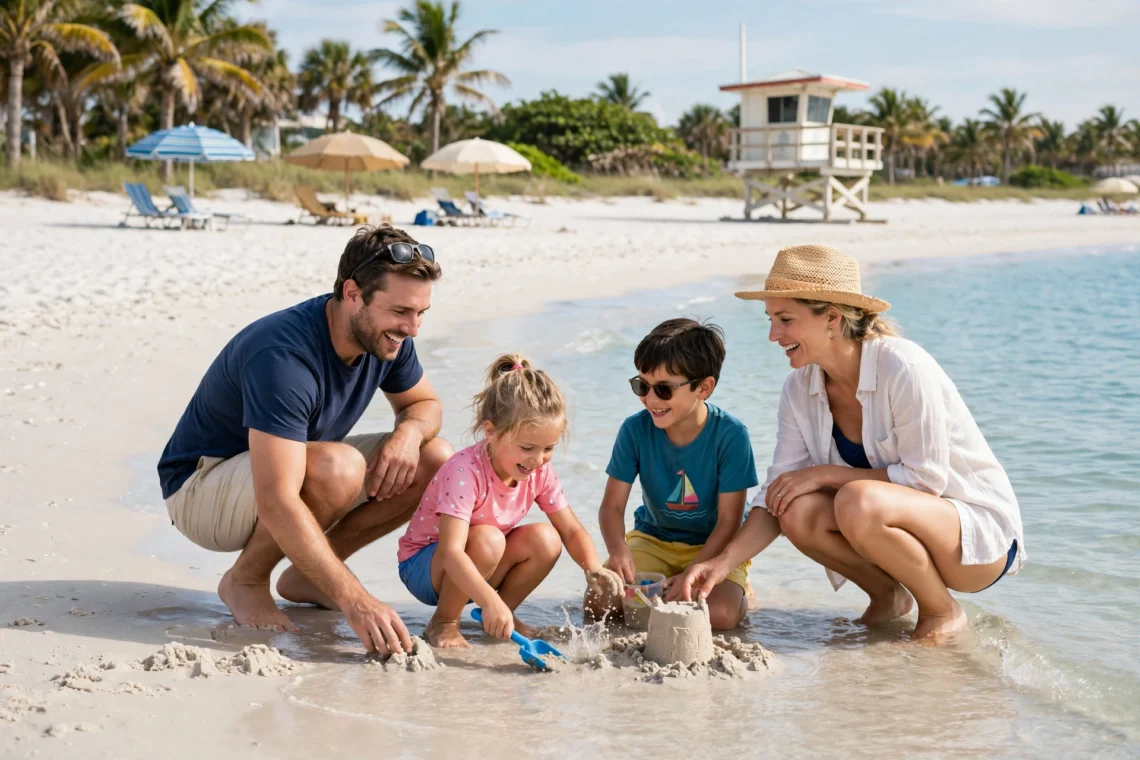
The prettiest beach in the photos is not always the best beach for a family. A wide stretch of white sand can still mean pounding surf, no shade, and a twenty-minute walk to the nearest toilet — and with a four-year-old, that is enough to ruin the day. What matters most with children is much simpler: calm water they can wade in, a lifeguard within sight, somewhere to sit in the shade, and food and a bathroom close by.
This guide picks the best family friendly beaches by what families actually need, split by region, age and budget. It starts with a short checklist you can use to judge any beach, then moves through the strongest picks around the world and in the United States, affordable options, all-inclusive stays, and how to find a good beach near home. It ends with planning steps and safety checks. No beach in this guide is “guaranteed safe” — the sea changes with weather, tide and season, so always check local flags and lifeguard advice on the day.
Quick Answer
The best family friendly beaches have calm, shallow water, lifeguards, shade, toilets and food nearby. Grace Bay, Ko Olina Lagoons, Siesta Beach and the Algarve suit most families, with the right pick depending on your children’s ages.
Quick-Guide Table
| Trip type | Best places or options | When to go |
| Toddlers and first beach trip | Ko Olina Lagoons, Matheson Hammock, Elafonisi | Year-round in Hawaii; May–Oct in Crete |
| Classic USA family holiday | Destin, Gulf Shores, Siesta Beach, Clearwater | May, Sep–Oct for fewer crowds |
| East Coast beach week | Outer Banks, Cape Cod, Hilton Head, Myrtle Beach | Late May–Jun, Sep |
| Caribbean escape | Grace Bay, Baby Beach Aruba, Punta Cana | Dec–Apr dry season |
| Europe summer holiday | Algarve, Mallorca, Crete | Jun–Sep |
Helpful List: Choose Your Family Beach In 5 Steps
- Start with your youngest child’s age — toddlers need lagoon or enclosed water
- Check for lifeguards, calm shallow water and shade before anything else
- Confirm toilets, showers, food and parking are within walking distance
- Match the season to your destination and avoid hurricane months
- Check lifeguard flags and local conditions again on the day
What Makes A Beach Family-friendly?
A good family beach is judged on the water first, not the postcard. Look for calm, shallow water with a gentle entry, the kind you find in bays, lagoons, and shores protected by a reef or a sandbar. Small children need to wade out slowly over soft sand, not step straight into a drop-off or a wave that knocks them over. Older children can handle a little surf, but even they do better where the water stays predictable.
Lifeguards are the second thing to check. A patrolled section with clear flags and warnings gives parents a real safety net, and it also tells you the beach is set up for swimmers rather than just sunbathers. If there is no lifeguard on duty, treat the water with more caution and keep children closer to shore.
The rest is comfort. Soft sand is easier on small feet and better for sandcastles than rock or coarse shells. Shade matters more than most parents expect — a few trees, a rented umbrella or a covered pavilion lets a toddler rest out of the sun. Toilets, showers and somewhere to buy lunch within walking distance keep the day running smoothly, and parking close to the sand saves a long carry with bags, buckets and a tired child. A stroller-friendly path is a bonus, not a luxury, when the youngest is still napping in the afternoon.
Finally, think about what happens when the beach stops working. A playground, rock pools to explore at low tide, or a cafe strip nearby turns a rainy afternoon or a bored hour into something easy instead of a reason to pack up early. Use this checklist on any beach, including one near your own home — if it passes most of these points, it is probably a good family pick.
Best Family Friendly Beaches In The World At A Glance
Grace Bay in Turks and Caicos is the strongest all-round pick. A barrier reef flattens the swell, the sand shelves gently, and the water stays clear and shallow a long way out, with resorts and lifeguarded stretches behind the sand. For toddlers who need water as flat as a pool, the man-made lagoons at Ko Olina on Oahu are hard to beat — the walls block the ocean swell entirely, so small children can splash in water that barely moves.
Kailua Beach Park on the same island offers a different kind of day: gentle waves, lifeguards on duty, shaded picnic areas and kayaking for older kids. In Greece, Elafonisi on Crete works like a giant warm wading pool, with a shallow lagoon and pink-tinted sand that children love. Costa Rica gives families two good options in one trip: Manuel Antonio pairs calm, lifeguarded coves with jungle trails where monkeys and sloths are easy to spot, while Playa Conchal has shallow turquoise water and crushed-shell sand that suits beginner snorkeling.
In Europe, the Algarve is the easiest all-round family beach trip, with sheltered coves of soft sand and resorts a short transfer from Faro airport. Mallorca’s Alcudia and Pollensa bays are broad and shallow, so children can wade out safely for ages, and the island has plenty to explore beyond the sand. One note on the overview’s Qatar pick: Katara and West Bay in Doha are reasonable options for a local weekend outing, with calm lifeguarded water, playgrounds and easy dining, but they are a regional choice rather than a world-leading family beach, and this guide treats them that way. Season months vary by source, so treat the table’s seasons as general patterns and check conditions before you book.
Best Family Friendly Beaches In The USA
The United States has strong family beaches on both coasts and the Gulf, and the best choice depends on your children’s ages and how far you want to travel.
San Diego in California solves the age-spread problem well. La Jolla Shores has glassy, lifeguarded shallows that suit toddlers, while teenagers can take surf lessons and walk the Mission Beach boardwalk. Coronado Beach is wide and flat, with soft sand and lifeguards in season.
On the Gulf Coast, Destin and Gulf Shores are the value picks. The water is warm and bath-calm, the sand is sugar-white, and condo prices usually sit below Florida’s Atlantic side. Siesta Beach in Sarasota has cool, powdery quartz sand that stays comfortable underfoot, gentle Gulf water, playgrounds and full lifeguard coverage. Clearwater Beach adds shallow water, lifeguards and family restaurants within easy reach.
The Outer Banks in North Carolina offer wide sandy beaches that are ideal for sandcastles and kite flying, with vacation rentals big enough for extended families. Hilton Head in South Carolina is one of the most kid-engineered islands on the East Coast: flat bike paths, hard-packed sand you can ride on at low tide, gentle surf and dolphin cruises from every marina. Cape Cod in Massachusetts has calm bays on its sound side that suit younger swimmers, while Myrtle Beach in South Carolina gives older children a long shoreline plus amusement parks and arcades nearby.
Each of these suits a different family. A toddler does best at La Jolla Shores or Siesta Beach; a teenager will get more from San Diego or Myrtle Beach. Match the beach to your youngest child first, then check what the older ones will enjoy.
Best Family-friendly Beaches On The East Coast
The East Coast suits many American families because the drives are shorter, the beaches are wide and sandy, and the beach towns come with food, rentals and easy parking. The water is generally cooler than the Gulf, and the Atlantic side can get rough, so the lifeguarded stretch matters even more here.
For space and quieter sand, the Outer Banks and Cape Cod are the strongest choices. Both have long beaches where a family can spread out, and both work well for a slower week built around the sand rather than attractions. Hilton Head and Myrtle Beach sit at the other end: more to do, more places to eat, and better options for older children who get bored of the beach by day three.
In South Florida, Crandon Park on Key Biscayne is a standout for small children. A natural sandbar offshore creates a shallow, calm lagoon where the water stays knee- to waist-deep for a long stretch, with lifeguards, clean restrooms and a playground nearby. Matheson Hammock Park in Coral Gables has something no other Miami beach offers: a man-made atoll pool that fills with calm bay water at high tide, which is ideal for toddlers. On the Gulf side, Siesta Key and Clearwater give families the calmer water the Atlantic side often lacks.
When the Atlantic side gets rough, stick to lifeguarded stretches and check the flags every day. A beach that was gentle yesterday can have a strong current today, and the flag is the fastest way to know.
Best Beaches For Different Ages: Toddlers, Kids And Teens
The right beach changes as children grow, so it helps to think in age groups rather than one fixed list.
Toddlers under four need flat, enclosed or lagoon water. Ko Olina’s lagoons, the atoll pool at Matheson Hammock, the shallow lagoon at Elafonisi, and Baby Beach in Aruba all work because the water barely moves and the entry is gradual. Shade and a bathroom nearby matter as much as the water at this age, and a short walk from the car to the sand is worth more than a famous name.
Young children from four to eight want shallow wading, sand that holds a castle, and a playground within sight. Siesta Beach, Grace Bay and the Alcudia bay in Mallorca all deliver that combination, with enough space for a family to settle in for a full day. At this age, a beach with food nearby also matters — hungry children and a long walk to lunch do not mix.
Older children from nine to twelve are ready for gentle snorkeling, kayaking and rock pools. Manuel Antonio in Costa Rica, Kailua in Hawaii and Napili Bay in Maui give them something to explore without strong surf. This is also the age to start teaching water safety properly: what a rip current feels like, why flags matter, and why they should never swim alone.
Teenagers want activity. Beginner surf lessons, paddle boarding, and theme parks or a boardwalk nearby keep them happy. The Gold Coast in Australia, San Diego and Myrtle Beach all work for this group, with surf schools and plenty to do after the beach. Age advice is general guidance, not a safety guarantee — always supervise children in and near the water, whatever their age.
Affordable Family Beach Vacations In The USA
A family beach trip does not have to be expensive, and the Gulf Coast is usually the cheapest place to start. Condos with kitchens, self-catering and shorter drives keep the total down compared with Hawaii or a resort island, and the water is often calmer too.
Gulf Shores and Destin are the classic value picks: warm, calm Gulf water, white sand, and condo prices that usually undercut Florida’s Atlantic coast a few miles east. The Outer Banks work well for larger families because a single rental house can hold grandparents, parents and children together, splitting the cost. Myrtle Beach is another budget-friendly option, with plenty of affordable stays and free beach access.
Timing matters as much as location. May and September are shoulder months on much of the US coast: the weather is still warm, the crowds are thinner, and prices are usually lower than in July and August. A condo with a kitchen and a pool often saves more than a resort when the beach is the main activity, because you cook breakfast, pack lunch, and use the pool when the children need a break from the sand. Prices change by season and by year, so treat any figure you see as a range and check current rates before booking.
Are All-inclusive Beach Vacations Worth It For Families?
An all-inclusive stay bundles meals, drinks, activities and often a kids’ club into one price, which sounds simple — and for some families, it is. It suits a first international trip, families with toddlers, and parents who want a real break instead of cooking and planning every meal. The kids’ club, the lifeguarded pool and restaurants on site mean the day runs itself.
It does not suit everyone. Families who like exploring outside the resort, eating local food and taking day trips can feel trapped, and the total cost can be higher than a condo plus groceries once you add flights and transfers. Older children who want to try local restaurants and markets may get bored of the same buffet by day four. Tight budgets also suffer, because you pay for meals and activities whether you use them or not.
To compare honestly, work out the total cost per day for each option: the all-inclusive price against a condo or hotel plus food, transport and activities. Then check what is actually included — some resorts charge extra for premium restaurants, water sports or the kids’ club, and some include far less than the name suggests. This guide does not rank or promote any resort or brand; the point is to match the format to your family, not to buy the most expensive package.
How To Find Kid-friendly Beaches Near You
Searches for the best family friendly beaches near me and kid friendly beaches near me are local searches, and the honest answer is that there is no single list that works everywhere. What you need is a method for judging the beach near you.
Start with your local tourism site, state park page or council beach page, which usually lists lifeguard hours, facilities and access. Then check recent reviews from other families — they will tell you whether the toilets are clean, the parking fills up by nine, or the water is rougher than the photos suggest. Look for the patrol status too: a beach that is lifeguarded in summer may be unpatrolled in winter, and that changes the decision.
Before you drive there, check four things: lifeguard hours today, parking and how far it is from the sand, whether there are toilets and shade, and the water conditions right now. If your nearest beach fails the test — strong surf, no lifeguard, no shade — look for an alternative nearby instead of forcing it. A lake beach, a sheltered bay or a patrolled stretch a little further away will give your children a better day than a famous beach that is wrong for their age.
Best Time To Visit And How To Plan Your Trip
The best time depends on the region. The Caribbean dry season runs roughly December to April, with the calmest weather and the highest prices. Europe’s beach season runs June to September, with the sea warmest in July and August. Hawaii is pleasant year-round, with quieter months in April to May and September to October. Australia’s Gold Coast is warmest from October to April, during the southern summer.
Hurricane season runs from June to November in the Caribbean and the Gulf of Mexico, so if you travel then, book flexibly and consider travel insurance. Shoulder months — May and September in most places — usually give the best balance of warm weather, fewer crowds and lower prices.
Plan in this order. First, pick the beach by your youngest child’s age, using the checklist at the top of this guide. Then check how you will get there and how far the stay is from the sand. Then book a place with a kitchen or a pool if you have small children, and pack for the beach itself: reef-safe sunscreen, hats, rash guards, water shoes, a shade tent or umbrella, snacks, plenty of water and a small first-aid kit. Sunscreen takes twenty to thirty minutes to absorb, so apply it before you arrive, and reapply after swimming.
Beach Safety: What Every Family Should Check
Safety starts with the lifeguards. Swim only where lifeguards are on duty, follow the flags and local warnings, and check conditions again each day — a beach that was calm yesterday can be different today. If there is no lifeguard, keep children in shallow water and stay close.
Stay within arm’s reach of toddlers at all times, even in shallow water. A good habit is to designate one adult to watch the water at a time, so nobody assumes someone else is watching. Life jackets help younger swimmers and make a child easy to spot in the water.
Rip currents are the most important thing to understand. They are narrow channels of water pulling away from the shore, and they can appear on otherwise calm beaches. If you feel pulled out, the basic rule is to stay calm, swim parallel to the shore until you are out of the current, then swim back in — never fight it directly. Teach older children this rule before they go in.
Sun and heat deserve the same attention as the water. Take shade breaks, especially for children under five, reapply sunscreen regularly, and bring more water than you think you need — children dehydrate faster than adults. Check local advice for jellyfish, sea urchins and sharp shells, and wear water shoes where they are common. This is general safety guidance, not medical advice; if something happens, follow the lifeguard’s instructions and seek local help.
Common Mistakes To Avoid When Picking A Family Beach
The most common mistake is choosing the most famous beach instead of the calmest one. Waikiki is crowded and built up, with mediocre swimming for small children, and Kuta in Bali has rips and surf that are genuinely unsafe for young children. A quieter bay nearby will give your family a better day than a famous name.
The second mistake is ignoring the season. Hurricane season, sargassum on Caribbean beaches, and jellyfish months are all real, and they can change a trip completely. Check the season for your destination before you book, not after.
Booking far from the sand with small children and no car is another easy mistake. A beautiful stay that needs a twenty-minute walk with beach gear, snacks and a tired toddler will wear everyone out by day two. Stay close to the beach, or make sure transport is easy.
Forgetting that shade, toilets and food are part of the decision is common too. A beach with perfect water and no shade, no bathroom and no lunch nearby is a short beach day, not a good one. And finally, do not trust one “best beach” ranking on its own. Rankings are one source’s opinion — check who each beach suits, read recent family reviews, and match the pick to your children’s ages before you commit.
Conclusion
The rule is simple: calm water, lifeguards, shade and facilities beat a famous name every time. Pick the beach that suits your youngest child first, check the season and the safety flags on the day, and keep the plan flexible enough for a rainy afternoon or a tired toddler.
A good family beach trip is not about finding the most beautiful shore in the world. It is about finding the shore where your children can play safely, where you can relax, and where the day runs smoothly from the first splash to the walk home. Start with the checklist, choose by age and budget, and you will find it. If you want more ideas, the site’s other beach and family guides cover Texas beaches, Hawaii, Costa Rica, Puerto Rico and summer destinations in the same practical style.
FAQ’s:
Which Beach Is Best For Toddlers?
Ko Olina Lagoons in Hawaii, Matheson Hammock in Miami and Elafonisi in Crete suit toddlers best, with flat, shallow water, gentle entry and shade nearby.
What Is The Safest Beach For Families In The USA?
Lifeguarded Gulf beaches like Siesta Beach, Destin and Clearwater are among the safest choices, with calm shallow water and full facilities close by.
When Is The Best Time For A Family Beach Holiday?
December to April suits the Caribbean, June to September suits Europe, and May and September offer fewer crowds and lower prices in much of the USA.
Are All-inclusive Beach Vacations Good For Families?
They suit first international trips and families with toddlers, but compare the total daily cost with a condo plus food before booking, and check what is included.
How Do I Find A Kid-friendly Beach Near Me?
Check your local tourism or state park page for lifeguard hours, facilities and water conditions, then read recent family reviews before driving there.
Disclaimer
This content is for general information only. Travel conditions, prices, entry requirements and opening times can change, so please check official travel advice and official sources before you travel. Travel3Ways is an independent travel information website and is not affiliated with any tourism board, airline, hotel or booking service. Travel3Ways was created only to provide helpful information to visitors and does not engage in paid promotions or advertising.




One comment on “Best Family Friendly Beaches: Calm, Safe Shores For Every Age”