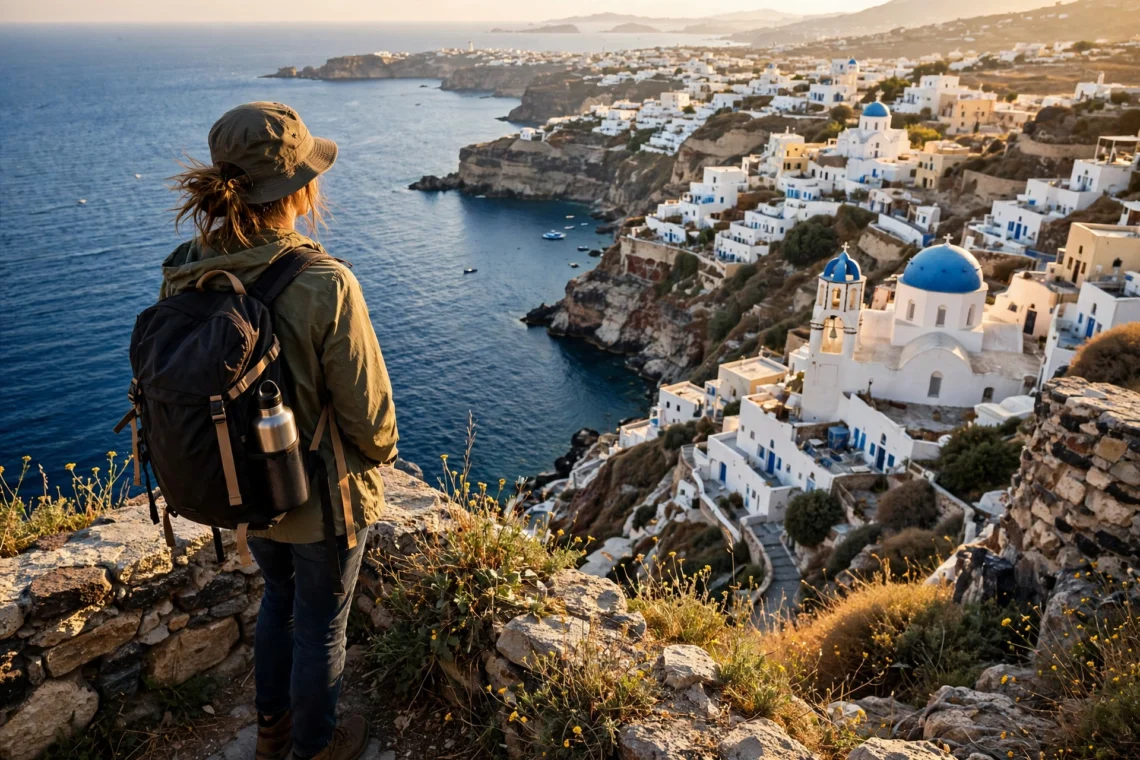
The world outside the US is huge, and choosing where to go first is the hardest part. There are beaches in Thailand, ruins in Italy, rainforests in Costa Rica, glaciers in Iceland and temples in Japan — and every list seems to rank them differently. The truth is simpler: there is no single best place to visit out of the US. There is only the best place for your trip, your budget and your travel style.
This guide compares the best places to visit out of the US by what travelers actually need — first-timers, couples, budget, beaches, culture and adventure — so you can pick by what suits you. It starts with a top-10 glance table, then picks by style, then the planning and safety steps that make the trip work. Budgets in this guide are ranges only, and entry rules change often, so check official sources before you book.
Quick Answer
The best places to visit out of the US depend on your trip: Portugal or Costa Rica for a first trip, Greece or Italy for couples, Thailand or Vietnam for budget travel, and Iceland or Peru for adventure.
Quick-Guide Table
| Trip type | Best places or options | When to go |
| First trip abroad | Portugal, Costa Rica, Ireland, Canada | May–June, September–October |
| Couples | Greece, Italy, Bali, Japan, Portugal | May–June, September |
| Budget trips | Thailand, Vietnam, Mexico, Guatemala, Colombia | November–March |
| Beaches and islands | Thailand, Greece, Mexico, Bali, Costa Rica | May–June, September, December–April |
| Culture and history | Italy, Japan, Peru, Turkey, Morocco | May–June, September–October |
| Nature and adventure | Iceland, Costa Rica, Peru, New Zealand, Thailand | June–August, December–April |
Helpful List: Plan Your First Trip Abroad In 5 Steps
- Pick your travel style first: beach, culture, adventure, food or family
- Choose a place that fits your flight time and budget — count the airfare, not just daily costs
- Check your passport validity and the destination’s entry rules on official government sites
- Buy travel insurance with medical and evacuation cover as soon as you book
- Check the US State Department travel advisory for your destination before booking and again before departure
How To Choose A Place Outside The Us
Start with travel style, not a ranking. A beach lover and a history lover will have completely different trips even in the same country, so ask what you want from the trip first: beach days, culture and food, adventure, family time or a mix of everything. The answer narrows the world down fast.
Then think about how far you want to fly. Short-haul places — Mexico, the Caribbean, Canada and Costa Rica — suit a week-long trip, because the flight is short and cheap. Long-haul places — Asia, Europe and Oceania — reward a longer trip, because the flight itself takes a day. A seven-day trip to Thailand spends two of those days in the air, while the same week in Mexico spends almost none of it.
Budget needs the same honest maths. A cheap daily cost does not mean a cheap trip, because airfare can dominate a short holiday. Thailand’s daily costs are low, but the flight from the US is long and expensive; Mexico’s daily costs are also low, and the flight is short. For a one-week trip, the closer country often wins on total cost even if its daily prices are a little higher.
Language and comfort level matter too, especially for a first trip abroad. English-friendly places — Portugal, Ireland, Canada, Singapore — remove one layer of stress, so you can enjoy the trip instead of worrying about every conversation. And season matters more than the destination: the same place in peak season and shoulder season can feel like two different trips, with different prices, crowds and weather.
Best Places For First-time Travelers
Portugal is the easiest first trip to Europe most travelers will find. It is safe, walkable and affordable by Western European standards, English is widely spoken, and Lisbon’s trams, hills and ocean views make the first day abroad feel rewarding rather than stressful. Porto and the Douro Valley add wine country and river views a short train ride away.
Costa Rica is the easiest first trip to Latin America. It is a short flight from the US, politically stable, and small enough that rainforests, volcanoes and two coasts fit into a single loop. Shuttle buses connect the main sights, English is widely spoken in tourist areas, and the country is built around eco-tourism, so wildlife, waterfalls and zip-lines are easy to arrange.
Ireland is a gentle first step abroad for Americans: English-speaking, famously friendly, and full of green countryside, coastal cliffs and small towns that reward slow travel. Canada is the closest option of all — familiar enough to feel easy, yet clearly different, with Montreal’s French flavor, Vancouver’s mountains and Toronto’s food scene.
What makes a place first-timer friendly is simple: easy visas, good transport, solid tourist infrastructure and English help when you need it. Pick a place with all four, and your first trip abroad will build confidence instead of stress.
Best Places To Visit Out Of The Us For Couples
Greece suits couples who want slow days and beautiful evenings. Santorini and Mykonos are famous for sunsets and whitewashed villages, while Crete adds beaches, food and history at lower prices. Go outside peak season — May, June or September — for better prices and fewer crowds.
Italy packs food, history and romance into one trip: Rome’s ruins, Florence’s art, the Amalfi Coast’s cliff villages. It is the most popular international destination for US travelers for a reason, and it works for a first trip together or a tenth anniversary alike.
Bali gives couples villas, beaches and temples on a modest budget, with rice terraces, jungle swings and sunset dinners that feel far more expensive than they are. Japan offers a quieter kind of romance: Kyoto’s temples, mountain ryokans with hot-spring baths, and slow walks between cities. Portugal rounds out the list with Lisbon’s hills and the Douro Valley’s wine estates, where boutique stays and coastal walks come at Western Europe’s gentlest prices.
Cheap Places To Visit Out Of The Us
Thailand and Vietnam are the classic budget picks, with daily costs roughly $30 to $50 for a backpacker-style trip — cheap street food, affordable stays and low-cost transport. Thailand adds islands and temples; Vietnam adds Hoi An’s old town, Ha Long Bay and some of Asia’s best food.
Mexico is the best value for a short trip: short flights plus low daily costs, with beaches in Cancun and Tulum, culture in Mexico City and colonial towns like Merida that cost far less than the resort strips. Guatemala and Colombia offer culture and nature at low daily costs too — Lake Atitlán and Antigua in Guatemala, Cartagena’s colorful old town in Colombia.
In Europe, Portugal and Poland are the best value for first-timers: Western European quality in Portugal at prices below France or Italy, and Eastern European prices in Poland with walkable old towns and rich history. One warning, always: count the flight. A cheap country far away can cost more overall than a closer one, especially on a short trip.
Best Places For Beaches And Islands
Thailand’s islands cover every mood: Phuket and Koh Samui for resorts and nightlife, Krabi for limestone cliffs and long-tail boats, and quieter islands for slow days. Add Bangkok’s temples and Chiang Mai’s mountain treks, and one trip can hold both beach and culture.
Greece’s islands are best in May to June and September, when the water is warm, the crowds are thinner and prices drop. Santorini and Mykonos are the famous names; Crete and Naxos are the better-value picks. Mexico’s Cancun, Playa del Carmen and Tulum offer white sand and turquoise water a short flight from the US, with Mayan ruins nearby for a day away from the beach.
Bali fits beaches, surf and temples into one island, while Costa Rica gives you Pacific surf and Caribbean calm in the same trip — two coasts, two different seas, one small country. Beach safety matters everywhere: check currents, flags and lifeguards before swimming, and know the hurricane season (June to November in the Caribbean) and the monsoon season (roughly May to October in parts of Southeast Asia) before you book.
Best Places For Culture And History
Italy is the deepest culture trip on this list: Rome’s Colosseum and Forum, Florence’s Renaissance art, Venice’s canals, and food that changes from region to region. Book the big sites ahead in peak season, and give each city at least two full days.
Japan rewards travelers who go beyond Tokyo and Kyoto. Hokkaido offers mountains and wild landscapes in the north, Okinawa offers island beaches and a different culture in the south, and the trains connect it all with a punctuality that makes planning easy. Peru pairs Lima’s world-famous food scene with Machu Picchu in the Andes — one of the great journeys in travel, reached by train and a high-altitude hike.
Turkey combines Istanbul’s mosques and bazaars with Cappadocia’s cave hotels and balloon-dotted skies, at prices well below Western Europe. Morocco adds medinas, desert camps and mountain villages, with a culture that rewards curious, respectful travelers. Wherever you go, respect local customs and dress codes, especially at religious sites.
Best Places For Nature And Adventure
Iceland is built for road trips: waterfalls, glaciers, black-sand beaches and volcanic landscapes along a single ring road, about five to six hours by plane from the US East Coast. Summer brings midnight sun and hiking; winter brings the northern lights and ice caves.
Costa Rica packs rainforests, volcanoes, cloud forests and wildlife into a country smaller than West Virginia. Monteverde’s misty trails, Arenal’s volcano and the Pacific coast’s surf all fit in one trip, with eco-lodges and guided walks making the wildlife easy to find.
Peru’s high-altitude trekking to Machu Picchu is the classic adventure on this list — but acclimatize first, because altitude sickness is real above 2,500 meters. New Zealand offers mountains, fjords and hiking trails across two islands, while Thailand’s mountain treks around Chiang Mai pair naturally with island relaxation afterwards. Adventure safety is not optional: altitude, fast weather changes and remote areas all need preparation, the right gear and travel insurance that covers what you plan to do.
When To Go: Best Time To Visit
Timing can matter more than the destination itself. Europe is at its best in May to June and September to October — warm weather, fewer crowds and better prices than the July and August peak. Southeast Asia’s dry season runs November to March, with the best weather and the most visitors. Costa Rica and the Caribbean share a December to April dry season, with hurricane season running June to November.
Japan has two sweet spots: March to May for cherry blossom, and October to November for autumn colors. Iceland is best in June to August for hiking and road trips, and in winter for the aurora. One difference catches many travelers out: the Southern Hemisphere runs on opposite seasons, so summer in New Zealand, Australia and Patagonia is December to February — the middle of the US winter.
What You Need Before You Travel Abroad
Start with your passport. Many countries require it to be valid for six months beyond your return date, so check the expiry date months before you travel, not the week before. Renew early — processing times can be long.
Visas and entry rules vary by passport and destination. Many countries are visa-free or e-visa for US passport holders, but never assume: check the destination’s official government site. For Europe’s Schengen area, US citizens can stay up to 90 days in any 180-day period. ETIAS, the new European travel authorization, is not yet in operation as of the latest checks — confirm on the European Commission’s official site before you book, and beware any website currently taking ETIAS applications.
Travel insurance is worth buying as soon as you book, especially for adventure and remote areas — medical and evacuation cover matter most. For money, carry a card that works abroad, some local currency, and tell your bank you are travelling so your card is not blocked. For health, check official travel health advice and any vaccination requirements early, because some vaccines need weeks to take effect.
Safety Checks And Common Mistakes To Avoid
Before booking and again before departure, check the US State Department travel advisory for the specific destination. Advisories vary by region — Mexico’s, for example, is state-by-state, so the advisory for one state says nothing about another. No place is guaranteed safe, and this guide does not claim otherwise: read the advisory, follow local advice, and use normal precautions everywhere.
The most common mistakes are easy to avoid. Booking peak season without checking prices is the first — the same hotel can cost twice as much in July as in May. Ignoring visa rules is the second — a missing e-visa can end a trip at the airport. Skipping travel insurance is the third, and packing for one climate only is the fourth: mountain mornings and beach afternoons in the same country need layers. Finally, do not trust one “best” ranking without checking what it suits — the top pick for a honeymoon may be wrong for a family trip.
Keep copies of your passport and bookings separate from the originals, and know the local emergency number before you land. A little preparation before the trip saves far more trouble than it costs.
Conclusion
The rule is simple: pick by travel style and season, not by a ranking. The best place is the one that fits your trip, your budget and the time of year you can travel.
For a first trip, Portugal or Costa Rica is hard to beat. For couples, Greece or Italy. For a tight budget, Thailand or Vietnam. For adventure, Iceland or Peru. Whichever you choose, check entry rules, travel advisories and prices on official sources before booking — and then go and enjoy it. If you want to dig deeper, the site’s other destination guides cover Lisbon, Italy, Costa Rica, Mexico, Hawaii, Thailand and Great Vacation Destinations in the same practical style.
FAQ’s:
What Is The Best Place To Visit Outside The Us For The First Time?
Portugal and Costa Rica are the easiest first trips — safe, walkable, English-friendly, with good tourist infrastructure and short, simple logistics.
What Are The Cheapest Places To Visit Out Of The Us?
Thailand and Vietnam cost roughly $30–50 a day, while Mexico offers the best value for a short trip thanks to short flights and low daily costs.
Do Us Citizens Need A Visa To Travel Abroad?
Many countries are visa-free or e-visa for US passport holders, but rules vary by destination — always check the destination’s official government site before booking.
When Is The Best Time To Visit Europe?
May to June and September to October offer the best balance of warm weather, fewer crowds and better prices than the July and August peak.
Is It Safe To Travel Outside The Us?
Most popular destinations are safe with normal precautions, but always check the US State Department travel advisory for your specific destination before booking and again before departure.
Disclaimer
This content is for general information only. Travel conditions, prices, entry requirements and opening times can change, so please check official travel advice and official sources before you travel. Travel3Ways is an independent travel information website and is not affiliated with any tourism board, airline, hotel or booking service. Travel3Ways was created only to provide helpful information to visitors and does not engage in paid promotions or advertising.