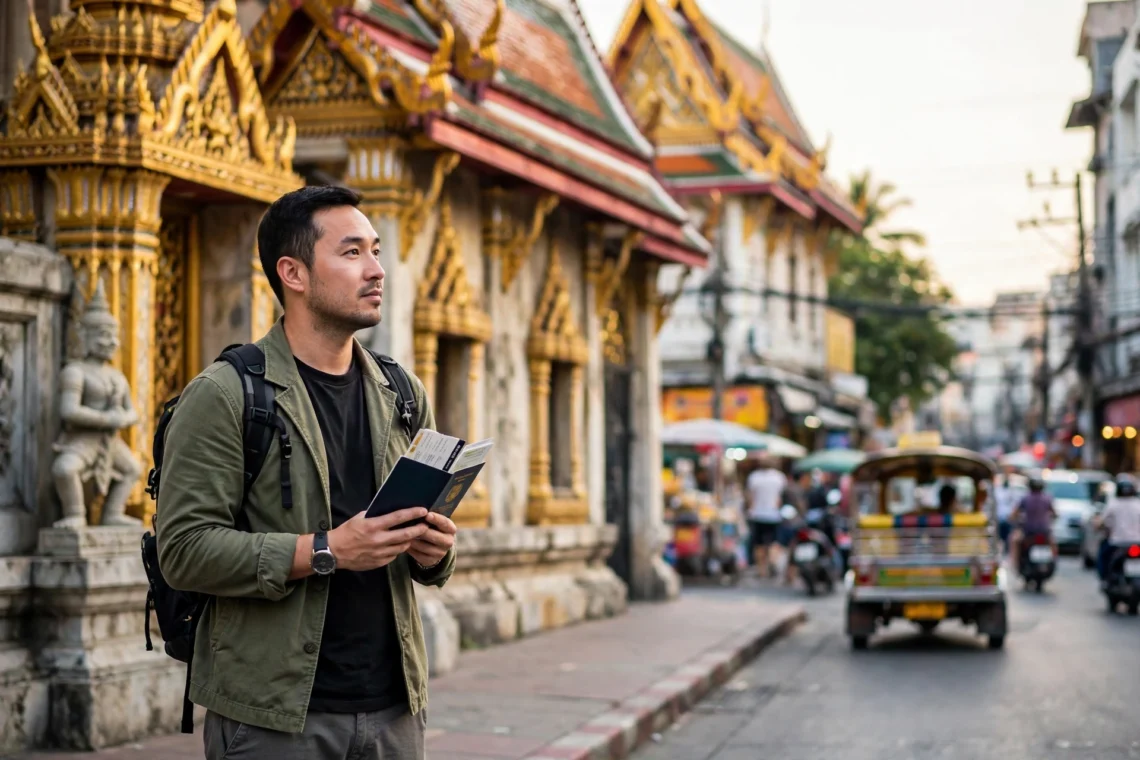
Thailand is cheap to visit, but a scooter crash or an island evacuation can cost more than the whole trip. A single night in a Bangkok private hospital, a helicopter flight from a remote island, or surgery after a motorbike accident can run into tens of thousands of dollars — and Thai private hospitals do not accept foreign health insurance, so the bill usually has to be paid upfront.
This guide explains how to choose the best travel insurance for Thailand: whether it is required, what cover actually matters, and how to pick a plan by trip type. It does not recommend one insurer over another, because the right plan depends on your trip — a two-week holiday, a long stay and a diving trip need different cover. This is general information, not financial advice. Prices and policy terms change often, so always check the insurer’s official website and read the policy wording before you buy.
Quick Answer
The best travel insurance for Thailand offers at least $100,000 in emergency medical cover and $250,000+ in evacuation cover. Check scooter and adventure activity rules in the policy wording, and buy as soon as you book.
Quick-Guide Table
| Trip type | Best cover options | When to buy |
| Short holiday (1–2 weeks) | Single-trip plan, strong medical and cancellation cover | As soon as you book |
| Long stay or digital nomad | Monthly subscription plan, check renewal rules | Before you travel |
| Adventure trip (diving, climbing) | Activity-inclusive plan or adventure add-on | Before you book activities |
| Family trip | One policy covering children, check age limits | As soon as you book |
| Senior traveler | Higher medical limit, declare pre-existing conditions | Early, before prices rise |
Helpful List: Choose The Right Policy In 5 Steps
- List your trip first: dates, islands or cities, scooter, diving, health conditions
- Compare medical and evacuation limits, not just the price
- Read the exclusions page: scooter license rule, adventure activities, alcohol, pre-existing conditions
- Check the claims process: app claims, direct billing, 24-hour assistance number
- Buy as soon as you book — cancellation cover only starts when the policy starts
Do You Need Travel Insurance For Thailand?
For most tourists, travel insurance is not legally required to enter Thailand. Visitors arriving on a visa exemption are not asked for proof of insurance at immigration, and no insurance document is part of the standard entry process. That is the position as of the latest checks, and it is worth confirming on an official source before you travel, because rules change.
The exception is long-stay visas. Holders of O-A and O-X retirement visas are legally required to show proof of medical cover, with minimum amounts set by the Thai authorities. If you are entering on one of these visas, check the exact requirement on the official Thai immigration or embassy page for your nationality.
The Thai government has also discussed making insurance compulsory for all visitors, and proposals for a tourist entry fee that would include basic accident cover have been reported. As of the latest checks, none of this has become law for standard tourist entry, and the figures in different reports do not agree — so do not treat any entry-fee number as a fixed fact. Check official sources before you travel.
Even though it is not required for most visitors, insurance is still worth having. Medical care in Thailand is affordable compared with the United States for routine treatment, but a serious accident is a different story. The US Department of State strongly urges travelers to Thailand to find a plan with reliable evacuation protection, because many of the best medical facilities are in Bangkok and other cities, while the islands and rural areas have limited care. Without evacuation cover, getting from a remote island to a proper hospital can be the most expensive part of the whole trip.
What Good Thailand Travel Insurance Should Cover
A good policy for Thailand starts with two numbers. The first is emergency medical cover: aim for at least $100,000, and ideally $250,000 or more. That sounds like a lot for a country where a doctor’s visit is cheap, but it is the serious cases that matter — surgery, intensive care and a long hospital stay after a scooter accident can quickly pass $100,000.
The second is medical evacuation, and this one matters even more in Thailand. Aim for at least $250,000 to $300,000. An air evacuation from a Thai island to Bangkok can exceed $50,000 to $100,000, and a full repatriation to your home country can cost far more. If your trip includes remote islands, a higher evacuation limit is worth the extra premium.
Beyond those two, look for trip cancellation and interruption cover — many plans cover 100% of the trip cost for cancellation and 150% for interruption — plus baggage loss and delay, and flight delay cover. A 24-hour emergency assistance line is essential: it is the number you call first when something goes wrong, and it can arrange direct billing with a hospital so you do not have to pay a large bill upfront and claim it back later.
Weather disruption cover is also worth checking. Flooding is the most common natural disaster in Thailand, and it can close airports, cancel ferries and strand travelers on islands. A plan with strong weather-related disruption cover is more useful here than it would be for a city trip in Europe.
Best Cover For Different Travelers
A short holiday of one to two weeks needs a single-trip plan with strong medical and cancellation cover. You are buying it for the worst case — a scooter accident, a bad case of food poisoning that needs a hospital stay, or a cancelled flight home — so the medical and evacuation limits matter more than the price.
Long stays and digital nomad trips suit monthly subscription plans, which run on a rolling cycle with no fixed end date. Check the renewal rules and whether the plan covers you in your home country during visits back, because some nomad plans exclude home-country cover or limit it to a few days.
Families should look for one policy that covers children as well as adults, and check the age limits and the activities list — a plan that covers the parents for diving may not cover a twelve-year-old for the same activity. Seniors face higher premiums and stricter rules on pre-existing conditions, so check the age caps and the medical screening questions before you buy. Adventure travelers — diving, climbing, Muay Thai — need a plan that actually lists their activities, or an add-on that covers them. A standard plan that excludes adventure sports is the wrong plan for a diving trip to Koh Tao, however cheap it is.
Scooter And Motorbike Cover: The Rule That Denies Most Claims
Scooter accidents are the most commonly denied travel insurance claim in Thailand, and the reason is almost always the same: the rider did not meet the license rule. This is the single most important thing to understand before you rent a scooter.
The standard rule across most policies is that you need a valid motorcycle license from your home country, an International Driving Permit, and a helmet at the time of the accident — or the claim is void. Many standard policies, including Heymondo for bikes above 75cc, exclude unlicensed riding entirely. SafetyWing covers motorbike accidents only if you are properly licensed for the vehicle, wearing a helmet and sober, and needs its Adventure Sports add-on for scooters above 50cc.
There is one rare exception worth knowing about. Genki Traveler covers medical expenses from accidents on light motorcycles up to 125cc even without a motorcycle license, as long as you are wearing a helmet. That is unusual, and it is worth verifying on the insurer’s own wording before relying on it, because it is the exception rather than the rule.
The practical advice is simple: if you do not hold a motorcycle license, do not ride a scooter in Thailand. Motorbike accidents are the number-one insurance claim for travelers in the country, and an uninsured crash can leave a hospital bill of $20,000 to $100,000. The convenience of a scooter is not worth that risk.
Adventure Activities: Diving, Trekking And Muay Thai
Thailand is built for active travelers, but standard travel insurance is not built for all of them. Most comprehensive plans cover the gentle activities without a problem: swimming, supervised snorkeling, trekking on marked trails, cooking classes, temple visits and cultural tours.
The activities that usually need an add-on or a specific plan are scuba diving beyond 10 to 30 meters, rock climbing at Railay Beach, Muay Thai training, zip-lining, bungee jumping and motorized water sports. Diving depth limits vary by plan and by your certification level, so a plan that covers diving to 30 meters may not cover a deeper dive, and a plan that covers recreational diving may exclude technical diving entirely.
The only safe way to check is to read the activity list in the policy wording. Never assume an activity is covered because the policy says “adventure sports” or because a website lists it as an example. If your activity is not named in the schedule, ask the insurer in writing before you buy — and keep the answer.
How Much Does Travel Insurance For Thailand Cost?
Prices vary widely, so think in ranges rather than fixed figures. For a two-week trip, a solid policy typically runs roughly $40 to $120, depending on the insurer and the level of cover. Monthly plans for longer stays usually run roughly $30 to $80 for budget cover, and more for higher limits and adventure add-ons. One comparison site reports an average of $200 to $250 per trip for Thailand, but that is a single source’s figure from its own users, not a fixed price for everyone.
What changes the price is age, trip length, the medical limit, cancellation cover and any adventure add-ons. A healthy adult under 40 on a two-week beach holiday will pay far less than a 65-year-old on a two-month trip with diving included. That is normal, and it is why comparing two plans by price alone is misleading.
The cheapest plan is not the best plan. A low limit that only covers a routine clinic visit is not enough for a serious accident, and a plan that excludes scooters is the wrong plan if you intend to ride one. Pay for the limits and the activities you actually need, and treat the premium as a small part of the trip cost.
How To Compare And Buy The Right Policy In 5 Steps
- List your trip first. Write down your dates, whether you are staying in cities or on islands, whether you will ride a scooter, dive, climb or train Muay Thai, and any pre-existing medical conditions.
- Compare medical and evacuation limits, not just the price. A plan with $500,000 medical and $1,000,000 evacuation is a different product from a plan with $50,000 medical and no evacuation cover, even if the prices look close.
- Read the exclusions page. This is where the scooter rule, the adventure list, the alcohol exclusion and the pre-existing condition rules live. If you cannot find the exclusions, do not buy the plan.
- Check the claims process. Can you claim through an app? Does the insurer offer direct billing with Thai hospitals? Is there a 24-hour emergency assistance number, and is it answered by a real person?
- Buy as soon as you book. Cancellation cover only starts when the policy starts, so buying the week before you fly leaves your prepaid hotels and flights unprotected if something happens in between.
What Travel Insurance Does Not Cover
Every policy has exclusions, and knowing them before you buy is what separates a good decision from a nasty surprise. Pre-existing medical conditions are usually excluded or limited, and waivers are hard to get — declare your conditions honestly, because hiding one can void the whole policy.
Riding without a license or a helmet is excluded on almost every policy, as is any accident that happens while you are under the influence of alcohol or drugs. Travelling against official government advice is also excluded, so check your government’s travel advice for Thailand before you go. Changing your mind about the trip is not covered either — that is what “cancel for any reason” cover is for, and it is rarely included in standard plans.
COVID-19 is worth a short note. Most policies now treat it like any other illness, but the details vary — some cover treatment, some do not cover cancellation because of it, and some exclude it entirely. Check the policy wording rather than assuming it is covered.
Common Mistakes To Avoid When Buying Travel Insurance For Thailand
The most common mistake is buying the cheapest plan with a low medical limit. A $50,000 limit sounds like a lot until a scooter accident needs surgery and intensive care, and then it is not enough.
The second is assuming scooter riding is covered without checking the license rule. This is the claim that gets denied most often in Thailand, and it is entirely avoidable — either hold the right license or do not ride.
The third is assuming diving, climbing or Muay Thai is included. These activities are excluded from most standard plans, and discovering that in a hospital in Koh Tao is the worst possible time to find out.
Buying after the trip starts, or after something has already gone wrong, is another mistake — no policy covers an event that happened before it started. Not declaring a pre-existing condition is equally risky, because the insurer can refuse the whole claim if it finds out. And finally, do not trust one “best” ranking on its own. Rankings are one source’s opinion, and the plan at the top of a list may be wrong for your trip. Read the policy wording and match it to what you are actually doing.
What To Do If Something Goes Wrong In Thailand
If something goes wrong, call the insurer’s 24-hour emergency line first — before paying a large bill, if you possibly can. The assistance team can direct you to a suitable hospital, arrange direct billing, and approve an evacuation if one is needed. Do not arrange your own air ambulance without their approval, because the insurer may refuse to pay for it.
Keep every receipt, medical report and police report, and take photos of documents as well as keeping the originals. Ask the hospital whether it can bill your insurer directly; many large Thai private hospitals have direct-billing arrangements with major insurers, which saves you paying upfront and claiming later.
File the claim promptly when you get home, with all the documents attached, and keep copies of everything you send. If the claim is delayed or refused, ask for the reason in writing and check it against the policy wording — that is the document that decides the outcome.
Conclusion
The rule for Thailand is simple: at least $100,000 in emergency medical cover and $250,000 or more in evacuation cover, scooter riding only with a proper license, an International Driving Permit and a helmet, and every activity checked against the policy wording before you buy. The best plan depends on your trip — a two-week holiday, a long stay and a diving trip need different cover, and the cheapest option is rarely the right one.
Check the insurer’s official website and the policy wording before you buy, and check official travel advice for entry rules and safety. This guide is general information, not financial advice, and it cannot replace reading the policy you are actually buying. If you want to go further, the site’s Annual Travel Insurance Plans guide explains single-trip versus annual cover, and the Travel Planning Tips guide covers the rest of the trip-planning checklist.
FAQ’s:
Is Travel Insurance Required For Thailand?
No, most tourists on a visa exemption do not need it legally, but long-stay O-A and O-X visa holders must show proof of medical cover.
How Much Medical Cover Do I Need For Thailand?
Aim for at least $100,000 in emergency medical cover and $250,000 or more in evacuation cover, as island evacuations to Bangkok can be very expensive.
Does Travel Insurance Cover Scooter Accidents In Thailand?
Only if you hold a valid motorcycle license and an International Driving Permit and wear a helmet. Without a license, most claims are denied.
Does Travel Insurance Cover Scuba Diving In Thailand?
Standard plans often exclude diving beyond 10–30 meters, so check the activity list in the policy wording or buy an adventure add-on first.
When Should I Buy Travel Insurance For Thailand?
Buy as soon as you book your trip, because cancellation cover only starts when the policy starts, and it cannot cover events that already happened.
Disclaimer
This content is for general information only. Prices, coverage, limits and policy terms can change, so please check the insurer’s official website and the policy wording before you buy. Travel3Ways is an independent travel information website and is not affiliated with any insurer, tourism board, airline, hotel or booking service. Travel3Ways was created only to provide helpful information to visitors and does not engage in paid promotions or advertising.