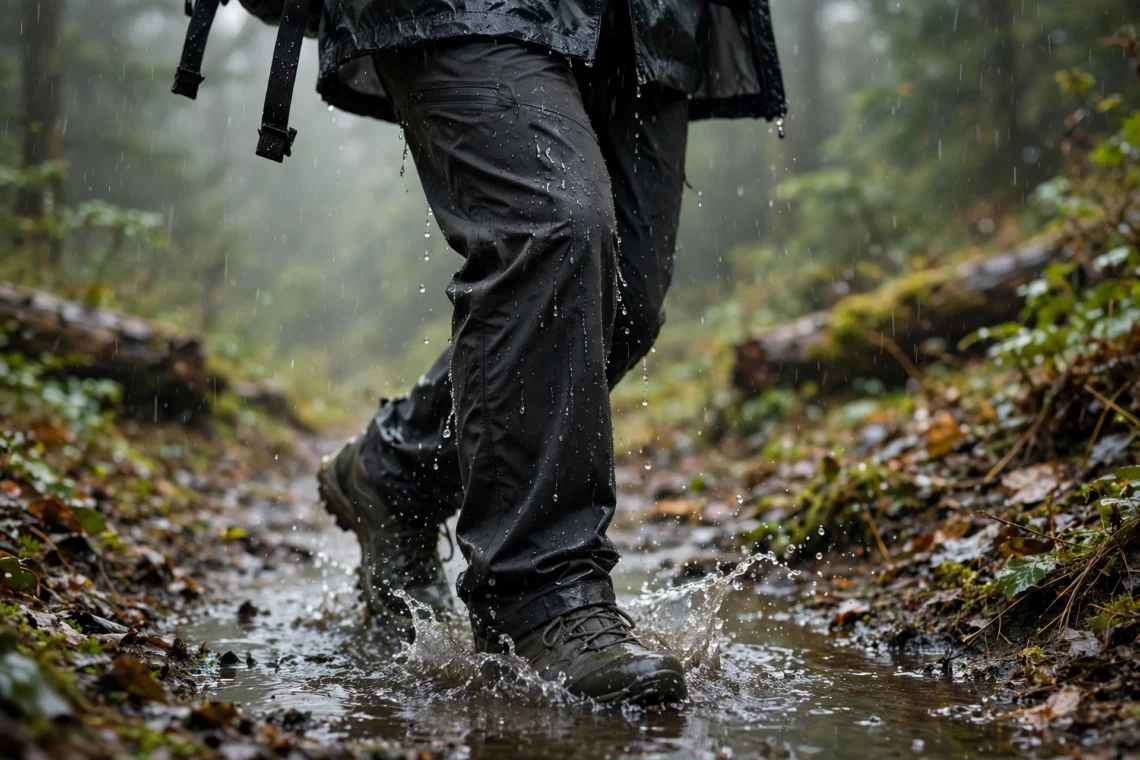
Soaked legs end hikes early. Once rain gets through your trousers, every step feels heavier, your feet blister more easily, and the cold creeps in. The wrong pants can leave you wet twice over: rain from the outside, and sweat trapped on the inside. The best waterproof hiking pants solve both problems, keeping rain out while letting sweat escape.
This guide covers the best waterproof rain pants by use — serious mountain weather, value and budget, lightweight and ultralight trips, and women’s and men’s fits — plus how to read waterproof ratings and choose the right pair. One honest note first: the picks below are research-based comparisons of specifications and published reviews, not hands-on testing by this site. They will help you shortlist the right pants, but always check the current specs and try the fit before you buy.
Quick Answer
The best waterproof hiking pants for most hikers are a mid-range 3-layer pair like the REI Co-op XeroCloud or Patagonia Torrentshell 3L. For severe mountain weather, choose a premium shell like the Arc’teryx Beta or Rab Kangri GTX.
Quick-Guide Table
| Hike type | Best pants | When it suits |
| Day hike in light rain | REI Co-op Rainier, Columbia Pouring Adventure II | When showers are short and the trail is easy |
| Multi-day backpacking | Patagonia Torrentshell 3L, REI Co-op XeroCloud | When you need packable, reliable protection |
| Serious mountain weather | Arc’teryx Beta, Rab Kangri GTX | When rain is heavy and shelter is far away |
| Fast and light hiking | Rab Phantom, Montane Minimus | When every gram counts on open trails |
| Budget trips | REI Co-op Rainier, Berghaus Deluge 2.0 | When you hike occasionally in moderate rain |
| Cold and wet conditions | Outdoor Research Foray, 3-layer shells | When warmth and full coverage matter |
Helpful List: Choose The Right Pair In 5 Steps
- Match the pants to your climate: heavy mountain storms need 20,000mm or more and a 3-layer shell; light showers need far less.
- Decide between over-trousers and standalone pants: over-trousers need long side zips to go on over boots.
- Try them on over your hiking layers and boots, then walk, squat, and lift your knees to check the fit.
- Check the vent zips reach from hip to mid-thigh, and the cuffs adjust neatly over your boots.
- Check the weight and pack size: aim under 10–12 oz unless you expect heavy bushwhacking or snow.
Waterproof Vs Water-resistant: What’s The Difference?
Water-resistant pants and waterproof pants sound similar, but they are built for different weather. Water-resistant pants use a Durable Water Repellent (DWR) finish on a tightly woven fabric. They handle light mist and a brief shower, then the fabric saturates and water gets through. They are fine for a dry forecast with a small chance of drizzle, but they are not rain pants.
Truly waterproof hiking pants use a membrane or coating that actively blocks water, even under pressure in heavy, prolonged rain. The membrane sits between the outer fabric and an inner layer, and its tiny pores are too small for liquid water to pass through, yet large enough for sweat vapour to escape. That is what keeps you dry in a real downpour.
Seams matter just as much as fabric. A waterproof membrane is useless if water leaks through the stitching, so good rain pants have fully taped seams. When you compare pants, check that the seams are taped — it is one of the easiest ways to tell a serious rain pant from a fair-weather one. Buying water-resistant pants and expecting them to survive mountain rain is the most common disappointment in hiking gear.
How To Read Waterproof And Breathability Ratings
Two numbers tell you most of what you need to know about a rain pant: how waterproof it is, and how well it breathes.
Waterproofing is measured as hydrostatic head, in millimetres. A tube of water is placed over the fabric until it leaks through, and the height of the water column is the rating. As a rough guide, 5,000–10,000mm suits light rain and short showers. The range of 10,000–20,000mm is the sweet spot for most hikers and handles heavy downpours and long days. Ratings of 20,000mm and above are expedition grade, built for severe, persistent rain, snow, and mountain conditions.
Breathability is measured as MVTR, the amount of water vapour in grams that passes through a square metre of fabric in 24 hours (g/m²/24h). A rating around 10,000g is good for standard hiking, while 20,000g or more is excellent for hard climbs with a heavy pack. One caution: different brands test breathability in different ways, so numbers from different test methods are not directly comparable. Treat them as a rough guide, not an exact ranking.
Construction also matters. In a 3-layer pant, the membrane is bonded between a tough outer fabric and a protective inner liner. This is the most durable and most protective option, and usually the most expensive. A 2.5-layer pant replaces the inner liner with a printed or sprayed protective coating, making it lighter and more packable but less durable. A 2-layer pant is the simplest build, usually found in budget models.
Finally, the DWR finish on the outer fabric makes water bead and roll off. It wears off with use and washing, which is why even good rain pants eventually start to feel damp on the outside. When water stops beading, the pants need washing and reproofing.
Best For Serious Mountain Weather
When the rain is heavy, the wind is strong, and you are hours from shelter, you need a pant that does not quit. Two models stand out for this kind of use.
The Arc’teryx Beta Pant is the premium pick for alpine conditions. It uses a 3-layer Gore-Tex membrane with a soft inner backer, weighs around 308g, and has 3/4-length waterproof side zippers that let you pull the pants on over boots and dump heat on a climb. Its build is tough enough for rock, snow, and rough trails, and it is the pair most often named as the best overall in published roundups.
The Rab Kangri GTX is the other serious-weather option. It also uses a Gore-Tex membrane in a durable 3-layer build, and it is made for long mountain days in heavy rain. It is a strong choice if you want expedition-level protection with a slightly more forgiving fit than the Beta.
These pants suit hikers facing severe, persistent rain and snow, and anyone heading into the mountains in unsettled weather. Fair-weather day hikers should skip them: they are heavier and far more expensive than you need, and a lighter pair will serve you better.
Best Value And Budget Picks
You do not need to spend premium money to stay dry. Several mid-range and budget pants offer real waterproof protection at a much lower price.
The REI Co-op XeroCloud is the best value pick. It is a 3-layer pant at a mid-range price, weighing around 10 oz, and it gives most hikers the protection they need without the premium cost. If you want one pair for everything from day hikes to multi-day trips, this is the smartest starting point.
The REI Co-op Rainier is the budget pick. It uses a 2.5-layer membrane and has full-length side zippers, so you can put the pants on or take them off without removing muddy hiking boots. That full-zip design is genuinely useful on the trail, especially when the rain starts mid-hike.
In the UK, the Berghaus Deluge 2.0 and the Rab Downpour Eco are strong value options, both widely recommended for regular hillwalking. The Columbia Pouring Adventure II is the cheapest option of all, fine for light rain and occasional use, though it gives up breathability and durability compared with the others.
What budget pants give up is breathability, durability, and venting. On a short day hike in moderate rain, you may never notice the difference. On a long, steep climb in heavy rain, you will. The trade-off is fine when your hikes are short and the weather is rarely severe.
Lightweight And Ultralight Rain Pants
On a multi-day trip, rain pants spend most of their time inside your backpack, so weight and pack size matter. Aim for under 10–12 oz unless you expect heavy bushwhacking or snow, where durability matters more than weight.
The Patagonia Torrentshell 3L is the best packable option. Its 3-layer H2No shell balances storm protection with a reasonable weight of around 11 oz, and it packs into its own zippered pocket. The two-way side zippers run from thigh to cuff, so you can pull the pants on over boots. It is the best all-rounder for backpackers who want real protection without much bulk.
The Rab Phantom is the best ultralight option, weighing around 79g — under 3 oz — and compressing into a palm-sized stuff sack. It is made for fastpacking and long backpacking trips where every gram counts. The trade-off is a minimalist, narrower athletic cut that fits best over shorts or leggings rather than bulky trekking pants, and it is less durable than a 3-layer shell.
The Montane Minimus and Pac Plus XT are also lightweight and breathable, well suited to fast hiking and running in the hills. Smaller ultralight brands such as LightHeart Gear also make rain pants aimed at thru-hikers; check their current specs and availability, as small makers change their line-up often. The trade-off with all ultralight pants is the same: they save weight but give up durability and ventilation, so they suit open trails, not rough bushwhacking.
Best Waterproof Hiking Pants For Women
Women’s-specific fits exist for a reason. A women’s cut usually has a narrower waist, a different hip shape, and a shorter leg, and unisex or men’s fits often gap at the waist or bunch at the ankle. The best waterproof hiking pants for women are the ones that fit your body and your layers, not simply the smallest men’s size.
Several of the best waterproof pants for women come in women’s versions. The Patagonia Torrentshell 3L is a popular choice, with a women’s cut and the same 3-layer protection. The Rab Phantom also comes in a women’s version, suited to fast and light trips. The REI Co-op Rainier has a women’s version with the same full-length side zips, and budget options such as the 33,000ft women’s rain pants offer a low-cost way into waterproof trousers.
When choosing, check the leg length options, the waist adjustment, and whether the cut fits comfortably over your base layers and hiking trousers. Try the pants on over the layers you actually hike in, and walk and squat in them before you buy.
Best Waterproof Hiking Pants For Men
Men’s fits are usually roomier through the leg, with longer leg options and a waist that adjusts with a belt or drawcord. The best waterproof hiking pants for men are the ones that move with you on steep ground and fit over your boots without catching.
The Arc’teryx Beta and the Rab Kangri GTX lead the men’s premium picks, both with men’s cuts and long side zips. The REI Co-op XeroCloud is the best value men’s option, and the Patagonia Torrentshell 3L is the best packable men’s choice. All four come in men’s versions with articulated knees and adjustable cuffs.
When choosing, check that the knees are articulated so the pants move when you climb, that the vent zips reach from hip to mid-thigh so you can dump heat, and that the cuffs adjust neatly over your boots. A pant that fits well standing still can still bind when you step up onto a rock, so test the movement before you commit.
How To Choose The Right Pair
Start with your climate. Heavy mountain storms call for 20,000mm or more and a 3-layer shell. Light summer showers need far less, and a light 2.5-layer pair will do. Hot and rainy conditions call for breathability and vents above all, while cold and wet conditions call for durability and full coverage.
Next, decide between over-trousers and standalone pants. Over-trousers are worn over your regular hiking trousers when the rain starts, so they need long side zips — at least knee-to-ankle, or 3/4-length — to go on over boots. Standalone waterproof pants replace your regular trousers, so they need a comfortable fit on their own and pockets you can actually use.
Then check the fit properly. Try the pants over your hiking layers and boots, walk up and down stairs, squat, and lift your knees high. Check the waist, the cuffs, and the length. A pair that is too long will drag in mud, and a pair that is too tight over your thighs will restrict your stride.
Finally, weigh the trade-offs. Venting matters as much as the membrane on a hard climb, because sweat can soak you from the inside before rain reaches you. Open the thigh vents before a steep ascent, and choose a pant whose ventilation zips reach at least from hip to mid-thigh. And remember that weight and packability matter most on multi-day trips, when the pants spend most of their time in your pack.
Common Mistakes To Avoid
- Buying water-resistant pants and expecting them to survive sustained rain. Check whether the pants have a membrane, not just a DWR finish.
- Choosing by waterproof rating alone and ignoring breathability. A very waterproof pant with poor breathability leaves you wet with sweat.
- Picking the lightest pants for rough, bushy trails where they tear. Ultralight fabric is not made for abrasion.
- Skipping the fit check over boots and layers. A pant that fits in the shop can bind on the trail.
- Trusting a single review score instead of comparing specs and use case. A five-star pant for a day hiker can be the wrong pant for a mountaineer.
- Forgetting the seams. A high waterproof rating means little if the seams are not taped.
Care, Packing, And Safety Checks
Pack your rain pants even when the forecast is dry. Mountain weather changes fast, and a clear morning can turn into an afternoon storm. Keep them near the top of your pack, not buried at the bottom, so you can reach them quickly.
Wash and reproof the DWR finish when water stops beading on the fabric and starts soaking into the outer layer instead. Use a technical wash and a reproofing product made for waterproof clothing, and follow the maker’s instructions. Store the pants dry and loosely packed, not crushed at the bottom of a wet pack.
Safety matters here more than comfort. Wet legs in cold wind raise the risk of hypothermia, so if you get soaked, change into dry layers when you can, keep moving, eat something warm, and know when to turn back. Check the weather and official trail advice before a mountain hike, and tell someone your route and expected return time. Our Colorado hiking guide covers altitude and weather safety in more detail, and our guide to choosing a good backpacking pack explains how to carry rain gear without overloading your pack.
Conclusion
The best waterproof hiking pants are the ones that match your rain, your effort level, and your budget — not the most expensive name on the shelf. For most hikers, a mid-range 3-layer pair such as the REI Co-op XeroCloud or the Patagonia Torrentshell 3L is the right starting point: genuinely waterproof, reasonably breathable, and light enough to carry. Step up to a premium shell such as the Arc’teryx Beta or the Rab Kangri GTX only when you face severe mountain weather for hours at a time.
Choose by the ratings and the fit, check the seams and the zips, and pack the pants even on a dry forecast. Stay dry, stay warm, and enjoy the trail.
FAQ’s:
What Waterproof Rating Do I Need For Hiking?
For most hikers, 10,000–20,000mm is the sweet spot for heavy rain, while 20,000mm or more suits severe mountain weather. Light rain needs far less.
Are Waterproof Hiking Pants Breathable?
Yes, but not perfectly. A breathability rating around 10,000g is good, and 20,000g or more is excellent. Thigh vents help release heat on hard climbs.
What Is The Difference Between 2.5-layer And 3-layer Pants?
A 3-layer pant bonds the membrane between a tough outer fabric and an inner liner, making it more durable. A 2.5-layer pant is lighter and more packable but less durable.
How Do I Wash Waterproof Hiking Pants?
Wash them with a technical wash and reproof the DWR finish when water stops beading on the fabric. Follow the maker’s instructions and store them dry.
Do I Need Rain Pants If The Forecast Is Dry?
Yes, pack them anyway. Mountain weather changes fast, and a clear morning can turn into an afternoon storm. Keep them near the top of your pack.
Disclaimer
This content is for general information only. Product prices, specifications, colours, sizes, and availability can change, so please check the brand’s official website or an authorised retailer before you buy. Travel3Ways is an independent travel information website and is not affiliated with any gear brand, manufacturer, or retailer. Travel3Ways was created only to provide helpful information to visitors and does not engage in paid promotions or advertising.