
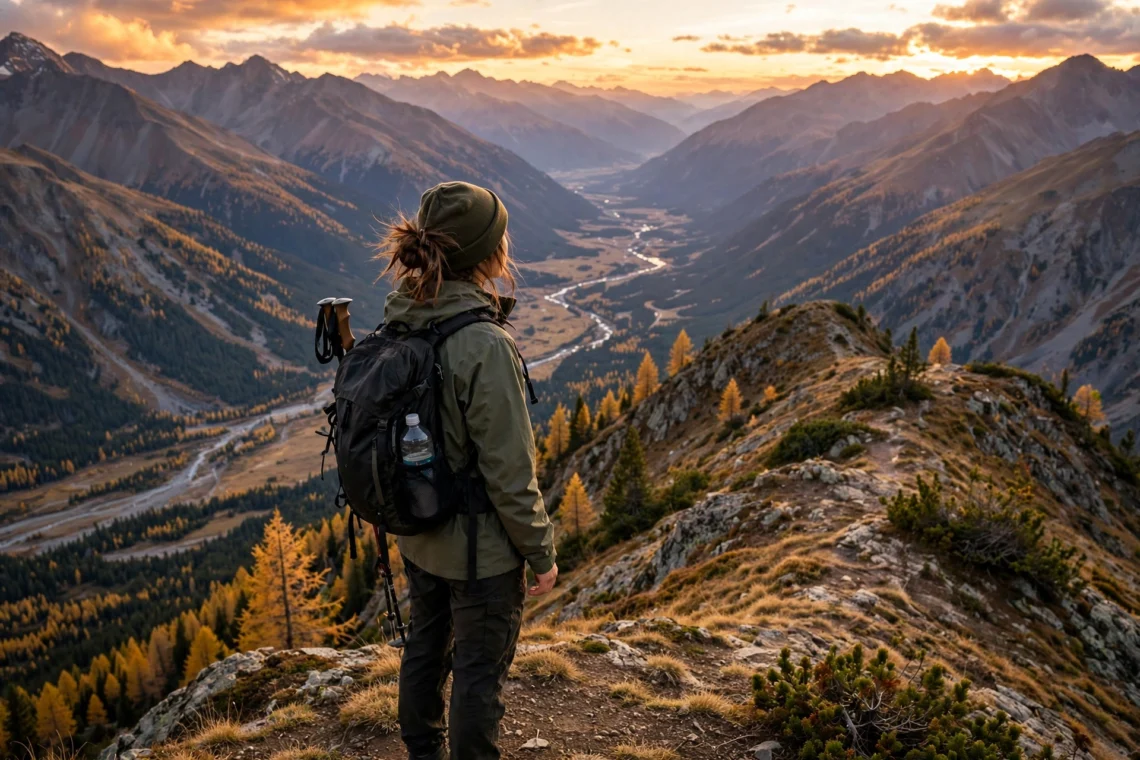
Solo travel means every decision is yours — the route, the pace, the budget, the bedtime — and the freedom is the point. Nobody to compromise with, nobody to wait for, nobody to argue about where to eat. You go where you want, when you want, for as long as you want. That freedom is why more people than ever are travelling alone, and why most of them come home planning the next one.
This guide picks the best first destinations, covers planning, budget, stays, safety and meeting people — everything a first solo trip needs in one place. It is honest about the trade-offs too: solo travel costs more per person and needs more preparation than travelling with someone. And it is reassuring where reassurance is earned: most solo trips pass without a single problem. Start with the glance table, then the destinations, then a five-step plan and the safety habits that make it all work.
Quick Answer
Solo travel means planning a trip on your own terms. Pick a forgiving first destination like Portugal or Japan, keep the trip to 4–10 days, book the first night in advance, and buy travel insurance before you fly.
Quick-Guide Table
| Trip type | Best places or options | When to go |
| First solo trip | Portugal, Japan, Ireland, Copenhagen | May–June, September–October |
| Budget solo trip | Thailand, Vietnam, Mexico City | November–March |
| Nature and road trips | Iceland, New Zealand, Costa Rica | June–August, December–April |
| Solo travel in the US | New York, San Francisco, Portland, Austin, Chicago | Spring and autumn |
| Meeting people | Thailand, Portugal, Japan, New Zealand | Year-round, shoulder season best |
Helpful List: Plan Your First Solo Trip In 5 Steps
- Pick a forgiving destination: safe, walkable, English-friendly, with a visible traveler scene
- Keep it short: 4–10 days for a first solo trip — a week to 10 days is the sweet spot
- Limit base changes: stick to two or three home bases instead of switching hotels every night
- Book the first night (and ideally the airport transfer) before you fly, and arrive in daylight
- Sort the four essentials before departure: travel eSIM, travel insurance, no-foreign-fee card, offline maps
What Is Solo Travel — And Why People Love It
Solo travel means planning and taking a trip on your own terms. You choose the pace, the route and the budget, and you decide when you want company and when you want to be alone. It is independent travel in the fullest sense — every decision belongs to one person.
Why it works is simple. Total freedom is the first reason: you can spend four hours in one museum, skip the attraction everyone else loves, or change your plans at breakfast. The second is connection: a person on their own is easier to approach than a couple or a group, so you talk to more strangers and have more conversations. The third is attention: you notice more when nobody is talking to you, and you remember more of what you saw. The fourth is confidence: every small problem you solve alone — a missed train, a wrong turn, a language barrier — makes the next one easier.
The trade-offs are real. There is no one to split costs with, so rooms and taxis cost more per person. There is no one to watch your bag while you go to the bathroom. Loneliness can appear, usually in the evening of the second or third day, when the excitement wears off and dinner is a table for one. Each of these has a fix — hostels and room-share tours for the cost, a day bag you never leave behind, and a hostel dinner or a walking tour for the lonely evening. And solo travel is not the same as being lonely: solitude is a choice, and company is available whenever you want it.
Best Places For A First Solo Trip
Portugal is the softest possible landing for a first solo trip. Lisbon is compact, walkable and full of other solo travelers, with free walking tours leaving from the center daily and hostels that have excellent private rooms. Porto adds wine country and a slower pace a short train ride away. English is widely spoken, prices are affordable by Western European standards, and the main risk is pickpocketing on tourist trams — the same risk as any big European city.
Japan is the destination solo travelers rave about most, and for good reason. It is exceptionally safe, public transport is superb, and solo dining is built into the culture, from ramen counters with individual booths to conveyor-belt sushi. Tokyo and Kyoto are the obvious starting points, and the trains connect them in about two hours.
Thailand has the largest solo-traveler community anywhere. The daily costs are low, the food is wonderful, the well-worn tourist trail means help is never far away, and meeting people is almost automatic in hostels and on tours. The watch-outs are scooter rentals — most travel insurance excludes them without the right license — and scam-prone tourist transport in Bangkok.
Iceland suits solo travelers who want nature and a road trip. English is everywhere, the population is tiny, and the Ring Road is hard to get lost on. It is the most expensive place on this list, and winter driving demands real caution, so summer is the better first trip. Ireland and Copenhagen round out the list as gentle first steps: English-speaking, friendly, and full of places where dining alone is completely unremarkable.
What makes a place first-timer friendly is a short list: safe, walkable, good public transport, English help available, and a visible traveler scene. What to skip on a first trip: complex overland border crossings, remote wilderness you would have to navigate alone, and anywhere under a travel advisory.
Solo Travel In The Us
You do not need a passport for a first solo trip. The US has excellent first-solo cities: New York for energy and neighborhoods, San Francisco for hills and food, Portland for cafés and walkability, Austin for music and food, Chicago for architecture and lakefront walks. All five are walkable, have good public transport and a café culture where eating alone is completely normal.
National parks work well alone if you choose wisely. Day hikes with marked trails, ranger stations and other hikers around are fine — but never hike a remote trail alone without telling someone where you are going and when you expect to be back. Carry water, a charged phone and a paper map, because signal disappears in canyons and forests.
Road trips alone need the same care: plan your fuel and stops, share your route with someone at home, and book stays ahead in small towns where options are few. Solo dining is normal everywhere in the US — counter seating, food markets and casual cafés make a table for one feel like nothing at all.
How To Plan Your First Solo Trip In 5 Steps
Pick a forgiving destination. Safe, walkable, English-friendly, with a visible traveler scene. Your first solo trip is not the place to test your resilience; it is the place to build confidence.
Keep it short. Four to ten days for a first solo trip — a week to ten days is the sweet spot, long enough to feel the freedom and short enough that loneliness or homesickness will not build.
Limit base changes. Stick to two or three home bases instead of switching hotels every night, to avoid transit fatigue and missed connections.
Book the first night before you fly. You are at your most vulnerable when you first arrive, tired and unsure of your surroundings, so arrange the room — and ideally the airport transfer — in advance. Arrive in daylight if you can.
Sort the four essentials before departure. A travel eSIM installed before you land, so you have data from the jet bridge; travel insurance with medical evacuation cover; a no-foreign-fee card; and offline maps downloaded to your phone.
How Much Does Solo Travel Cost?
Solo travel costs more per person, and the reason is simple: the biggest costs are shared by couples. A double room, a hire car, a private guide or a taxi all cost the same whether one person uses them or two. Food, activities and public transport cost the same either way, so the gap is smaller than people fear — but it is real.
Daily budget ranges for one budget traveler, excluding flights: Southeast Asia runs about $18 to $35 a day in Vietnam, Thailand and Indonesia. Japan, South Korea, Australia and New Zealand run about $60 to $120 a day. Western Europe costs more, and Iceland the most.
The single supplement is the cost to watch for: hotels and tour operators charge solo travelers extra for a room built for two, typically adding 10 to 100 percent. Avoid it with solo rooms, hostels with private rooms, apartments, or room-share tours that pair solo travelers with a roommate of the same gender at no extra cost.
Budget hacks that actually work: choose hostels with kitchens and free breakfast, because cooking even a few meals saves real money; use overnight transport to save a night’s stay; join free walking tours in every city — they are also the best way to meet people; travel on weekdays when tours and activities are cheaper and quieter; and use public transport and shared transfers rather than taxis.
Where To Stay When Travelling Alone
Social hostels are the easiest stay for a first solo trip. They offer dorms and private rooms, common areas and organized activities, and they make meeting people almost automatic. Choose small or social hostels rather than big party ones if you want conversation without the noise, and read reviews from solo travelers before booking.
Guesthouses and homestays give you direct contact with hosts who know the area and will tell you where to eat, what to skip and how to get around. Apartments and solo rooms give you privacy when you want it, with no supplement and a kitchen of your own.
Whatever you choose, check four things: 24-hour check-in, good reviews from solo travelers, a safe neighborhood, and a location near a station. And pack light: one carry-on or a manageable rucksack, so you never struggle with heavy luggage on stairs, trains or cobblestone streets.
Staying Safe While Travelling Solo
Before you go, read the official travel advice for your destination. The US State Department rates countries from Level 1 (exercise normal precautions) to Level 4 (do not travel), and a level can apply to just one region, so read the page for the specific place you are going. Share your itinerary with someone at home and agree how often you will check in. Photograph your passport and important documents and store the copies in the cloud. Save the embassy contact in your phone. And buy travel insurance with good medical cover, including evacuation — alone, there is no one to pick up the pieces, and some countries now check for proof of cover at entry.
On the road, arrive in daylight in a new city, especially the first time. Keep a bank card and some cash separate from the rest, so you can still reach money if your main payment method fails. Keep your phone charged, with a power bank in your day bag. Share your live location with someone you trust before heading out, especially for hikes or late nights. Trust your gut: if something feels off — a driver, a tour, a friendly stranger — leave the situation. You do not owe anyone an explanation.
At night, use licensed taxis, choose busy train carriages, and avoid poorly lit areas and hitchhiking. Watch your drink in bars and never accept open drinks from strangers. In an emergency, 112 works in any EU country, free from any phone, and US citizens can join the Smart Traveler Enrollment Program (STEP) to get alerts from the local embassy and be easier to reach.
The honest picture: most solo trips pass without a hint of trouble, and the precautions are largely common sense. Harassment risk varies enormously by destination, so research before going, and never call any place guaranteed safe — no place is.
How To Meet People — And Enjoy Eating Alone
Meeting people is easier than most first-timers expect, because solo travelers are the most approachable people on the road. Social hostels, free walking tours, cooking classes, small-group day tours, language exchanges and hostel dinners all put you next to people who want to talk. Guided walking tours and group nature outings — hiking, diving, cycling — work especially well, because you share an experience first and a conversation follows.
Eating alone is the part people worry about most, and it is the part that fades fastest. Start with counter seating, lively food markets or casual cafés with a good book if a formal table feels intimidating. Solo dining is completely normal in Japan, Singapore and most big cities — in Tokyo, ramen counters are built for one person, and nobody looks twice.
Mix solitude with socializing: anchor your days with one main activity — a morning hike, a museum visit — and leave the afternoon open for spontaneous wandering. And if loneliness appears, treat it as a signal to join something — a tour, a class, a hostel dinner — not as a failure. It is a check-engine light, not a verdict on the trip.
Solo Travel Groups And Tours: When To Join One
A group helps when the logistics are hard: remote areas, complex border crossings, a first time in a challenging destination, or when you simply want company without doing the planning. Small-group tours and walking tours are the easiest way to meet people without losing your independence, and room-share options mean no single supplement.
What to look for: small groups, a pace that suits you, and room-share options with no extra charge. When to stay independent: cities with good transport, places you already know, and trips where freedom matters most. There is no rule — many solo travelers mix the two, travelling independently for a week and joining a group for a remote leg in the middle.
Common Mistakes To Avoid When Travelling Solo
The first mistake is picking a hard destination for a first trip instead of a forgiving one. Your first solo trip should build confidence, not test it. The second is changing hotels every night and arriving after dark — transit fatigue and late arrivals are where most solo trips go wrong.
The third is buying no travel insurance. Alone, there is no companion to get you to a clinic or wire cash, and a small problem becomes a big one fast. The fourth is skipping cash and a backup card — one lost wallet should never end a trip. The fifth is trusting one “best” ranking without checking what it suits; the top pick for a honeymoon may be wrong for a solo traveler. And the sixth is over-planning every hour. Leave room for the spontaneous part — it is usually the best part.
Conclusion
The simple rule is this: pick a forgiving destination, keep the first trip short, book the first night, and build safety habits into defaults. Do those four things, and the rest of solo travel mostly takes care of itself.
For a first trip, Portugal or Japan is hard to beat. For budget and meeting people, Thailand. For nature, Iceland or New Zealand. Whichever you choose, check official travel advice and entry rules before booking, and buy insurance before you fly. Then go — travelling alone is one of the most rewarding things you can do, and the first trip is the hardest one. After that, the world gets bigger. If you want to keep planning, the site’s other solo and destination guides cover Solo Travel to Europe, Solo Travel Ideas, Solo Trips for Women in the US, Japan and places to visit out of the US in the same practical style.
FAQ’s:
Is Solo Travel Safe?
Most solo trips pass without any trouble. Pick a safe, walkable destination, read official travel advice before booking, share your itinerary, and trust your instincts on the road.
How Much Does Solo Travel Cost?
Solo travel costs more per person because rooms and taxis are not shared — budget about $18–35 a day in Southeast Asia and $60–120 a day in Japan or New Zealand.
What Is The Best First Solo Travel Destination?
Portugal and Japan are the easiest first trips — safe, walkable, English-friendly, with good transport and a visible solo-traveler scene.
How Do I Meet People While Travelling Solo?
Stay in social hostels, join free walking tours, cooking classes and small-group day tours, and eat at counter seating or lively food markets.
Do I Need Travel Insurance For Solo Travel?
Yes. Travel insurance with medical evacuation cover is non-negotiable when travelling alone, since no companion can help you in an emergency.
Disclaimer
This content is for general information only. Travel conditions, prices, entry requirements and opening times can change, so please check official travel advice and official sources before you travel. Travel3Ways is an independent travel information website and is not affiliated with any tourism board, airline, hotel or booking service. Travel3Ways was created only to provide helpful information to visitors and does not engage in paid promotions or advertising.


One comment on “Solo Travel: How To Plan Your First Trip Alone With Confidence”